
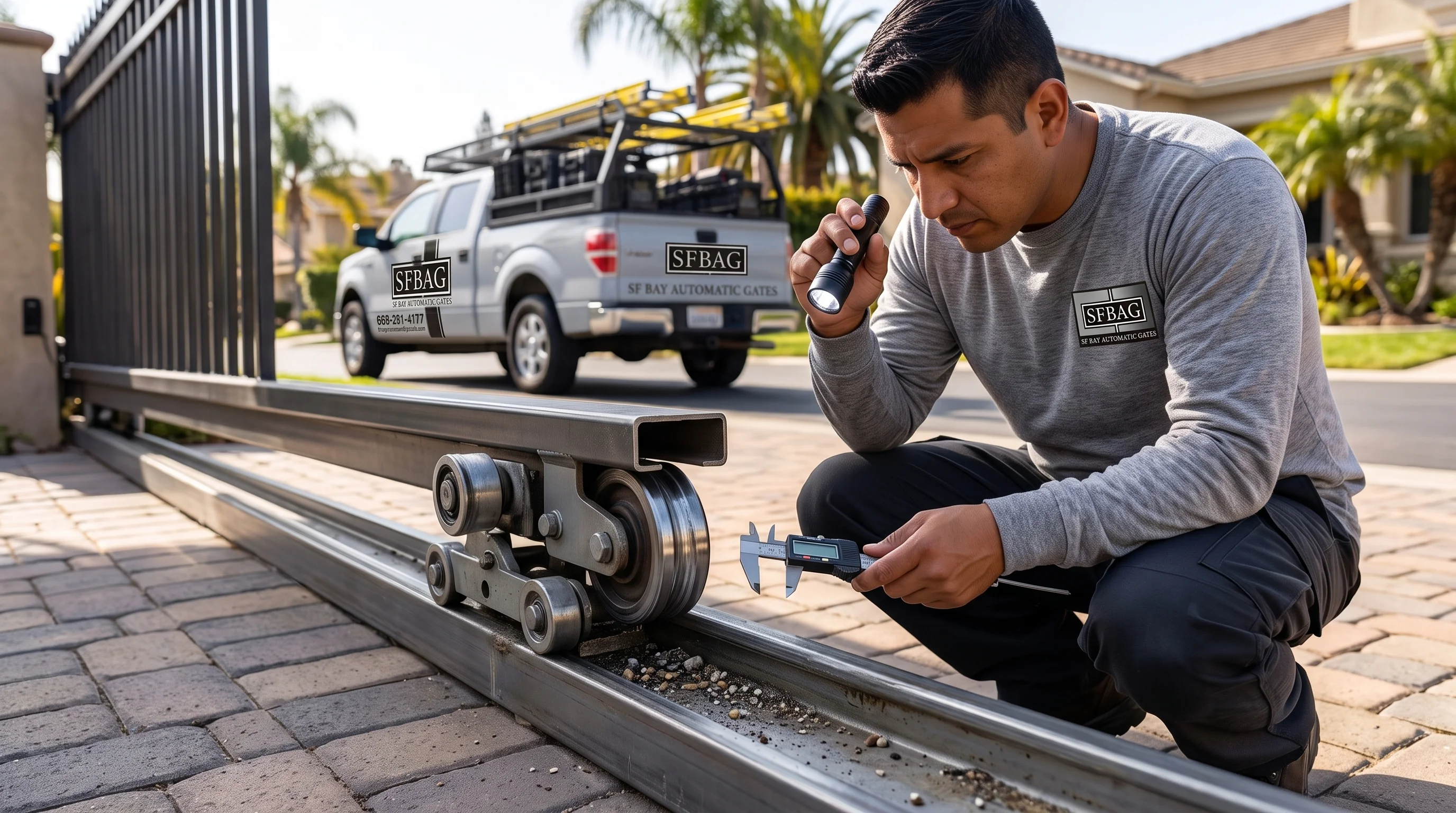
A gate that hesitates for a moment before opening, drifts slightly off its track, or occasionally fails to respond to a remote rarely feels urgent. It still opens. It still closes. Life goes on, and the issue gets filed away as something to look into eventually. That delay is precisely how a small, inexpensive fix quietly turns into a much larger driveway gate repair, and understanding why that progression happens is the clearest way to avoid it. A driveway gate is a mechanical and electrical system working together, and like any such system, small inefficiencies compound rather than stay contained.
Why Minor driveway gate repair Needs Get Ignored
Gates are designed to operate quietly in the background, which is part of why early signs of trouble are so easy to dismiss. A slight delay or an occasional odd noise does not stop the gate from doing its job, so it rarely generates the same sense of urgency as a system that has stopped working entirely. This gradual tolerance for minor issues is exactly what allows small mechanical or electrical faults to build on each other over weeks or months, often without the property owner noticing the pattern until the gate stops functioning altogether.
The Psychology of "It Still Works"
As long as a gate technically performs its function, most property owners mentally file it under "working," even if the process looks noticeably different than it did when the gate was new. A motor that groans slightly, a gate that swings a bit unevenly, or a remote that requires a second press are all treated as quirks rather than warnings. That framing delays action until the issue becomes impossible to ignore, at which point the underlying cause has often had months to worsen.
How One Small Issue Strains the Rest of the System
Gate systems rarely fail because of a single catastrophic event. More often, one small issue places extra strain on a neighboring component, and that strain accelerates wear across parts that were otherwise functioning normally. A track that has drifted slightly out of alignment forces the motor to work harder on every cycle, shortening its lifespan. A hinge that has loosened changes how weight distributes across the gate, which can eventually throw off sensor alignment or cause the gate to bind partway through its swing.
Common Early Signs That Precede a Larger driveway gate repair
Recognizing the early indicators of a developing problem makes it far easier to schedule a straightforward repair before the issue escalates into something more involved. Some signs are subtle enough that property owners across the Bay Area frequently overlook them for weeks before deciding to act.
Mechanical Symptoms Worth Watching
A gate that moves noticeably slower than it used to, hesitates partway through its cycle, or produces a new grinding or scraping sound is signaling that something in the mechanical system needs attention. These symptoms are frequently tied to track misalignment, worn rollers, or debris buildup, all of which are simple to correct when caught early but can damage the motor or track further the longer they go unaddressed.
Electrical and Sensor Irregularities
Electrical issues tend to present as inconsistent behavior rather than a single obvious symptom. A gate might respond reliably to a remote from certain angles but not others, or it might open on command yet fail to close automatically as expected. Safety sensors that intermittently fail to detect an obstruction deserve particularly prompt attention, since these components exist specifically to prevent the gate from closing on a vehicle, pet, or person passing through.
What Happens When Minor Issues Are Left Unaddressed
The cost of ignoring an early warning sign is rarely just financial, though the financial impact tends to be the most visible consequence. A motor working overtime to compensate for a misaligned track will eventually overheat or burn out entirely, turning a simple realignment into a full motor replacement. A sensor that has stopped reading obstructions reliably transforms what was once a convenience feature into a safety liability that could result in property damage or injury.
From Simple Fix to Full System Failure
Left unaddressed long enough, a series of small issues can compound into a gate that stops functioning altogether, whether it gets stuck open, refuses to close, or stops responding to any input at all. At that stage, diagnosing the root cause becomes more complicated, since multiple components may now show wear that started with a single original issue but spread as other parts absorbed the extra strain. Comprehensive driveway gate repair at this stage tends to involve more labor, more component replacement, and considerably more disruption than addressing the same issue would have required months earlier.
Security Consequences of a Delayed Repair
A gate that no longer closes reliably is not simply an inconvenience, it represents a security gap. Properties across San Jose and the wider Bay Area that rely on a gate as a primary access control point lose that protection the moment the gate begins malfunctioning, whether it sticks open intermittently or stops responding to commands altogether. That gap often goes unnoticed until it is tested by an unwanted visitor, at which point the consequences extend well beyond the cost of the repair itself.
How Regional Conditions Accelerate Wear on driveway gate repair Needs
Coastal humidity, seasonal rain, and salt-tinged air near San Francisco and the surrounding bay place additional strain on gate hardware compared to drier inland climates. Metal components corrode faster in this environment, and moisture intrusion into control boards or wiring can cause electrical issues to develop more quickly than they might elsewhere.
Seasonal Patterns in Gate Performance
Many property owners notice gate issues becoming more apparent during or shortly after the rainy season, when moisture exposure peaks and soil movement can subtly shift foundations and posts. Recognizing this pattern makes it easier to anticipate when a gate might need closer attention, rather than being caught off guard by an issue that seems to appear suddenly but was actually building for months.
Comparing the Cost of Early Repair to Delayed Repair
The financial gap between addressing a minor issue promptly and waiting until it develops into a full failure is often larger than property owners expect. A track realignment or sensor recalibration typically involves a single focused visit and a limited scope of work. A motor replacement caused by months of compensating for that same misalignment involves a more extensive process, including diagnostics, part sourcing, and installation, all of which add time and cost that a timely repair would have avoided entirely.
Why Emergency Repairs Cost More Than Scheduled Ones
A gate that fails completely, particularly one that gets stuck in an open position, often needs to be addressed urgently rather than on a convenient schedule, since an inoperable gate leaves a property without its primary access control point. Emergency scheduling tends to be less efficient than a planned appointment, both in terms of availability and the pressure to resolve the issue quickly rather than thoroughly. Property owners who address minor issues on their own timeline, before they become urgent, generally have more flexibility and a more predictable outcome than those responding to a sudden breakdown.
Building a Simple Habit of Periodic Checks
A quick periodic check, testing the remote at different distances, listening for new sounds during operation, and visually inspecting the track for debris or misalignment, takes only a few minutes but can surface developing issues well before they become disruptive. Property owners who build this kind of check into a seasonal routine, rather than waiting for a problem to announce itself, are consistently the ones who avoid the larger, more disruptive repairs that come from months of unnoticed wear.
Making Early Attention a Habit
Treating minor gate irregularities as worth addressing, rather than symptoms to tolerate, tends to save considerable time, effort, and expense over the life of the system. A gate that receives attention at the first sign of a problem generally requires smaller, less invasive fixes than one left to develop compounding issues across multiple components.
Property owners across the Bay Area who stay attentive to subtle changes in how their driveway gate operates, whether a new sound, a slower cycle, or an inconsistent remote response, are in the best position to catch problems while they remain simple and affordable to resolve. Waiting until a gate stops working entirely rarely saves money or effort; it just postpones a repair that was always going to be necessary, while allowing the underlying issue more time to spread into a project far larger than it needed to be.
In the end, the gates that last the longest with the fewest disruptions tend to belong to property owners who treat small irregularities as useful early information rather than background noise to tune out, and that small shift in attention is often all it takes to avoid the larger repair altogether.