
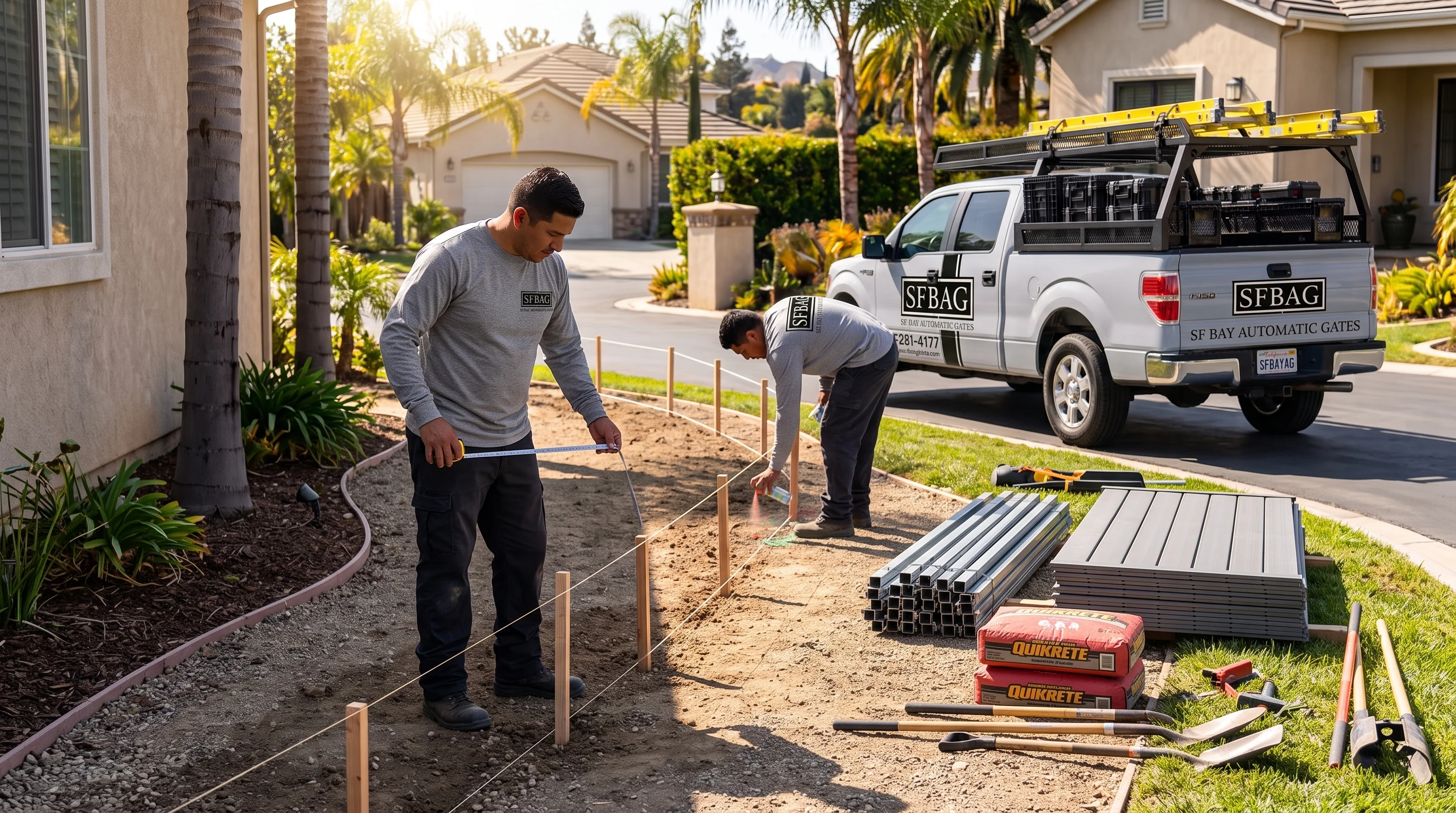
Adding a new fence changes more about a property than most people anticipate before the project begins. Beyond simply marking a boundary, the finished fence affects privacy, security, how the yard is used day to day, and how the entire property looks from the street. Because the decisions made during fence installation are difficult and costly to reverse once construction is complete, taking the time to understand the process thoroughly before committing to a design tends to produce far better long-term results than rushing into the first plan that seems reasonable, and working with an experienced fence contractor from the earliest planning stages makes that process considerably smoother.
Why Planning Matters More Than Most Property Owners Expect
A fence installed without adequate planning often functions acceptably at first but reveals its shortcomings over time, whether through material that was not suited to local conditions, a design that does not actually address the original goal, or a boundary line that turns out to conflict with a neighbor's understanding of the property division. These issues are far easier to avoid during the planning stage than to correct after construction is finished.
Defining the Actual Goal Before Choosing a Style
Fences serve different primary purposes depending on the property, and clarifying that purpose before selecting a style prevents a mismatch between design and function. A fence intended primarily for privacy calls for different height and material choices than one meant mainly to define a boundary or contain pets, and a fence built without this clarity often ends up serving its intended purpose only partially, requiring modification or replacement sooner than a fence designed around a clear goal from the outset.
Common Planning Mistakes That Lead to Regret
Several patterns show up repeatedly among property owners who end up dissatisfied with a finished fence. Choosing a material based purely on initial appearance without considering how it performs in local weather conditions frequently leads to premature wear. Underestimating how tall a fence needs to be for genuine privacy, only to discover the finished height still allows sightlines from neighboring properties, is another common source of regret that could have been avoided with more careful site evaluation upfront.
Understanding Property Lines Before fence installation Begins
Confirming the exact property boundary before construction is one of the most important, and most frequently skipped, steps in the entire process. Building even slightly onto a neighboring property, whether by a few inches or a few feet, can create disputes that are far more difficult and expensive to resolve than the cost of confirming the boundary properly beforehand.
Surveys and Boundary Confirmation
A professional survey provides a definitive record of where a property line actually falls, which is particularly valuable on older properties across San Jose and the surrounding Bay Area where boundary markers may have shifted, been removed, or never been clearly documented in the first place. Relying on assumptions, existing landscaping, or informal agreements with a neighbor instead of a proper survey is one of the more common ways fence projects run into costly complications after construction has already begun.
Setback Requirements and Local Regulations
Beyond the property line itself, local regulations often specify how far a fence must sit from that line, along with height restrictions that can vary depending on whether the fence faces the street, a side yard, or a rear property line. These requirements differ by municipality throughout the Bay Area, which makes verifying local code before finalizing a design essential to avoiding a fence that later needs modification to achieve compliance.
Material Selection for Long-Term Performance
The material chosen for a new fence affects not just its appearance but how well it holds up against the specific climate conditions it will face over the course of its lifespan.
Wood, Vinyl, and Metal Compared
Wood offers a classic, versatile appearance but requires regular sealing or staining to resist moisture damage, particularly given the seasonal rain and humidity common throughout the region. Vinyl resists rot and requires minimal maintenance but can become brittle under prolonged UV exposure over many years. Metal fencing, whether wrought iron or aluminum, provides strength and durability, though iron requires proper coating to prevent rust, especially for properties near San Francisco and the surrounding bay where salt-tinged coastal air accelerates corrosion on unprotected surfaces.
Matching Material to Site-Specific Conditions
Beyond general climate considerations, specific site conditions such as sun exposure, drainage patterns, and proximity to sprinklers or irrigation systems can influence which material will actually perform best in a given location. A fence section that receives constant moisture from a nearby sprinkler head, for example, may age very differently than a section just a few feet away that stays consistently dry, which is why a thorough site walkthrough before finalizing material choices tends to prevent uneven wear patterns later.
What a Thorough fence installation Process Involves
A properly managed installation follows a sequence designed to avoid the kinds of shortcuts that lead to instability or premature wear. This typically begins with the site assessment and boundary confirmation already discussed, followed by careful post placement, foundation work, and only then the actual construction of panels or sections.
Foundation Work and Post Placement
Post depth and foundation quality determine how well a fence resists the soil movement and moisture exposure common throughout the region. Clay-heavy soil found across parts of San Jose expands and contracts with seasonal changes, and posts set without adequate depth or proper concrete footings are considerably more likely to lean or shift within just a few years, undermining the stability of the entire fence line regardless of how well the panels themselves were constructed.
Sequencing and Quality Checks During Construction
Allowing adequate curing time for concrete footings before panels bear weight, checking alignment consistently throughout construction rather than only at the end, and confirming that gate hardware operates smoothly before considering the project complete are all details that separate a fence built to last from one that looks acceptable on installation day but develops problems shortly after.
Working With a fence contractor to Avoid Common Pitfalls
An experienced fence contractor brings more to a project than simply the labor required to put up panels and posts. Their familiarity with local soil conditions, regulatory requirements, and material performance in the specific regional climate often prevents issues that a less experienced approach might not anticipate until they have already become a problem.
Questions Worth Asking Before Construction Begins
Asking how the provider verifies property boundaries, what foundation depth they use for the local soil type, and how they handle communication with neighboring property owners about shared boundary lines all reveal useful information about how thoroughly a project will actually be managed. Property owners across the Bay Area who ask these questions upfront tend to have a much clearer picture of what to expect than those who simply compare finished photos from previous projects.
Setting Realistic Expectations for Timeline and Process
Understanding how long a fence installation typically takes, and what factors can extend that timeline, helps property owners plan around the project rather than being caught off guard by delays. Weather, permitting requirements, and the complexity of the specific site all influence how quickly a project moves from initial planning to a finished, functional fence.
Weather and Seasonal Timing Considerations
Scheduling construction during drier stretches of the year generally produces better results for foundation work, since concrete footings cure more predictably in stable soil conditions than during periods of heavy seasonal rain. Property owners across the Bay Area who plan installation timing around these seasonal patterns tend to experience fewer weather-related delays and a more consistent finished result than those who begin construction during the wettest months of the year.
What to Expect During Each Phase
A well-organized installation typically moves through distinct phases: initial site assessment and boundary confirmation, material selection and permitting, foundation work with adequate curing time, and finally panel installation and quality checks. Understanding this sequence in advance helps property owners recognize that a properly built fence takes longer than a rushed one, and that the additional time invested at each phase is generally what produces a structure capable of performing reliably for decades rather than requiring early correction.
Setting a New Boundary Up for Long-Term Success
A fence built with careful attention to planning, boundary confirmation, material selection, and construction sequencing tends to perform reliably for decades, requiring only routine maintenance rather than early and repeated correction. Skipping any of these steps in the interest of a faster or simpler process often creates problems that surface only after construction is finished, when addressing them becomes considerably more disruptive and costly than it would have been to get right from the start.
Property owners across the Bay Area preparing to build a new boundary are well served by treating fence installation as a project that deserves the same careful planning as any other significant property improvement. Partnering with a qualified fence contractor early in the process, rather than only once a design has already been chosen, tends to be the clearest path toward a fence that meets its intended purpose and continues to do so for years to come.