
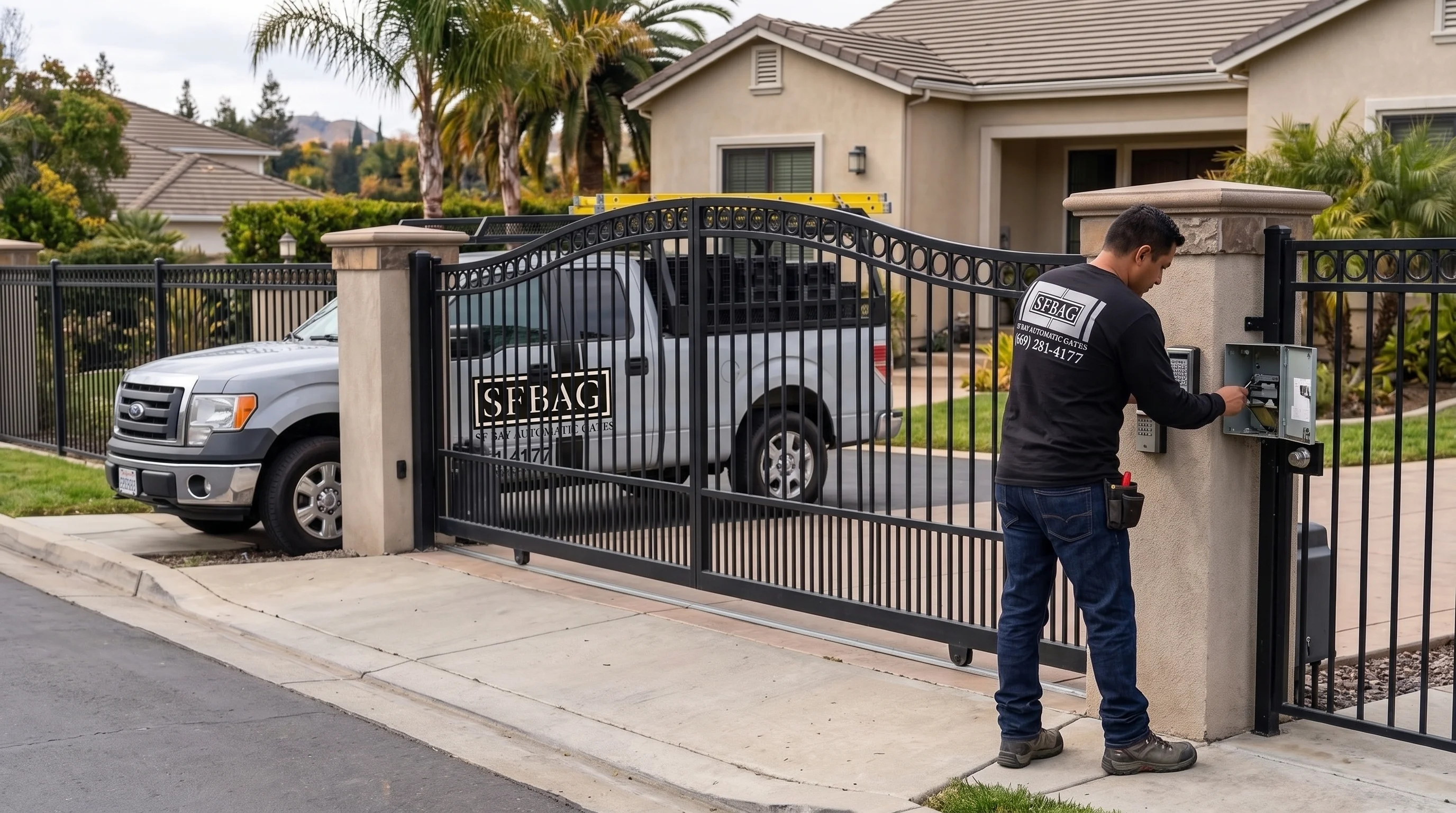
A beautiful entrance can raise the perceived value of a home in an instant, and that is often the first reason homeowners consider a gate. The real value of a well-planned driveway gate, however, lies in what it does after the first impression fades. Automatic gates for driveway security control who enters a property, when they enter, and how easily they can leave with something that does not belong to them. Across the Bay Area, where package theft, vehicle break-ins, and privacy concerns are common topics among homeowners, understanding the security benefits, and the limits, of an automated entrance helps set realistic expectations.
Security is not a single feature but a set of layers, and an automatic gate can strengthen several of them at once when it is designed with that goal in mind. The sections below explain what these gates can realistically offer and how to make sure the security benefits are more than skin deep.
How Automatic Gates for Driveway Security Change the Equation
The most basic security benefit is deterrence. A closed, automated entrance signals that a property is protected and monitored, and many opportunistic intruders simply move on to easier targets. Unlike a manual gate that is often left open for convenience, an automated gate closes behind every vehicle and can be set to close automatically after a short delay, so the perimeter remains secure even when residents are in a hurry or distracted.
Controlled access adds another layer. Instead of an open driveway that anyone can walk or drive into, entry requires a remote, a code, a credential, or approval from someone inside the home. Visitors announce themselves through an intercom, delivery drivers can be granted access only when expected, and service providers can receive codes that work on specific days or hours. This control reduces the number of people who can reach the front door, garage, and parked vehicles without permission.
Protecting Vehicles, Packages, and Outdoor Property
Driveways often hold valuable items in plain view: parked cars, bicycles, tools, and deliveries waiting at the door. An automated gate places a physical barrier between those items and the street, making theft slower, more visible, and more difficult. Package theft in particular drops when deliveries are placed inside a gated area, and vehicles parked behind a closed gate are less exposed to break-ins and tampering. For homes without a garage or with more cars than garage space, this protection is especially valuable.
Integrating Access Control and Monitoring
Modern access control turns the gate into part of a broader security system. Video intercoms allow residents to see and speak with visitors from a smartphone, even when away from home, and decide whether to open the gate. Keypads with individual codes make it possible to track which code was used and to delete a code when it is no longer needed. Some systems keep activity logs that record each opening, providing a useful record if something goes wrong or a question arises later.
Cameras positioned at the entrance add visibility and evidence. A camera covering the gate, the approach, and vehicle license plates provides a clear record of who arrives and leaves. Lighting that activates at night improves both camera footage and the sense of security for residents arriving after dark. When the gate, cameras, lighting, and alarm system work together, each one strengthens the others and the property becomes a far less attractive target.
Anti-Tamper Design and Hardware
A security gate must resist tampering as well as casual entry. Operators and control boxes should be mounted on the protected side of the gate or housed in locked, sturdy enclosures. Manual releases should require a key so they cannot be used from the street to disengage the operator. Hinges should be protected against removal, and gate leaves should be secured with locks that resist being pried or pushed apart. Designs without horizontal rails on the street side remove easy footholds for climbing, and the gate should be as tall as local rules allow and as tall as the adjoining fence.
Closing the Gaps Around the Gate
A gate is only as secure as the perimeter around it. If a fence is low, damaged, or missing along part of the property, the gate can simply be bypassed. Gaps beneath the gate, beside posts, or between leaves should be tight enough to prevent crawling through. Pedestrian gates need the same attention as the main entrance, with self-closing hinges and secure locks. Evaluating the entire frontage ensures the gate is part of a continuous barrier rather than a decoration standing alone.
Balancing Security With Safe Exit
Security features must never prevent safe exit. Residents need a reliable way to open the gate from inside, including during power outages, and emergency responders need a way to enter. Vehicle exit sensors, battery backup, an accessible manual release for residents, and fire department access devices keep the property secure without creating hazards for the people who live there. Each of these should be tested at installation and again during routine maintenance visits.
Security Considerations for Different Property Types
The right approach varies by setting. Suburban homes near busy streets benefit from fast-operating gates that minimize the time the entrance stands open. Rural and semi-rural properties, like many on the larger lots surrounding Livermore and the Tri-Valley, often have long driveways, outbuildings, and equipment that make controlled access especially valuable, along with distances that make automation essential. Hillside homes may need gates designed for slopes, while urban properties may need compact sliding designs and careful attention to pedestrian traffic. Tailoring the system to the property ensures the security benefits are real.
Reliability Is Part of Security
A gate that frequently malfunctions, stays open after a power outage, or fails to latch provides little protection. Correctly sized operators, well-built frames, properly set footings, and regular maintenance keep the gate closing and locking reliably. Battery backup ensures the gate continues to work during outages, and routine service catches issues such as worn hinges or misaligned sensors before they compromise security. In practical terms, the most secure gate is the one that works correctly every single time.
Managing Credentials Over Time
Security also depends on how access is managed after installation. Remotes get lost, codes get shared, and household staff or contractors change over the years. Systems that allow individual codes and remotes to be added or removed without reprogramming everything make it easy to keep access current. Reviewing who has access every few months, removing codes that are no longer needed, and using temporary codes for short-term visitors keep the gate's protection from eroding quietly over time.
Protecting the Gate From Vehicle Impact
The gate itself can become a target, whether from a deliberate attempt to force it open or an accidental bump from a delivery truck. Reinforced posts, sturdy frames, and protective bollards placed near operators and control boxes reduce the chance that a single impact disables the system. Positioning equipment out of the vehicle path and choosing operators with secure mounting brackets further limits damage. A gate that can absorb minor contact and keep working protects the property far better than one that is knocked out of service by the first collision.
Security for Homes With Frequent Visitors
Homes that host regular visitors, such as caregivers, tutors, cleaners, or extended family, need access control that is flexible without being loose. Individual codes for each regular visitor, scheduled access windows, and video intercom screening for everyone else keep the entrance controlled while avoiding the temptation to leave the gate open during busy days. Activity logs make it easy to confirm who arrived and when, which is especially helpful for households managing several service providers at once.
What an Automatic Gate Cannot Do Alone
An automatic gate is a strong deterrent and a valuable layer of protection, but it is not a complete security plan on its own. Determined intruders may still attempt to climb fences or enter on foot, which is why gates work best alongside lighting, cameras, alarm systems, sturdy doors and locks, and good neighborhood awareness. Viewing the gate as one part of a layered approach leads to better decisions about features and integration, and it sets expectations that the system can actually meet.
Investing in Security That Goes Beyond Appearance
Automatic gates for driveway security offer far more than curb appeal when they are designed and installed with protection in mind. Controlled access, monitoring integration, anti-tamper hardware, a continuous perimeter, and reliable operation combine to make a property harder to target and easier to manage. Homeowners across San Jose, San Francisco, and the wider Bay Area who plan their entrances this way gain both peace of mind and practical everyday benefits.
The strongest results come from treating the entrance as a security project from the first conversation, with materials, hardware, access control, and placement all chosen to protect the property rather than simply decorate it. For homeowners ready to strengthen their property's first line of defense, a consultation with specialists who design and automate every style of driveway gate is the best way to build an entrance that looks impressive and protects just as well.