
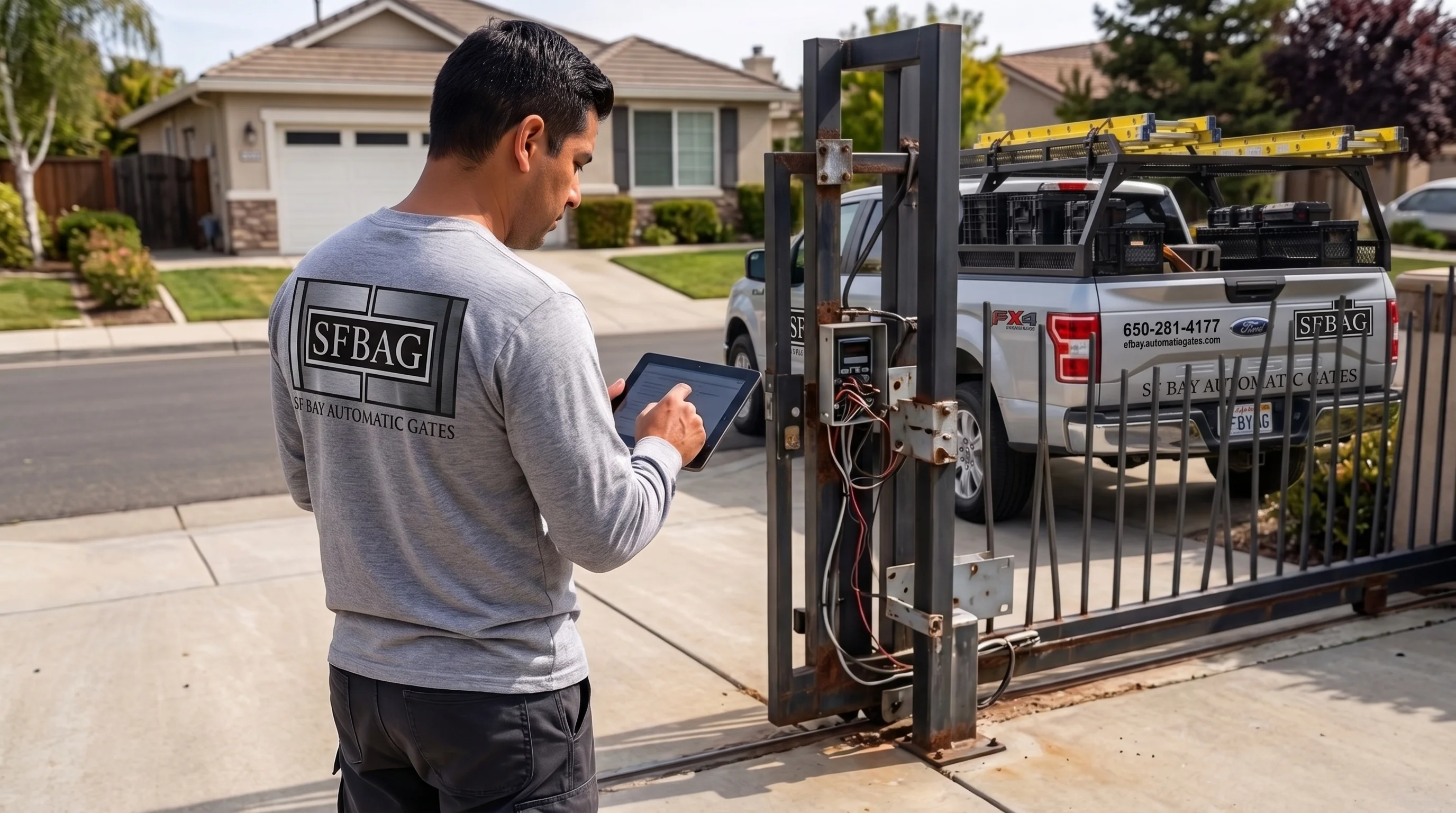
Selecting who handles a gate project often gets treated as a secondary decision, something to sort out quickly once the design and material choices have already been made. In practice, the choice of an automatic gate company bay área property owners work with tends to matter more than any single design detail, since construction quality, communication, and long-term support all depend on who is actually doing the work. A well-designed gate installed poorly rarely performs the way it was intended to, which is why understanding how to evaluate an automatic gate installation provider deserves as much attention as the gate itself.
Why the automatic gate company bay área Decision Carries So Much Weight
Two gates can look nearly identical on paper, using the same materials and the same general design, and still perform very differently within a few years. The difference usually comes down to execution: how the foundation was set, how carefully the automation was calibrated, and how thoroughly the finished system was tested before being handed over. These are all decisions made by the people doing the installation, not by the property owner selecting a style from a catalog, which is exactly why the provider matters as much as the product.
The Hidden Cost of Choosing Based on Speed Alone
A provider willing to complete a project faster than others is not automatically a red flag, but speed achieved by skipping steps, such as rushing foundation curing time or shortcutting site assessment, tends to show up later as instability, misalignment, or premature automation failure. Repairing these issues after the fact almost always costs more in time and disruption than the value gained from a faster initial timeline, and in many cases the property owner ends up paying for corrective work that a more thorough process would have avoided entirely.
Warning Signs During the Selection Process
A few patterns tend to appear consistently among providers whose work leads to problems down the line. Vague answers about foundation depth, automation weight ratings, or material specifications often indicate a process that has not been standardized or carefully documented. Reluctance to provide references, examples of completed work, or written scope details is another signal worth taking seriously, since a provider confident in their own process is typically willing to be specific about how that process works.
What a Reliable automatic gate company bay área Approach Looks Like
Providers that consistently deliver gates with long lifespans tend to share a similar set of practices, regardless of the specific materials or design style involved. These practices usually start well before construction and continue through testing after installation is complete, and they generally reflect a broader philosophy toward automatic gate installation as a structural project rather than a quick add-on to an existing property.
Thorough Site Assessment Before Any Work Begins
A proper evaluation accounts for soil composition, slope, drainage, and how the gate will actually be used on a daily basis, factors that are especially relevant across San Jose and the broader Bay Area, where sloped lots and seasonal rain place real demands on foundation work. Providers that skip or rush this step are more likely to encounter alignment or stability issues later, since decisions made without this information often need to be corrected after the fact rather than getting things right from the start.
Transparent Communication About Materials and Timelines
Clear communication about what materials will be used, how long curing and installation will take, and what the automation system is rated to handle gives property owners a realistic picture of what to expect. Providers that explain these details clearly, rather than offering only general assurances, tend to be the same ones whose finished projects hold up well over time, since transparency during planning usually reflects a genuinely organized construction process.
Questions That Reveal the Difference Between Providers
A handful of direct questions during the selection process tend to surface more useful information than comparing finished photos or general reputation alone. Asking how foundation depth is determined for a specific site, what warranty coverage applies to structural components versus automation hardware, and how long the provider has worked specifically with automated gate systems, rather than general fencing or construction, all help separate providers with a genuinely specialized process from those treating gate work as a secondary service.
Evaluating Past Work and Longevity
Photos of a freshly completed gate reveal very little about how that gate will perform after several years of exposure to weather and daily use. Asking about projects completed multiple years earlier, and how those gates have held up, offers a far more useful indicator of construction quality than recent work alone. Providers confident in their long-term results are typically willing to discuss older projects openly, since consistent performance over time is the clearest evidence that foundation work, material selection, and automation sizing were handled correctly from the start.
Communication Habits That Signal a Trustworthy Process
The way a provider communicates during the planning and construction phases often reveals as much about their process as any technical detail. Providers who explain the reasoning behind their recommendations, rather than simply stating what will be done, tend to have a more thoughtful and consistent approach to each project. This willingness to explain the "why" behind foundation depth, material selection, or automation sizing usually reflects genuine expertise rather than a rehearsed sales script.
Written Scope and Documentation Practices
A detailed written scope of work, outlining materials, timelines, and what is included in warranty coverage, protects both the provider and the property owner from misunderstandings later in the project. Providers who document these details clearly before work begins are generally the same ones who follow through consistently during construction, since thorough documentation tends to reflect an organized and repeatable process rather than one improvised on a project-by-project basis. Property owners who receive vague or incomplete scope documents before construction starts often find that the same lack of clarity carries through into the finished work itself.
How Location-Specific Experience Affects automatic gate installation Outcomes
Providers familiar with the specific soil, climate, and regulatory conditions across San Jose and the surrounding Bay Area bring practical knowledge that generic experience elsewhere cannot fully replace. Local familiarity affects decisions ranging from foundation depth in clay-heavy soil to material finishes suited for coastal humidity, and providers without this regional experience sometimes apply standard approaches that do not account for conditions specific to the area.
Permitting and Local Code Familiarity
Automated gates are often subject to local building and safety codes, covering everything from setback requirements to safety sensor specifications. A provider familiar with these requirements across the Bay Area can navigate permitting more efficiently and is less likely to install a system that later requires modification to meet code. This familiarity also reduces the chances of delays caused by permit rejections or required corrections partway through a project, both of which can extend a timeline well beyond what was originally planned and add unnecessary friction to what should be a straightforward process.
Providers without local permitting experience sometimes underestimate how long approval will take or overlook a requirement specific to a municipality within the Bay Area, which can leave a property owner managing corrections after installation has already begun. Working with a provider who handles this step routinely, rather than occasionally, generally means fewer surprises once construction is underway and a smoother path from initial design to a finished, code-compliant gate.
Making a Decision That Holds Up Over Time
Choosing a provider based solely on the lowest bid or the fastest available timeline often leads to a gate that requires early and repeated attention, undermining much of the value the installation was meant to provide in the first place. A more reliable approach involves comparing how thoroughly each provider evaluates a site, how transparent they are about materials and process, and how their previous projects have actually performed over several years rather than just months.
Property owners across the Bay Area weighing their options benefit from treating this decision with the same seriousness as the construction itself, since even well-designed automatic gate installation plans can fall short when execution does not match the design. Taking the time to ask specific questions, review past work, and understand each provider's actual process is generally what separates a gate that performs reliably for decades from one that requires costly correction within just a few years.
In the end, the strength of a finished gate depends far less on the initial pitch or proposal and far more on the discipline applied throughout construction, from foundation depth to final testing. A property owner who prioritizes that discipline during the selection process is far more likely to end up with an entrance that continues performing exactly as intended, year after year, without the recurring costs that come from cutting corners early on.