
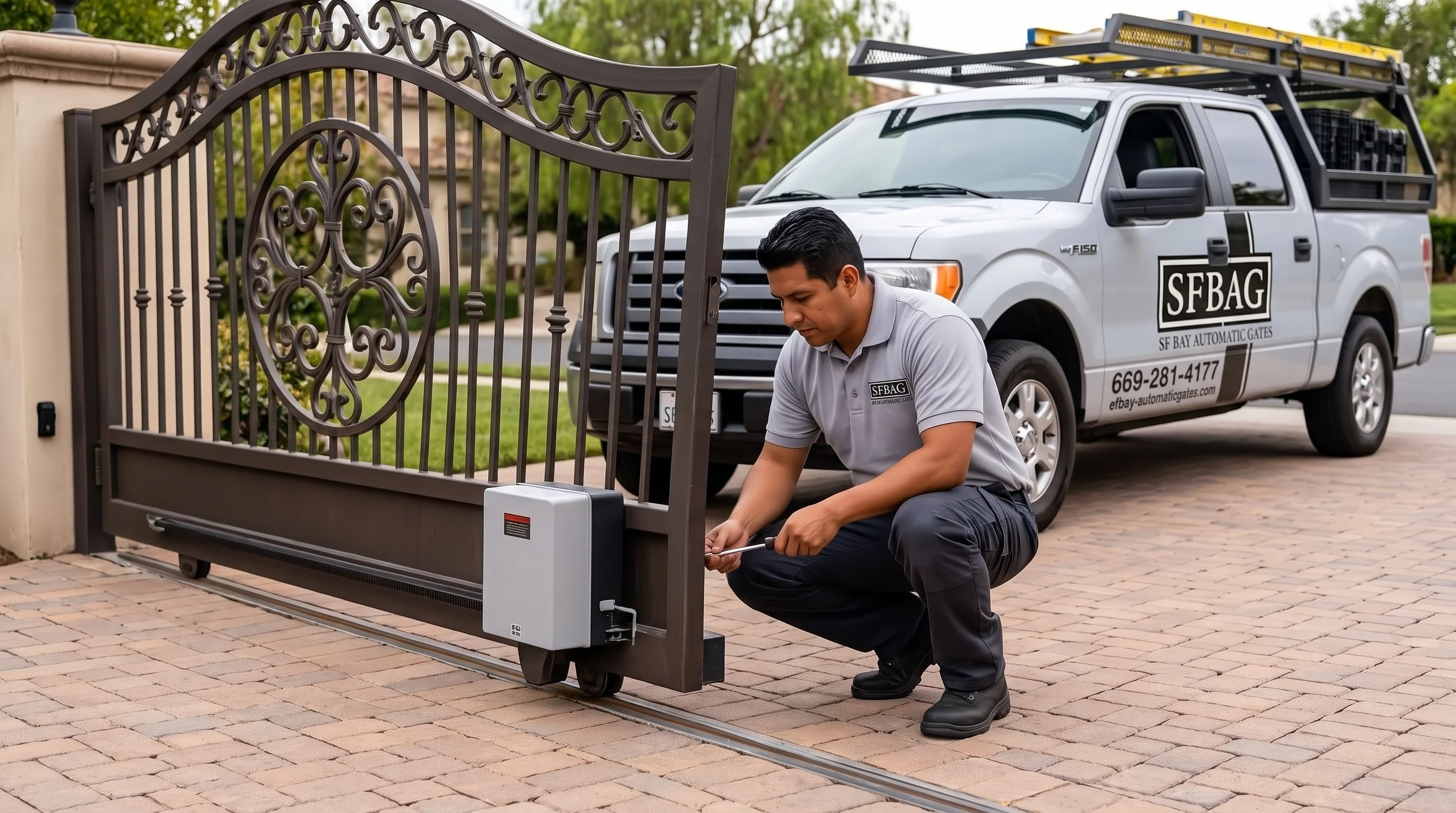
Gates seem to pick the worst possible moments to fail. The driveway gate refuses to open on the morning of an important meeting, the side gate sticks halfway open late at night, or the commercial entry locks down just as deliveries arrive. In a city as busy and spread out as San Jose, those failures disrupt schedules, create security gaps, and sometimes leave vehicles trapped inside. Knowing what typically causes these sudden problems, what to do in the moment, and when to call for automatic gate repair helps property owners respond calmly and get the gate working again with minimal disruption.
Most sudden failures have warning signs that were easy to overlook, but some truly happen without notice, such as power outages, vehicle impacts, or storm damage. In either case, fast and accurate gate repair in San Jose is what restores security and access, and a little preparation beforehand makes those moments much less stressful.
Gate Repair San Jose: Why Gates Fail at Inconvenient Moments
Gates tend to fail at busy times because busy times are when they work hardest. Morning and evening rush periods put the most cycles on an operator, and components that are already weakened by wear, heat, or poor alignment often give out under that extra demand. A battery that barely handled overnight use may not have enough charge for the morning departure. A motor that has been overheating on hot afternoons may finally trip its thermal protection during the evening return. What looks like a sudden failure is often the final step in a gradual decline.
Other failures are truly unexpected. Power interruptions, surges from storms, a vehicle clipping the gate or post, or damage to wiring during landscaping work can stop a gate instantly. These events cannot always be prevented, but understanding how to secure the property and operate the gate manually in the meantime greatly reduces their impact.
Power Outages and Manual Release
Many automated gates include battery backup systems designed to keep them operating during outages, but batteries that have not been tested or replaced may not provide enough power when they are needed. When the gate has no power at all, most operators include a manual release that allows the gate to be moved by hand. Knowing where the release is located and how it works is valuable for every household or business with an automated gate.
Using the Manual Release Safely
Manual releases vary by operator type, and some require a key or a special tool. Before releasing the gate, it is important to make sure the power is off and no one is in the gate's path, since a gate on a slope or in the wind can move unexpectedly once disengaged. After the gate is moved, it should be secured in position until service is complete, and the operator should be re-engaged only according to the manufacturer's instructions or by a technician.
When Not to Force the Gate
If the gate does not move easily after release, forcing it can bend the frame, damage the operator arm, or pull hinges and rollers out of alignment. Resistance at that stage usually signals a mechanical problem that needs professional attention rather than more effort. It is safer to leave the gate where it is, secure the property by other means if necessary, and wait for a technician who can identify whether a roller has seized, a hinge has failed, or the frame itself has shifted.
Vehicle Impacts and Sudden Damage
Collisions are among the most common causes of sudden gate failure, especially at commercial properties and shared driveways. Even a minor impact can bend a frame, knock a post out of plumb, break an operator arm, or damage a track. A gate that has been hit should be inspected before it is operated again, since damaged components can fail under load and create safety hazards for anyone nearby.
Common Problems Behind Gate Repair in San Jose
Beyond emergencies, most service calls involve a familiar set of issues. Worn batteries and failing capacitors cause slow or incomplete operation, while control boards damaged by heat or power surges lead to erratic behavior. Misaligned or dirty photo eyes stop gates from closing, and remotes or keypads with weak batteries or wiring problems fail to send commands. On the mechanical side, sagging swing gates, worn rollers on sliding gates, and bent tracks create resistance that strains operators until they fail.
The city's variety of properties shapes how these problems appear. Hillside estates in Almaden Valley and Evergreen often have heavy gates on sloped driveways, which put extra load on hinges and operators. Older homes in Willow Glen and the Rose Garden may have gates that were automated long after they were built, sometimes with operators that are undersized for the gate. Multifamily buildings and business parks across San Jose see heavy daily traffic that accelerates wear. Technicians familiar with these settings can often identify likely causes quickly because they have seen similar patterns many times.
Heat, Soil, and Seasonal Effects
Summer heat in the South Bay can push operators and control boards past their limits, especially when gates sit in direct sun and cycle frequently. Winter rain allows moisture to reach connections and electronics, and expansive clay soils swell and shrink with the seasons, gradually shifting posts and changing gate alignment. Gates that work perfectly in one season may develop problems in the next, which is why periodic adjustments help keep them reliable year-round. A gate that begins to drag after the first heavy rains, or one that starts tripping its motor protection during the first hot week of summer, is often showing the effects of these seasonal changes rather than a random failure, and a timely adjustment can prevent the problem from turning into a breakdown during the busiest part of the day.
What to Do Immediately When a Gate Fails
The first priority is safety. Keep people and vehicles away from the gate until its condition is clear, especially if it has been damaged or is moving unpredictably. Check for obvious causes such as a tripped breaker, a power outage, a remote with a dead battery, or an object blocking a sensor. If the gate is stuck open and the property needs to be secured, consider temporary measures, such as using the manual release to close it if it moves freely, while waiting for service.
When calling for service, describing what happened before the failure helps technicians diagnose the problem quickly. Noting any unusual sounds, slow movement, error lights on the control board, recent storms, or impacts gives valuable clues. Photos of the gate, the operator, and any visible damage can also be helpful. This information allows the technician to arrive prepared with the right parts and tools.
Choosing Gate Repair San Jose Property Owners Can Rely On
Not every service provider has the same skills. Reliable repair requires knowledge of electrical systems, gate operators, access control, safety devices, and metal fabrication, since many problems involve more than one of these areas. A qualified team should be licensed, insured, and experienced with a wide range of operator types and gate styles. Clear explanations of the diagnosis and repair options, along with transparent recommendations, build confidence that the right work is being done.
Local presence matters as well. A service provider based in the South Bay can respond more quickly and is familiar with the conditions, property types, and neighborhoods that shape gate performance in the area. Responsiveness is especially important when a gate failure leaves a property unsecured or blocks access for residents, employees, or customers.
Commercial and Multifamily Gates
Gates at apartment complexes, office parks, warehouses, and retail centers face a different level of demand than most residential gates. They may cycle hundreds of times a day, serve dozens of users with different access credentials, and protect vehicles, inventory, and equipment. When one of these gates fails, the impact spreads quickly, from tenants who cannot leave for work to delivery trucks idling at the entrance. Repairs in these settings often involve more than fixing the immediate fault. Technicians may recommend high-cycle operators, heavier hinges or rollers, protective bollards near posts, and access control upgrades that make it easier to manage users. Property managers benefit from keeping a service history for each gate, since patterns in that record often reveal which components are wearing fastest and should be replaced on a schedule rather than after a breakdown.
Preventing the Next Emergency With Maintenance
Many sudden failures can be avoided with routine maintenance. Scheduled inspections allow technicians to test batteries, check force and limit settings, lubricate moving parts, clean and align sensors, and tighten hardware before problems develop. They also provide an opportunity to identify components nearing the end of their service life so they can be replaced on a planned schedule rather than during an emergency. For properties throughout the Bay Area, a maintenance routine tailored to how often the gate is used and the conditions it faces is one of the best investments in reliability.
Gates will occasionally fail, but preparation and prompt service keep those moments brief and manageable. Knowing how to respond, recognizing early warning signs, and working with a knowledgeable team all help keep San Jose properties secure and accessible. When a gate starts acting up, arranging professional automatic gate repair quickly is the most effective way to restore dependable operation and prevent the next inconvenient surprise.