
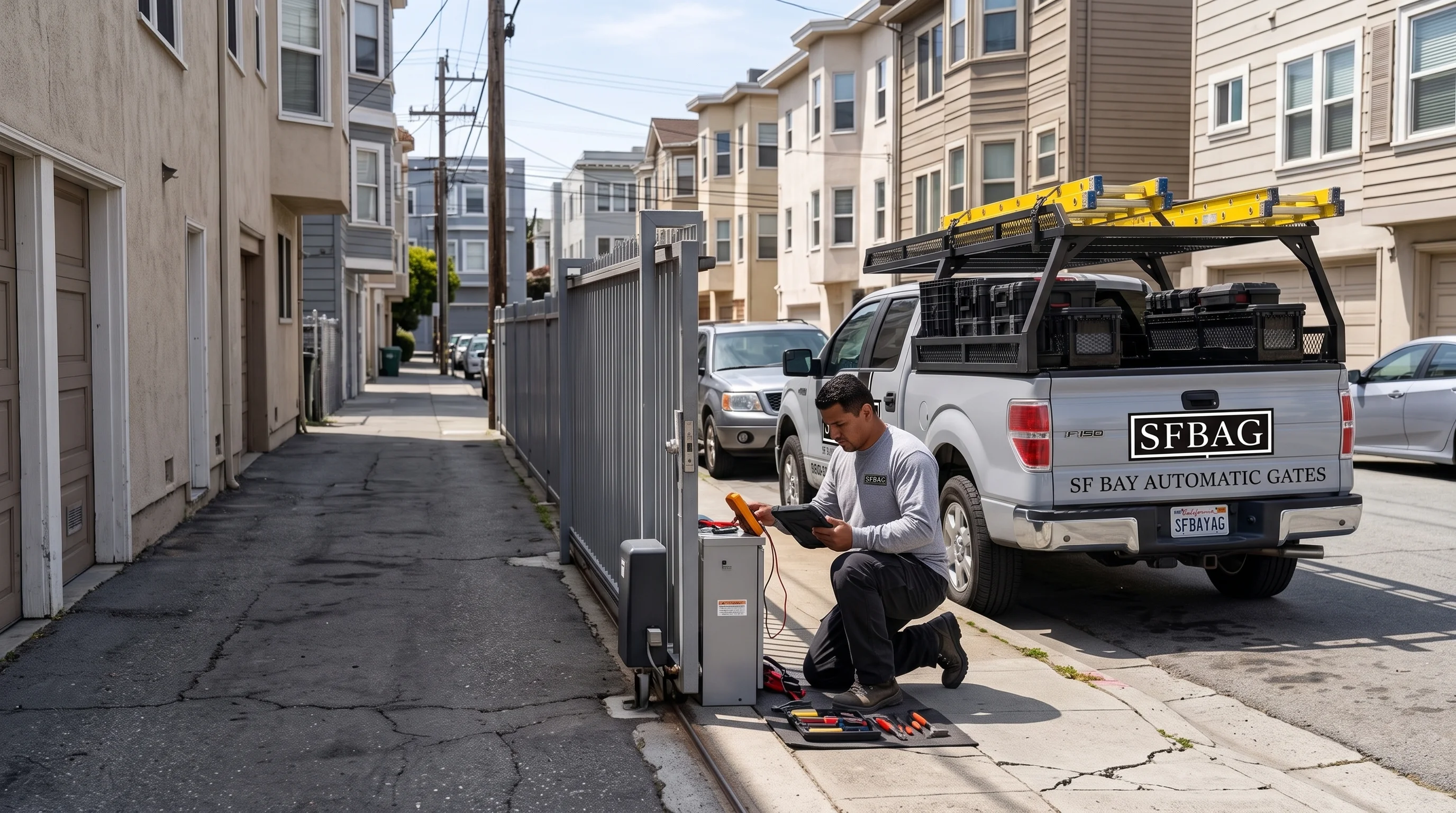
Properties throughout San Francisco deal with a combination of conditions that few other regions face at the same intensity: dense fog rolling in most mornings, salt-heavy air drifting off the bay, and driveways built on some of the steepest and most varied terrain found anywhere in the state. All of that adds up to gate systems that work harder than they might elsewhere, which is exactly why understanding automatic gate repair in this specific environment matters more than applying a generic troubleshooting checklist built for a milder climate.
Why automatic gate repair san francisco Needs Differ From Other Regions
A gate installed and maintained the same way regardless of location will typically wear differently depending on where it sits. San Francisco's marine layer keeps humidity elevated for much of the year, and that persistent moisture accelerates corrosion on exposed metal components far faster than a drier inland climate would. Combined with the salt content carried in coastal air, hardware that might last a decade elsewhere can show significant wear within just a few years if it was not built or finished with this environment specifically in mind, which is why treating every gate system as functionally identical regardless of where it is installed rarely produces the best long-term outcome.
The Combined Effect of Fog, Salt Air, and Steep Grades
Few cities combine persistent fog, salt exposure, and dramatic elevation changes within individual neighborhoods the way San Francisco does. A driveway gate on a steep grade experiences uneven mechanical stress with every open and close cycle, since gravity affects a sloped gate differently than one operating on level ground. Add in moisture that never fully clears for much of the year, and the result is a set of wear patterns that simply do not show up the same way in flatter, drier parts of the Bay Area.
Corrosion Patterns Unique to Coastal Properties
Corrosion on a gate exposed to San Francisco's climate tends to concentrate at welds, fasteners, and any point where two metal surfaces meet, since moisture collects and lingers in these small gaps longer than it does on flat, exposed surfaces. Left unaddressed, this localized corrosion can weaken structural joints well before the rest of the gate shows visible signs of aging, which is part of why a surface-level inspection sometimes misses the areas most in need of attention.
Common automatic gate repair san francisco Issues Property Owners Report
Certain problems come up with noticeably more frequency in San Francisco than in other parts of the region, largely due to the specific combination of climate and terrain described above.
Motor Strain From Steep Driveway Grades
Motors sized correctly for a flat driveway can struggle when installed on a steep incline without adjustments to account for the added gravitational load. Over time, this added strain shows up as slower operation, unusual noise during the open or close cycle, or a motor that runs hotter than expected. Left unaddressed, this kind of chronic overwork tends to shorten a motor's functional lifespan considerably compared to one operating on level terrain.
Sensor Reliability in Persistent Fog
Photoelectric safety sensors, which detect obstructions in a gate's path, can occasionally be affected by heavy fog or condensation building up on their lenses, leading to inconsistent detection performance during the foggiest parts of the year. While modern sensors are generally designed to handle typical moisture exposure, prolonged condensation buildup without regular cleaning can still degrade performance over time, making this a detail worth checking during any inspection of a gate system in this climate.
Wiring and Control Board Vulnerabilities
Control boards and exposed wiring are particularly vulnerable to the sustained humidity found throughout San Francisco, especially when housings were not sealed or positioned with adequate protection from moisture intrusion. A control board exposed to persistent dampness can develop connection issues gradually, sometimes producing intermittent, hard-to-diagnose symptoms before failing more completely.
What a Proper automatic gate repair Process Involves in This Climate
Diagnosing gate issues in San Francisco's specific conditions requires attention to details that might be lower priority in a drier, flatter setting. A thorough process typically starts by evaluating not just the gate's current symptoms but also how its components have likely been affected by the property's specific exposure to fog, salt air, and grade.
Diagnostic Priorities for Coastal and Hillside Properties
Technicians familiar with San Francisco's conditions typically prioritize checking for corrosion at welds and fasteners, testing motor performance under actual load rather than just visually inspecting it, and confirming that sensor lenses are clean and properly calibrated. This climate-specific approach to diagnosis often catches issues that a generic inspection checklist, built without local conditions in mind, would miss entirely.
Repair Materials Suited to the Local Environment
Repairs performed in this environment benefit from materials specifically chosen for corrosion resistance, such as stainless steel hardware or components with marine-grade coatings, rather than standard parts that might be adequate in a less demanding climate. Using climate-appropriate materials during automatic gate repair work tends to extend the interval before the same issue resurfaces, compared to a repair that addresses the immediate symptom without accounting for the conditions that caused it.
Preventive Steps for San Francisco Gate Owners
Given how much the local climate accelerates certain types of wear, preventive attention tends to pay off more noticeably here than it might in a milder environment. A few consistent habits can meaningfully extend the interval between repairs and catch developing issues before they become disruptive.
Seasonal Inspection Timing
Scheduling an inspection heading into the foggiest months, typically late spring through early fall in much of the city, allows any sensor or corrosion issues to be addressed before they are put under sustained stress by the season's conditions. Property owners who follow this kind of seasonal rhythm tend to catch problems while they remain minor, rather than discovering them only after they have already progressed.
Protective Measures for Exposed Hardware
Simple steps, such as periodically cleaning salt residue from exposed metal surfaces and confirming that control board housings remain properly sealed, can meaningfully slow the corrosion process that this climate accelerates. These measures do not eliminate the need for professional attention entirely, but they do reduce how often more involved repairs become necessary.
Why Delaying Repairs Costs More in This Climate
The relationship between delayed repairs and rising costs is more pronounced in San Francisco than in drier regions, largely because corrosion and moisture-related damage tend to progress faster once they take hold. A fastener showing early surface rust can often be replaced quickly and inexpensively, but the same fastener left untreated for another season may weaken enough to compromise a structural joint, turning a minor part swap into a more involved repair involving the surrounding frame.
Comparing Standard Repairs to Climate-Adapted Repairs
A repair that uses standard, non-corrosion-resistant hardware in this environment often needs to be revisited sooner than one that accounts for local conditions from the outset. While climate-adapted materials may involve a marginally different scope of work upfront, they typically reduce how frequently the same issue resurfaces, which tends to make them the more practical choice for gates that will continue facing the same fog and salt exposure year after year. Property owners who have dealt with repeat repairs on the same component often find that switching to more resistant materials during a subsequent repair finally resolves the underlying pattern, saving them from cycling through the same fix on a recurring basis every year or two.
Keeping a Gate Reliable in San Francisco's Unique Conditions
Gates operating in San Francisco face a combination of environmental stressors that few other locations encounter at the same time, which means both diagnosis and repair benefit from an approach tailored specifically to those conditions rather than a generic process applied regardless of location. Recognizing early signs of corrosion, motor strain, or sensor irregularity, and addressing them with an understanding of what caused them locally, tends to produce more durable results than treating every gate the same way.
Property owners throughout San Francisco and the surrounding Bay Area dealing with a gate that has started acting up are generally well served by seeking automatic gate repair support that accounts for the specific demands of the local environment, since a repair built around these conditions tends to hold up considerably longer than one that overlooks them.
A gate maintained with San Francisco's fog, salt air, and hillside terrain in mind will consistently outperform one treated as though it sits in a milder, flatter setting, and that distinction is often what separates a system that runs smoothly for years from one that keeps generating the same repeat issues season after season, regardless of how many times individual symptoms get addressed along the way.