
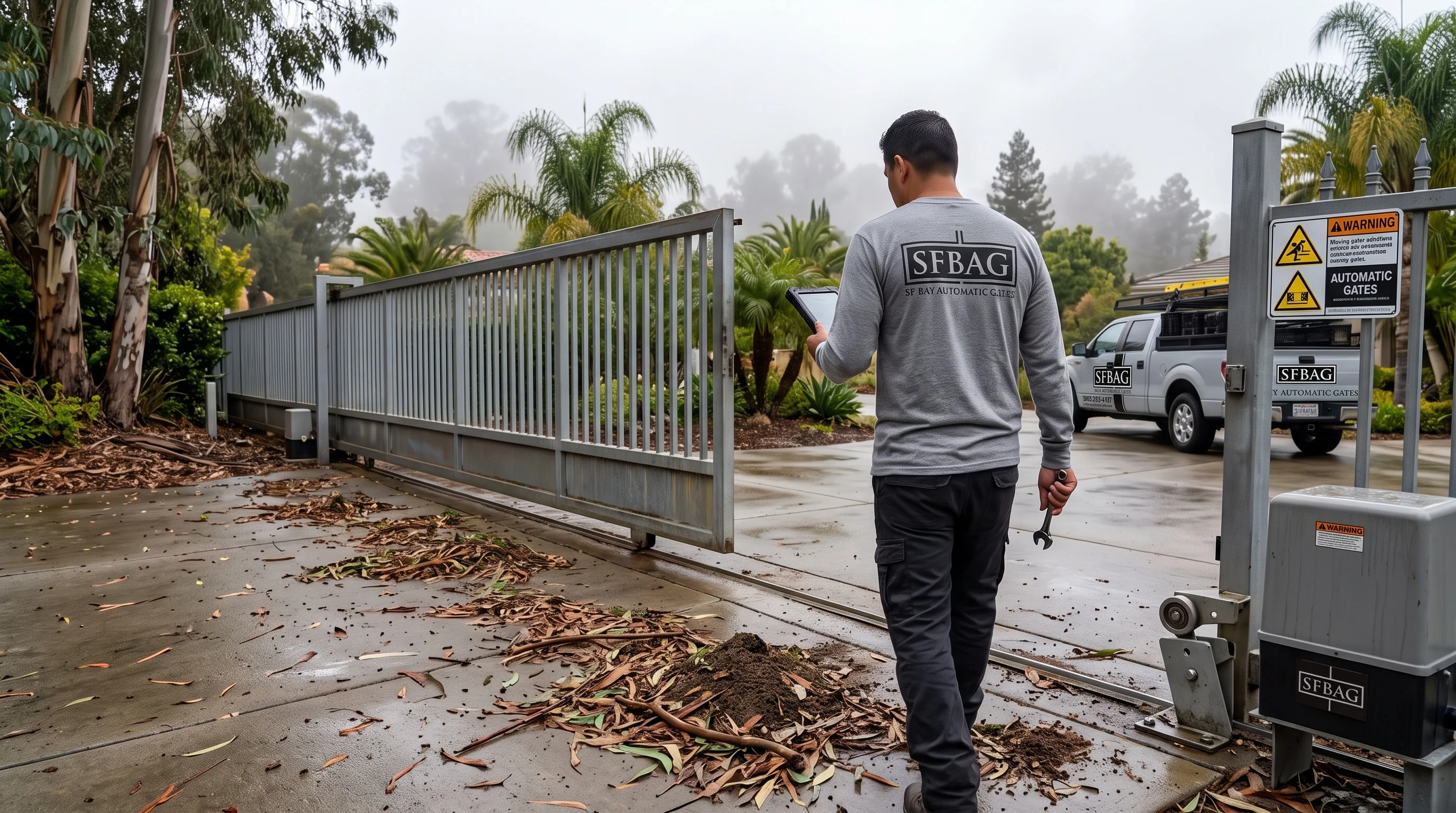
Automated gates operate quietly in the background of daily life until something starts to go wrong, and even then, the signs are often subtle enough to dismiss for weeks or months before anyone takes real action. A slower open cycle, an occasional odd noise, or a remote that needs a second press all seem minor in isolation, but recognizing which of these signs genuinely warrant automatic gate repair can be the difference between a quick, affordable fix and a full system failure that disrupts daily routines and compromises security.
Why bay area gate repair Needs Are Easy to Overlook
Gates are built to function reliably without requiring constant attention, which means most property owners only think about their gate when something visibly stops working. This out-of-sight, out-of-mind pattern is exactly what allows small mechanical or electrical issues to progress unnoticed, since the gate continues opening and closing throughout the early stages of a developing problem, just with slightly reduced performance that is easy to rationalize away.
The Gradual Nature of Gate Deterioration
Very few gate failures happen suddenly without warning. Motors that eventually burn out typically show signs of strain for weeks beforehand, running louder or hotter than usual. Sensors that eventually stop detecting obstructions reliably often show intermittent inconsistency first, working correctly most of the time before the failures become more frequent. Recognizing this gradual pattern is the first step toward catching issues while they remain simple, affordable, and quick to resolve.
Common Reasons Property Owners Delay Repairs
Beyond simply not noticing the signs, several practical reasons contribute to delayed repairs. A gate that still technically works, even if imperfectly, does not create the same urgency as one that has stopped functioning entirely, and that perception gap is precisely where many repair delays originate. Scheduling a repair also requires taking time out of a busy routine, which can feel like an unnecessary interruption when the gate seems to be managing well enough on its own for the time being, even though that assumption often proves costly once the underlying issue eventually worsens.
Gate Problems That Deserve Immediate Attention
While not every minor irregularity requires urgent action, certain issues carry enough risk, either to the gate's mechanical integrity or to personal safety, that they deserve prompt attention rather than being added to an ongoing mental list of things to eventually address.
Safety Sensor Malfunctions
Safety sensors exist specifically to prevent a gate from closing on a vehicle, pet, or person, which makes any inconsistency in their performance a priority rather than a minor inconvenience. A sensor that occasionally fails to detect an obstruction represents a genuine safety risk, and this category of issue should never be left unaddressed simply because the gate still opens and closes successfully most of the time.
Unusual Noises During Operation
Grinding, scraping, or clicking sounds that were not present when the gate was newly installed typically indicate friction or misalignment somewhere in the mechanical system. These sounds often point to issues that will worsen under continued use, since the friction causing the noise also accelerates wear on the components involved, making early diagnosis considerably more valuable than waiting to see whether the sound goes away on its own.
Inconsistent Remote or Keypad Response
A gate that responds reliably to a remote from some locations or angles but not others often points to an electrical or antenna-related issue rather than a simple battery problem. Property owners across the Bay Area sometimes replace remote batteries repeatedly without resolving the underlying issue, when the actual cause lies in the gate's receiver or wiring rather than the remote itself.
How Bay Area Conditions Shape Common Repair Needs
Regional climate and terrain play a significant role in which issues tend to develop most frequently across local gate systems, and understanding these patterns helps property owners anticipate problems before they escalate.
Moisture and Corrosion-Related Issues
Coastal humidity and seasonal rain accelerate corrosion on exposed metal hardware throughout the region, particularly at welds, fasteners, and any point where dissimilar metals meet. Properties closer to San Francisco and the surrounding bay tend to see this pattern most pronounced, given the additional salt content carried in the coastal air, while inland communities generally experience somewhat slower corrosion rates, though moisture-related wear remains a factor throughout the broader Bay Area regardless of exact location.
Soil Movement and Foundation Stability
Clay-heavy soil common across parts of San Jose and neighboring communities expands and contracts with seasonal moisture changes, which can gradually shift gate posts and foundations out of alignment over time. This kind of foundation movement often shows up first as a gate that no longer swings or slides quite as smoothly as it once did, a symptom easy to attribute to general wear rather than recognizing it as a sign that the underlying foundation itself needs attention.
What Professional bay area gate repair Diagnosis Involves
A proper automatic gate repair process starts with identifying the actual root cause of a symptom rather than simply addressing the most visible sign of trouble. A gate that responds inconsistently to a remote, for example, could stem from a weak receiver antenna, interference from nearby electronics, wiring damage, or a failing control board, and each of these causes requires a different resolution.
Comprehensive Testing Before Repair Work Begins
Technicians typically test the full range of motion, verify safety sensor accuracy at multiple points along the gate's path, inspect wiring connections for corrosion or damage, and evaluate the condition of tracks, hinges, and rollers before recommending a specific repair. This thorough approach avoids the common mistake of replacing a component that was not actually responsible for the original symptom, which wastes both time and money without resolving the underlying issue.
Matching Repairs to Regional Conditions
Repairs performed with the local climate in mind, using corrosion-resistant hardware and components rated for sustained humidity exposure, tend to hold up considerably longer than generic replacement parts that were not selected with the Bay Area's specific environmental demands in mind. This distinction often separates a repair that lasts for years from one that needs to be revisited within a single season.
Building a Preventive Maintenance Habit
Beyond addressing existing symptoms, many property owners find real value in scheduling periodic inspections rather than waiting for a problem to become noticeable on its own. A routine check, whether performed personally or by a professional, tends to catch developing issues while they remain minor, affordable, and quick to resolve, rather than allowing them to compound into a more involved repair over time.
Seasonal Timing for Inspections
Scheduling an inspection before the rainy season begins, typically in late summer or early fall across most of the Bay Area, allows any moisture-related vulnerabilities to be addressed before they are put under sustained seasonal stress. Property owners who build this kind of seasonal rhythm into their routine consistently report fewer unexpected breakdowns than those who address gate issues purely on a reactive basis, and the modest time investment involved is generally far less than the disruption of an emergency repair.
What a Routine Inspection Typically Covers
A thorough inspection generally includes testing the gate's full range of motion, checking sensor accuracy, inspecting hardware for early signs of corrosion, and confirming that wiring and control board housings remain properly sealed against moisture intrusion. Covering these points consistently, rather than only when a visible symptom prompts a closer look, is what separates gate systems that run reliably for a decade or more from those that require frequent, disruptive repairs, and the difference in long-term cost between the two approaches is rarely small.
Recognizing When to Schedule bay area gate repair
A gate showing any combination of unusual noise, inconsistent remote response, slower operation, or sensor irregularities deserves closer inspection, even if it continues to function on the surface. Waiting for a complete failure rarely saves time or money, since components under continued strain tend to affect surrounding parts as the underlying issue progresses.
Property owners throughout the Bay Area who take these early signs seriously, scheduling automatic gate repair before a minor issue becomes a major one, consistently spend less on upkeep over the full life of their gate system. A gate maintained proactively, with attention paid to the specific wear patterns common across the region, tends to perform reliably for years longer than one addressed only after it stops working altogether.
Ultimately, the difference between a gate that runs smoothly for a decade and one that requires frequent, disruptive repairs often comes down to how seriously the earliest, smallest warning signs are taken, long before the gate gives any indication of stopping altogether, and that early attention consistently proves to be the more economical path over the system's full lifespan.