
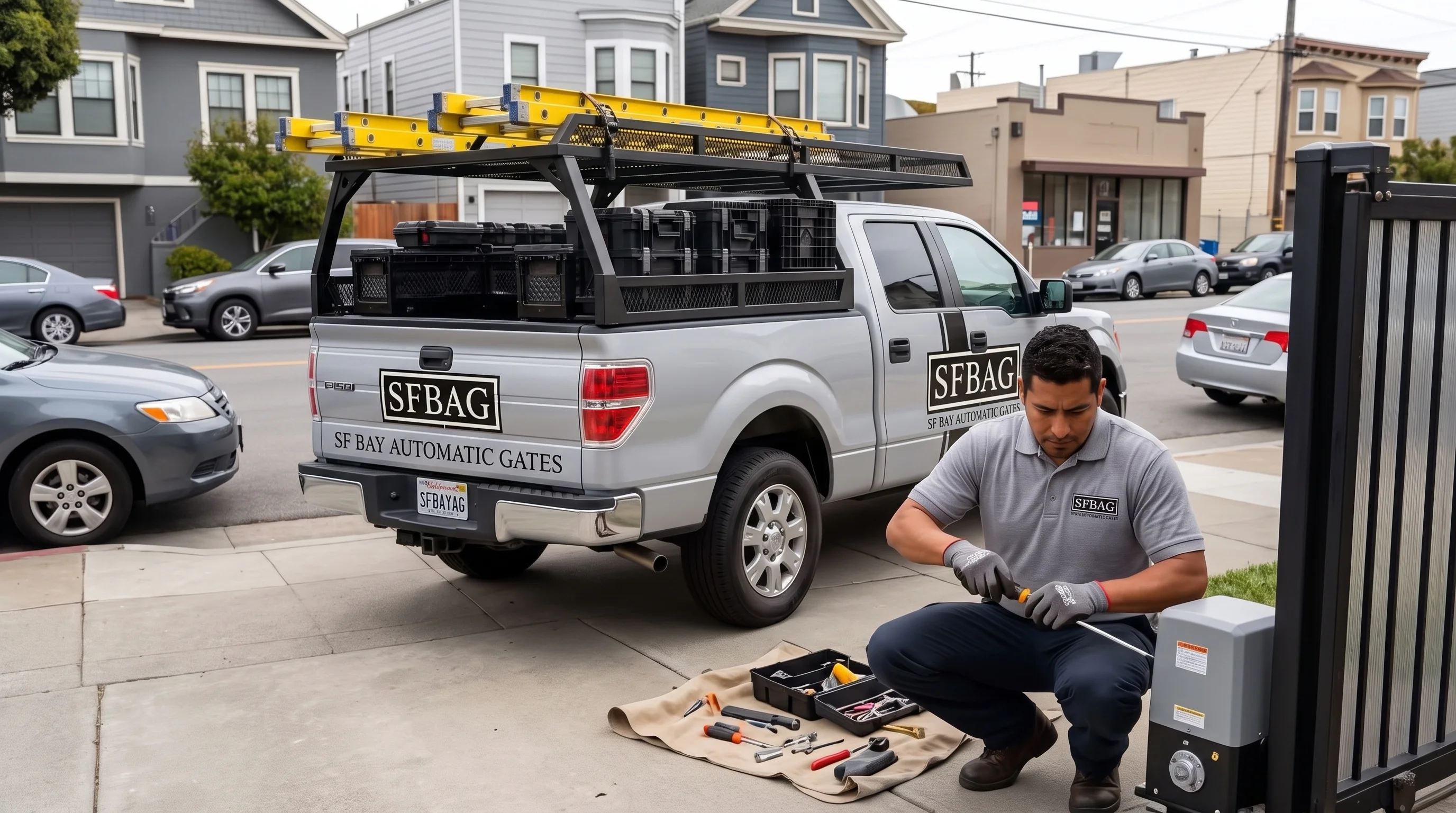
Gates in a city work harder than almost anywhere else. They secure driveways just steps from busy sidewalks, protect parking lots and loading areas, control access to multifamily buildings, and face constant exposure to traffic, weather, and curious hands. In Oakland, where historic homes, dense apartment blocks, industrial yards, and hillside estates all share the same city limits, the problems that affect gates are as varied as the properties themselves. Knowing what causes those problems, and when to call for automatic gate repair, helps property owners and managers keep their entries secure and working reliably.
Urban gates tend to accumulate wear quickly and draw more attention from anyone looking for an easy way in. Recognizing the patterns behind city gate failures, and responding before those patterns turn into breakdowns, makes gate repair in Oakland faster, simpler, and far less disruptive for everyone who depends on the entry.
Gate Repair Oakland: How Urban Settings Affect Gate Performance
City gates operate in close quarters. Driveway gates often open directly onto sidewalks or narrow streets, sliding gates may run along tight property lines, and pedestrian gates see steady foot traffic from residents, visitors, and delivery drivers. Vehicles pass close to posts and operators, increasing the chance of impact damage. Dust, exhaust, and debris from nearby streets collect in tracks and on sensors. These conditions add stress to both mechanical and electrical components and shorten the intervals between service needs.
The mix of property types also matters. Single-family homes may have one gate that cycles a few times a day, while apartment buildings, commercial lots, and industrial facilities may have gates that open hundreds of times daily. Each setting calls for different equipment and maintenance, and problems that would take years to develop on a lightly used residential gate can appear within months on a heavily used commercial one.
Tampering, Vandalism, and Forced Entry
Urban gates are more likely to be tested by people trying to get in. Pushing, pulling, or lifting gates to defeat locks, prying at latches, and damaging keypads or intercoms can all compromise both security and operation. Even unsuccessful attempts can bend frames, loosen hardware, or misalign sensors, leading to problems that appear later as hesitation or failure to close. Repairing this damage promptly restores the gate's integrity and removes visible signs of weakness that could invite further attempts.
Protecting Keypads, Intercoms, and Control Boxes
Access devices mounted near the street are vulnerable to vandalism and weather. Durable housings, secure mounting, protective covers, and careful placement reduce the risk of damage. Control boxes should be locked and positioned where they are difficult to reach from outside the property, and wiring should run through protected conduit so it cannot be cut or pulled.
Securing the Manual Release
Manual releases are essential during power outages, but they should not be accessible from the street. Locking releases, or positioning them on the secure side of the gate, prevents unauthorized people from disengaging the operator and simply pushing the gate open. Everyone who may need to operate the gate during an outage, including residents, property managers, and maintenance staff, should know where the release is and how to unlock it, so that security does not come at the expense of access during an emergency.
Heavy Traffic and Commercial Use
Gates at commercial and multifamily properties require operators rated for high-cycle use and components built to withstand constant movement. Undersized operators, light-duty hinges, and rollers not designed for heavy loads wear out quickly. When these gates fail, the consequences include disrupted deliveries, frustrated tenants, and security gaps. Service for high-traffic gates often involves upgrading components to better match actual use in addition to repairing what has failed.
Common Gate Problems Across Oakland Neighborhoods
Despite the variety of settings, several problems appear again and again. Worn batteries and failing capacitors cause slow or inconsistent operation. Misaligned or dirty photo eyes prevent gates from closing. Sagging swing gates and worn rollers on sliding gates create resistance that strains operators. Damaged wiring, often from landscaping or vehicle impacts, interrupts power or signals. Access control devices fail due to weather exposure or tampering. Identifying which of these issues is present, and whether more than one is involved, is the foundation of an effective repair.
Local conditions shape how these problems develop throughout Oakland. Properties in the hills, including Montclair and the neighborhoods above Rockridge, often have gates on steep driveways surrounded by trees, where slopes, debris, and moisture add to wear. Homes and apartment buildings in the flatlands deal with tighter spaces and heavier street activity. Commercial and industrial properties in West Oakland and near the waterfront face heavy traffic, salt air, and industrial dust. Understanding these differences helps technicians anticipate problems and recommend solutions suited to each site.
Hills, Flatlands, and the Waterfront
Hillside gates need careful attention to grade, drainage, and operator selection, since steep driveways place additional load on hinges and motors. Flatland properties often require sliding or space-saving gate designs because of limited room. Waterfront and industrial areas demand corrosion-resistant materials and finishes, as salt air and pollutants accelerate rust on metal gates and hardware. Tailoring repairs and upgrades to these conditions improves reliability and extends service life.
Sliding Gates on Tight Urban Lots
Sliding gates are a common solution where there is no room for a gate to swing, and they are especially popular on narrow city lots, parking areas, and industrial yards. They bring their own maintenance needs, though. Ground tracks collect gravel, leaves, and street debris that cause rollers to jump or bind, and a track that is bent by a vehicle tire can stop the gate completely. Cantilever designs avoid a ground track but depend on precisely aligned rollers and a rigid frame, so any sag or impact damage shows up quickly as rubbing or noise. Chains and gear racks stretch and wear with use and need periodic adjustment. Keeping tracks clean, checking roller condition, and correcting alignment early prevents most sliding gate failures and protects the operator from the extra strain that a binding gate creates.
Safety and Liability Considerations
Automated gates must stop and reverse when they encounter an obstruction, and they must be equipped with properly functioning safety devices. In busy urban areas with pedestrians, cyclists, and vehicles passing close to gates, these features are essential. A gate that closes unexpectedly, fails to reverse, or has disabled sensors creates serious safety risks and potential liability for property owners and managers. Regular testing and prompt repair of safety devices protect everyone who uses or passes the gate.
Older Buildings and Retrofitted Gates
Many Oakland properties have gates that were added or automated long after the building was constructed. Retrofitted systems sometimes rely on posts that were never meant to carry a moving gate, operators chosen for convenience rather than for the gate's actual weight, and wiring routed through spaces that were not designed for it. These installations can work for years, but they tend to develop recurring problems: posts that lean, operators that overheat, and power or signal issues that come and go. Repairs on retrofitted gates often reveal the underlying mismatch, and addressing it directly, whether by reinforcing posts, resizing the operator, or rerouting wiring through protected conduit, usually ends the cycle of repeated service calls. Owners of older homes and small apartment buildings benefit from asking whether a recurring problem is truly a new failure or the same design limitation showing up again.
Responding Quickly to Gate Repair in Oakland
When a gate begins to show signs of trouble, quick action prevents larger problems. Slow movement, unusual noises, inconsistent response to remotes or keypads, visible damage, and failure to close completely all call for prompt evaluation. For commercial and multifamily properties, establishing a relationship with a reliable service provider ensures faster response when problems arise and keeps downtime to a minimum.
A thorough repair visit includes inspecting the gate structure, hinges or rollers, posts, operator, power supply, wiring, safety devices, and access controls. Technicians should explain what they find, recommend repairs based on the root cause, and suggest upgrades where current equipment is not suited to the property's use or conditions. Clear communication helps owners make informed decisions and plan for future needs.
Long-Term Reliability Through Maintenance
Regular maintenance is the most effective way to reduce emergency repairs. Scheduled service allows technicians to lubricate moving parts, test batteries, adjust force and limit settings, clean and align sensors, tighten hardware, inspect access devices, and address rust before it spreads. Maintenance frequency should reflect how often the gate is used and the conditions it faces, with high-traffic and waterfront gates typically needing more frequent attention. Properties throughout the East Bay and the greater Bay Area benefit from this approach through more reliable operation and longer equipment life.
Urban gates face demanding conditions, but with attentive care they can provide years of dependable service. Recognizing early warning signs, addressing tampering and wear promptly, and maintaining the system regularly all help keep city properties secure and accessible. When a gate starts to show any sign of trouble, scheduling professional automatic gate repair is the most effective way to restore reliable performance and protect the property it serves.