
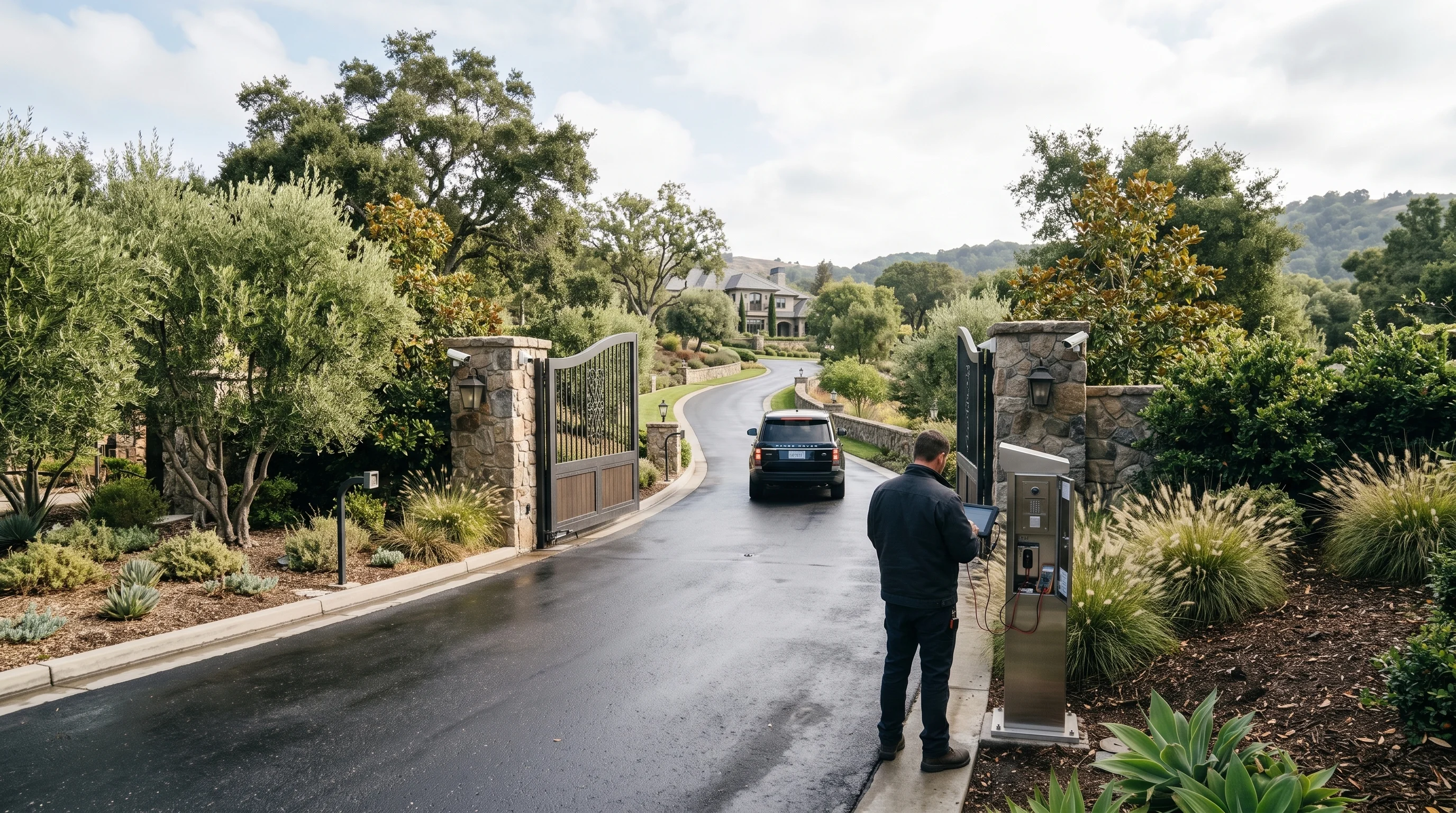
Across the SF Bay region, property owners are rethinking what a front entrance should do. It is no longer enough for a gate to simply mark a boundary. Today, automatic gate installation is recognized as one of the most practical upgrades a residential or commercial property can receive, combining physical security with intelligent access control in a single, durable system.
Whether the property sits in a dense urban neighborhood or a sprawling hillside lot, the entrance is the first point of contact between the outside world and everything. Getting that point of contact right matters more than most people realize.
What Makes Automated Gate Systems Different from Manual Options
A manually operated gate requires someone to physically open and close it every time a vehicle or person enters or exits. That process creates friction, delays, and security gaps, especially during early mornings, late evenings, or when no one is available to monitor the entrance.
Automated gate systems eliminate that friction. With motor-driven mechanisms, remote controls, keypads, intercoms, or smartphone integration, the gate responds to authorized users without requiring anyone to step. The result is a seamless, consistent access experience that a manual gate simply cannot replicate.
For SF Bay properties where convenience and security are equally valued, this difference is significant. Families in Palo Alto, for example, benefit from smart gate systems designed for tech-forward Silicon Valley homes, while coastal properties in Pacifica require corrosion-resistant automatic gate solutions built for ocean-side climates. The technology adapts to the environment.
Key Security Benefits of Automatic Gate Installation
Security is the most commonly cited reason property owners pursue automated gate systems, and the benefits are concrete rather than theoretical.
- Controlled access: An automated gate allows property owners to define exactly who enters and when. Keypads, RFID cards, and intercom systems create layers of verification that a standard fence or manual gate cannot provide. Unauthorized vehicles and individuals are stopped at the perimeter rather than at the front door.
- Deterrence: Visible gate automation signals to potential intruders that a property is actively monitored and secured. This deterrence effect is well documented in property security literature. A property with a functioning automated gate is a harder target than one without.
- Camera and sensor integration: Modern gate automation systems are designed to work alongside security cameras, motion sensors, and alarm systems. When a vehicle approaches, the system can log the entry, trigger a camera feed, and send a notification to a smartphone simultaneously.
- Reduced unauthorized foot traffic: Pedestrian access can be managed through separate intercom panels or coded pedestrian gates, preventing foot traffic from bypassing the vehicle gate entirely.
For SF Bay communities where property values are high and security expectations match, these features are not luxuries. They are practical necessities. Areas like Antioch, where neighborhoods are expanding rapidly, benefit from security-focused automatic gate installations designed for growing suburban properties.
How Automatic Gate Installation Improves Daily Life
Beyond security, automated gate systems change the texture of daily routines in ways that are immediately noticeable.
Arriving home during a rainstorm, a driver no longer needs to exit the vehicle to push open a heavy gate. A remote signal or vehicle sensor triggers the gate, and entry is completed without interruption. For households with children, elderly family members, or individuals with mobility considerations, this convenience is meaningful.
Delivery management is another practical benefit. Intercom systems with video capability allow property owners to communicate with couriers, grant temporary access, or redirect deliveries without being physically present at the gate. This is particularly relevant across the SF Bay area, where remote work arrangements and busy professional schedules are common.
Property owners can also set scheduled access windows, create temporary access codes for guests or contractors, and receive activity logs showing every entry and exit. This level of control over an entrance was previously available only to large commercial facilities. Automated gate technology has made it accessible to residential properties throughout the SF Bay region.
Gate Types and Their Role in Automatic Gate Installation
The type of gate selected has a direct impact on how the automation system performs. Understanding the options helps property owners make informed decisions before installation begins.
Sliding gates move horizontally along a track, making them ideal for properties with limited driveway space or steep inclines. They are common across SF Bay hillside neighborhoods and urban lots where a swinging gate would require too much clearance.
Swing gates open inward or outward on hinges and are often preferred for estates and wider residential driveways. They accommodate decorative ironwork and ornamental designs more naturally than sliding systems.
Vertical pivot and barrier arm gates are used primarily in commercial and high-traffic settings, such as parking facilities, business campuses, and gated communities across the SF Bay area.
Each gate type requires a compatible motor and operator system. Selecting the right pairing is one of the most important technical decisions in any automatic gate installation project. An undersized motor on a heavy iron swing gate, for example, will lead to premature wear, slow operation, and eventual failure.
Site Conditions That Affect Automated Gate Performance
No two SF Bay properties are identical, and site conditions play a significant role in how an automated gate system is designed and installed.
- Grade and slope: Driveways that slope toward or away from the street affect gate clearance, drainage, and motor load. Sliding gates on sloped terrain require precision track installation to prevent the gate from drifting or binding.
- Soil and foundation: Post foundations must be set at appropriate depths to prevent shifting, particularly in areas with clay-heavy soil or seismic activity, both of which are relevant across the SF Bay region.
- Climate exposure: Coastal properties face salt air and moisture that accelerate corrosion on untreated metal components. Properties in inland SF Bay communities face heat and dust that affect motor performance and lubrication intervals. Material selection and protective coatings should reflect the specific climate zone of the installation site.
- Power supply: Automated gates require a reliable power source. Properties without existing electrical infrastructure near the gate location may require trenching and conduit installation. Solar-powered gate operators are an alternative for remote locations or properties seeking energy independence.
A thorough site assessment before installation ensures that the system selected will perform reliably under the actual conditions it will face, not just ideal ones.
Compliance and Safety Standards in Automatic Gate Installation
Automated gate systems in California are subject to safety standards that govern how they operate around people and vehicles. UL 325 is the primary standard for gate operators, requiring entrapment protection through sensors, reversing mechanisms, and other safeguards that prevent the gate from closing on a person or vehicle.
ASTM F2200 addresses gate construction standards, specifying requirements for gaps, protrusions, and structural integrity that reduce the risk of injury.
Property owners should verify that any installation meets these standards and that the equipment used carries appropriate certifications. Reviewing the frequently asked questions about automatic gates can help clarify what to expect from a compliant installation and what questions to ask before work begins.
Why SF Bay Properties Benefit from Professional Gate Automation
The SF Bay area presents a unique combination of architectural diversity, climate variation, and regulatory requirements that makes professional gate automation particularly valuable. A property in Atherton requires a different approach than one in Oakland or Gilroy. Luxury estate gates in Atherton prioritize discretion and ornamental detail, while security-grade gate systems for Oakland's urban properties emphasize reinforced construction and camera integration.
Across the SF Bay region, the common thread is that automated gate systems deliver a measurable improvement in security, convenience, and property presentation when they are properly specified and installed. For property owners evaluating this upgrade, exploring the full range of automatic gate installation services available across the SF Bay area is the logical starting point.