
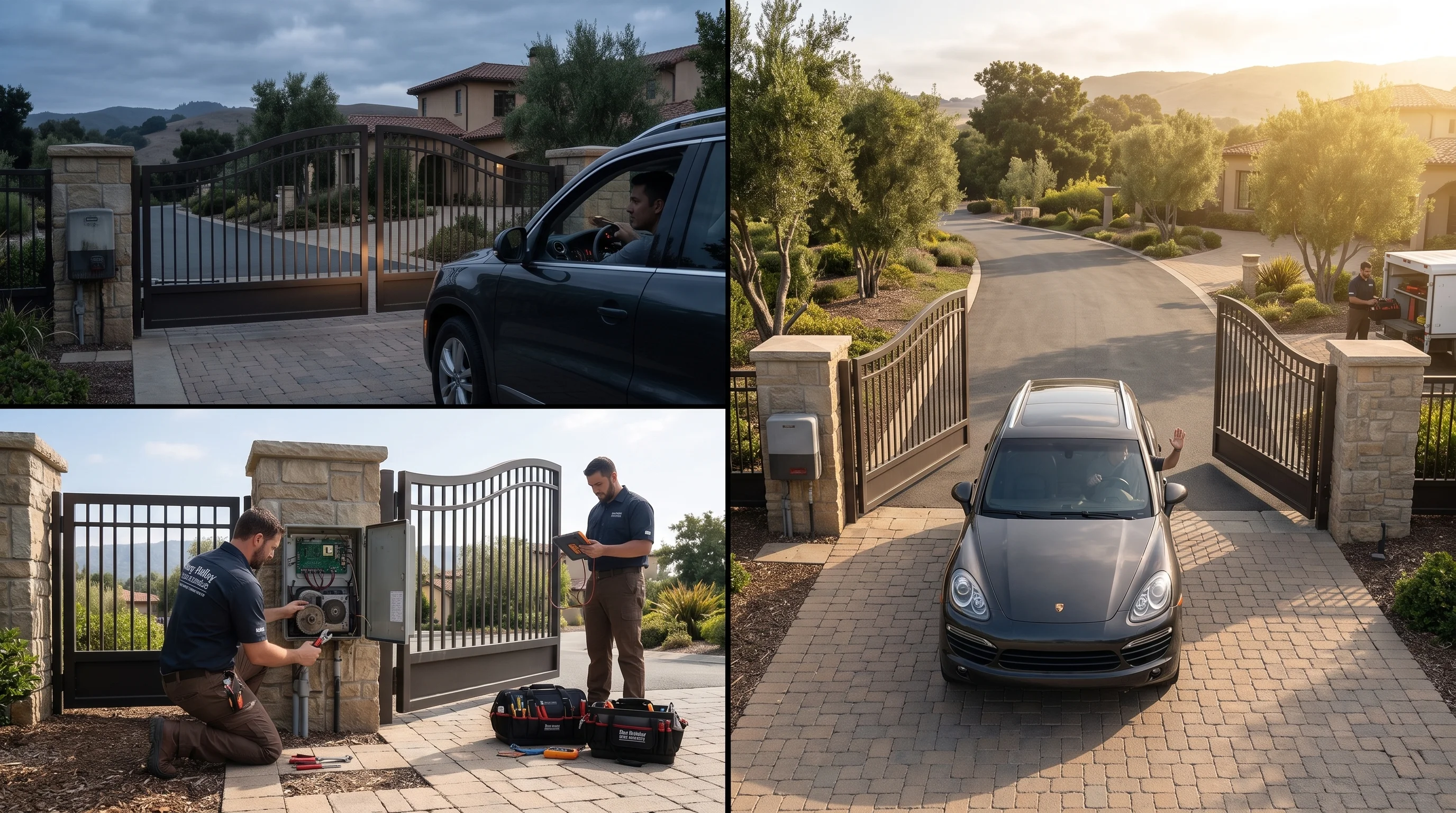
Across the SF Bay Area, automatic gates are a daily necessity for thousands of residential and commercial properties. They control who enters, protect what matters, and shape the first impression of any property. When something goes wrong, the disruption is immediate. Automatic gate repair is not simply a maintenance task; it is a critical service that restores security, functionality, and peace of mind to property owners throughout the region.
Understanding what drives gate failures, what repair actually involves, and why timely intervention matters can help any SF Bay property owner make smarter decisions before a minor issue becomes a costly breakdown.
Why Automatic Gate Repair Cannot Wait
A gate that hesitates, reverses unexpectedly, or refuses to open entirely is not just an inconvenience. It is a security vulnerability. In the SF Bay Area, where properties range from hillside estates in Marin to dense urban parcels in Oakland and suburban family homes in Antioch, a malfunctioning gate exposes the property to unauthorized access and potential liability.
The mechanical and electrical components inside an automatic gate system are interdependent. A worn motor strains the control board. A misaligned track forces the opener to work harder. A failing sensor can cause the gate to reverse mid-cycle or stop without warning. Delaying automatic gate repair services allows these interconnected problems to compound, often turning a straightforward fix into a full component replacement.
Prompt attention to early warning signs is always the more cost-effective path.
Common Problems That Require Gate Repair
Property owners across the SF Bay region encounter a predictable set of gate issues, though the specific cause often depends on the environment and gate type.
Motor and opener failures are among the most frequent. Motors wear down over years of daily cycling, and in coastal SF Bay communities like Pacifica or Alameda, salt air accelerates corrosion inside the motor housing. A gate that moves slowly, stalls mid-travel, or produces grinding sounds is signaling motor stress.
Sensor and safety loop malfunctions are another common source of trouble. Modern automatic gates rely on photo-eye sensors and in-ground loop detectors to detect vehicles and pedestrians. When sensors drift out of alignment or loops sustain damage from ground movement, the gate may refuse to open, fail to close, or behave erratically. This is especially relevant in areas with clay-heavy soils common in parts of the East Bay, where ground shift is a seasonal reality.
Control board and wiring issues tend to appear after power surges or prolonged exposure to moisture. The SF Bay Area's fog, rain, and temperature swings create conditions that degrade electrical connections over time. A gate that responds to one remote but not another, or that operates only intermittently, often has a wiring or board fault at its root.
Hinge wear, track damage, and structural misalignment affect swing gates and sliding gates differently but cause similar outcomes: rough operation, incomplete travel, and accelerated wear on every other component. Properties with steep driveways, common throughout the SF Bay hills, place additional mechanical stress on hinges and track hardware.
For a broader look at the full range of gate services available throughout the region, the expert automatic gate and fencing services page outlines the scope of solutions available across multiple gate types and access control systems.
What a Professional Automatic Gate Repair Involves
A qualified technician approaches gate repair systematically. The process typically begins with a thorough diagnostic review of every major subsystem: the opener, control board, safety sensors, power supply, mechanical hardware, and access control components. Skipping this step risks treating a symptom while the underlying cause continues to cause damage.
Once the root cause is identified, repairs are performed using manufacturer-compatible components. For automatic gate systems, this often means sourcing parts from brands like LiftMaster, FAAC, or Nice, which are widely used across SF Bay installations. Using off-brand substitutes in safety-critical systems can compromise performance and may void existing warranties.
After repairs are complete, a responsible technician will test the full cycle of operation, verify that all safety features respond correctly, and confirm that access control programming is intact. The frequently asked questions about automatic gates resource covers what tools and safety protocols qualified technicians use during this process, which is useful background for any property owner preparing for a service visit.
Gate Repair Across Different SF Bay Environments
The SF Bay Area is not a uniform environment. Gate repair needs vary meaningfully depending on location.
In coastal communities, corrosion is the primary threat. Hardware exposed to marine air requires more frequent inspection and lubrication, and repair work often involves replacing corroded fasteners, resealing motor housings, and treating metal surfaces before they deteriorate further.
In inland SF Bay communities where summer heat is intense, thermal expansion affects track alignment and puts added strain on opener springs. Gates that work perfectly in winter may bind or stall during peak summer temperatures if hardware tolerances are not accounted for.
In hillside neighborhoods throughout the SF Bay, gravity and soil movement create ongoing alignment challenges. Swing gates on sloped driveways require precise hinge adjustment and may need counterbalance modifications that flat-terrain installations do not.
Properties in high-traffic commercial zones, common across the SF Bay's industrial corridors and business parks, subject their gates to far more daily cycles than residential systems. Commercial gate repair often involves heavier-duty component upgrades alongside the standard diagnostic and replacement work.
The Role of Maintenance in Reducing Repair Frequency
Reactive repair is always more disruptive than preventive maintenance. Across the SF Bay, property owners who schedule periodic inspections tend to catch developing issues before they cause full system failures. Lubrication of moving parts, sensor alignment checks, and control board inspections performed on a regular cycle extend the operational life of any automatic gate system significantly.
That said, even well-maintained gates eventually need professional attention. Recognizing the difference between a gate that needs routine service and one that requires immediate gate repair is a skill that comes from understanding how these systems behave under normal conditions versus when something is genuinely wrong.
For property owners exploring gate solutions across different SF Bay communities, the service areas page for the greater SF Bay region provides a comprehensive view of where professional gate services are available, covering more than 70 cities throughout the area.
Choosing the Right Response When a Gate Fails
When an automatic gate stops working correctly, the immediate priority is safety. A gate stuck in the open position should be treated as an active security concern. A gate that closes unpredictably poses a risk to vehicles and people. Neither situation should be left unaddressed while waiting for a scheduled appointment.
Property owners throughout the SF Bay should have a clear plan for emergency gate situations: know how to engage the manual release on the opener, understand how to temporarily secure the entry point, and have contact information for a qualified repair technician ready before an emergency occurs.
For non-emergency situations, documenting the symptoms before the technician arrives helps speed up the diagnostic process. Note when the problem started, whether it is consistent or intermittent, whether any recent changes occurred (new remote programming, power outages, or physical impacts to the gate), and what sounds or behaviors accompany the malfunction. This information gives a technician a meaningful head start.
Reliable, responsive automatic gate repair keeps SF Bay properties secure, accessible, and operating exactly as intended, which is precisely what any gate system was designed to deliver from the first day it was installed.