
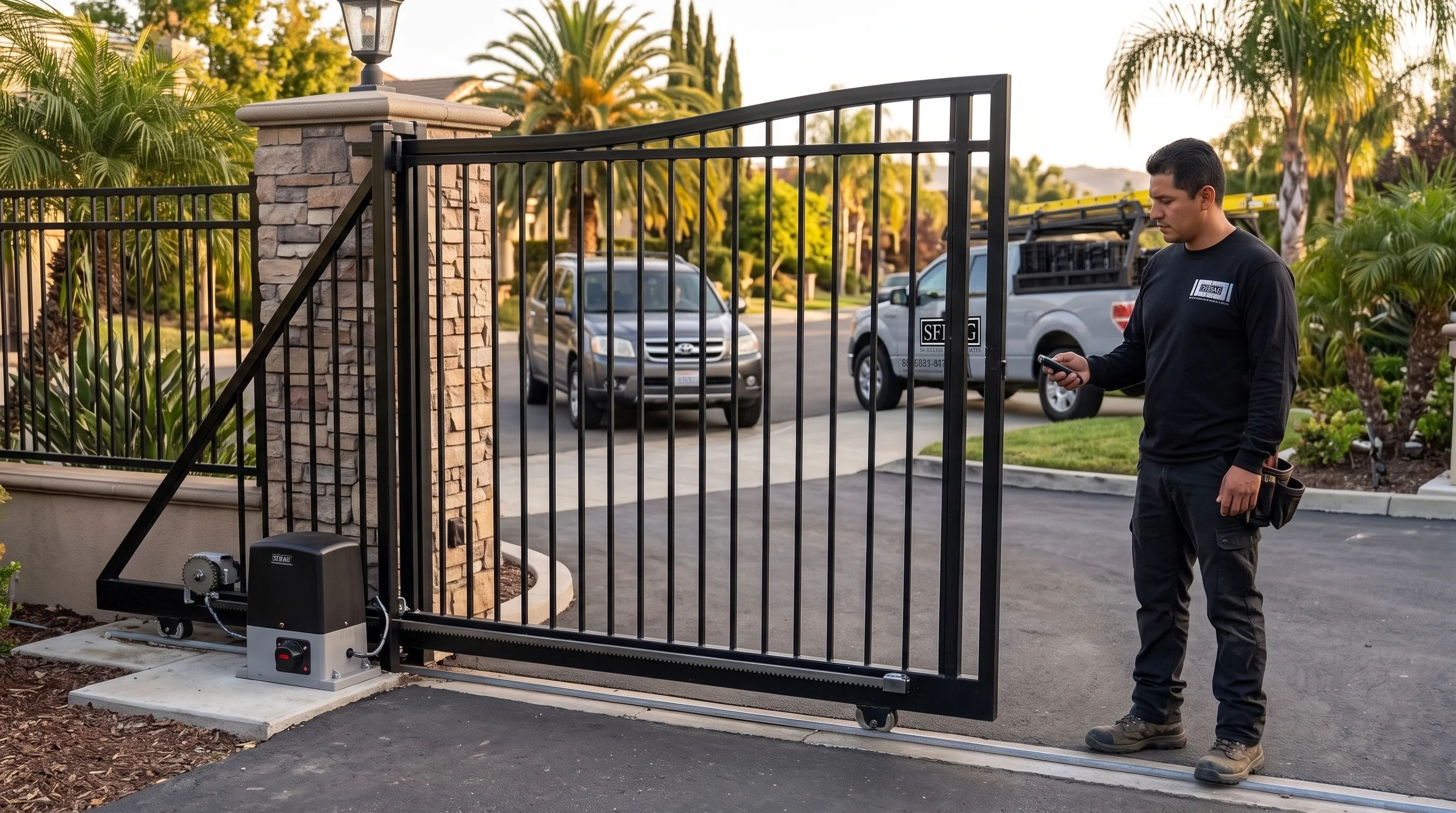
For many homeowners, an electric gate starts as an appealing idea and quickly turns into a practical question: will it deliver enough value to justify the investment? A well-designed driveway gate with automation can transform how a home is secured and used every day, but the answer depends on the property, the household, and how the system is planned and installed. Across the Bay Area, where homes range from compact suburban lots to sprawling hillside estates, the value of an electric gate for driveway access looks different from one property to the next, and a careful look at each factor makes the decision far easier.
Weighing that value means looking beyond the convenience of pressing a button. Security, privacy, safety, property appeal, daily routines, maintenance, and long-term reliability all play a role, and understanding each one helps homeowners make a confident decision rather than one based only on appearance or a neighbor's recommendation.
What an Electric Gate for Driveway Access Actually Delivers
Convenience is the most immediate benefit. An electric gate opens as a vehicle approaches and closes after it passes, so residents no longer need to leave the car to open or close the entrance. That convenience matters most during rain, at night, and when arriving with children or groceries, and it often determines whether the gate is closed consistently at all. A manual gate that remains open because closing it is inconvenient offers little protection, while an automated gate that closes every time keeps the perimeter secure without extra effort from anyone in the household.
Security and privacy improve because access becomes controlled. Visitors must request entry through an intercom or keypad, service providers can receive codes that work only during certain hours, and residents can see and speak with guests before opening the gate. Packages and vehicles parked inside the property are less exposed, and the presence of a gate discourages casual trespassing and opportunistic theft. For homes set back from the street, the gate also defines a clear boundary between public and private space that visitors immediately understand.
Safety for Children, Pets, and Pedestrians
A closed entrance keeps children and pets from wandering toward the street, which is one of the most common reasons families choose automation. Modern electric gates include safety devices that stop and reverse the gate when something is in its path, along with force settings that limit how hard it pushes. When designed with sensors positioned correctly and tested regularly, an electric gate provides both a secure perimeter and safe operation around the people who use it every day.
The Factors That Shape the Investment
Several elements influence the overall scope of an electric gate project, and understanding them helps homeowners set realistic expectations. The size, material, and style of the gate determine fabrication effort and weight. The operator must match that weight and the expected number of daily cycles. Power availability affects whether new electrical service, trenching, or a solar system is needed. Site conditions, such as slope, drainage, and soil, influence footing design and gate type. Access control options range from simple remotes to video intercoms and smartphone integration, and each adds capability along with complexity.
Ongoing Maintenance and Ownership
The investment does not end at installation. Electric gates need periodic maintenance, including lubrication of hinges or rollers, battery testing and replacement, sensor cleaning, and adjustment of force and limit settings. Finishes may need occasional touch-up, especially near the coast where salt air is present. These needs are modest when planned for, but homeowners who expect a maintenance-free system are often surprised. Factoring routine care into the decision gives a more accurate picture of long-term value.
Reliability Depends on Installation Quality
Much of the long-term value comes from how well the system is installed. Properly sized footings keep posts from leaning, correctly matched operators avoid overheating, sealed enclosures protect electronics from moisture, and carefully adjusted safety devices prevent nuisance reversals. Poorly installed systems may work at first and then require frequent service, eroding the value of the investment. Choosing an experienced installer is one of the most important ways to protect the return on an electric gate. Reviewing past projects that have been in service for several years, rather than only newly finished ones, shows how an installer's work actually holds up over time in local conditions.
Power Outages and Backup Planning
Outages caused by storms or planned shutoffs during fire-risk weather can leave an electric gate without power. Battery backup allows the gate to continue operating for a number of cycles, and a manual release provides a fallback during longer interruptions. Including these features from the start ensures the gate remains a convenience rather than an obstacle when the power goes out.
When an Electric Gate Is Most Worth It
An electric gate tends to deliver the most value when the entrance is used several times a day, when the home is on a busy street, when children or pets need a secure boundary, or when privacy is a high priority. Properties with long driveways benefit because residents would otherwise have to walk a considerable distance to open or close the gate. Homes in areas where privacy and controlled access are expected by buyers may also see the gate as a feature that adds appeal when the property is eventually sold.
Communities such as Saratoga, where homes often sit on larger lots with long, sometimes sloped driveways and wooded surroundings, illustrate the point well. Walking down a long drive to open a gate by hand is impractical, and the privacy that a gated entrance provides fits the character of the neighborhood. Similar conditions exist in Los Gatos, the hills above Los Altos, and the hillside neighborhoods of the East Bay, where electric gates are a natural fit for both daily convenience and long-term value.
When It May Not Be the Right Fit
An electric gate may be less worthwhile on a property where the gate would rarely be closed, where the driveway is too short to allow a vehicle to pull off the street while the gate opens, or where bringing power to the gate would be disproportionately difficult. In some cases, a simpler manual gate or a pedestrian gate with a keypad meets the household's needs. An honest assessment should consider these possibilities rather than recommending automation by default, since the right answer depends on the property.
Choosing the Right Gate Style for Automation
The style of the gate affects how well automation performs. Swing gates suit driveways with level space behind the opening, while sliding gates work better on sloped or narrow sites. Cantilever designs avoid ground tracks that collect debris, which helps on rural and wooded properties. Lighter, open designs place less strain on operators than solid privacy panels, although solid gates can be automated successfully with properly sized equipment and reinforced posts. Matching the style to the site reduces wear, improves reliability, and keeps the investment performing as intended for many years.
Getting the Most Value From an Electric Gate
Homeowners who decide to proceed can maximize value through careful planning. Choosing a design that complements the home, selecting durable materials and finishes for the local climate, sizing the operator correctly, planning conduit for future accessories, and including battery backup and safety devices from the start all contribute to long-term satisfaction. Access control should match how the household lives, whether that means simple remotes, a keypad for visitors, or a video intercom for screening guests before they reach the house.
Questions to Answer Before Committing
A few questions help clarify whether the investment makes sense. How many times a day will the gate open and close, and who will use it? Is power already available near the entrance, or will new service be needed? Does the driveway allow a car to pull completely off the street while the gate opens? Will the household want to screen visitors with a video intercom, or are remotes and a keypad enough? How important are privacy and appearance compared with simple convenience? Working through these questions before reviewing proposals helps homeowners describe what they need clearly, compare options accurately, and avoid paying for features that will rarely be used while overlooking the ones that will matter every day.
A professional assessment ties these choices together. Evaluating the site, power, usage, and goals clarifies whether an electric gate is the right investment and which configuration will deliver the best result. Across San Jose, San Francisco, and the broader Bay Area, homeowners who take this approach rarely regret the decision, because the system they end up with is built around their property instead of a generic template.
Making the Decision With Confidence
An electric gate for driveway access is worth the investment when it matches the property and the household's needs and when it is installed with care. Convenience, security, privacy, safety, and property appeal all improve when the system works reliably every day. For homeowners weighing the decision, a consultation focused on the right driveway gate design and automation for the property is the clearest way to determine whether the upgrade will deliver lasting value.