
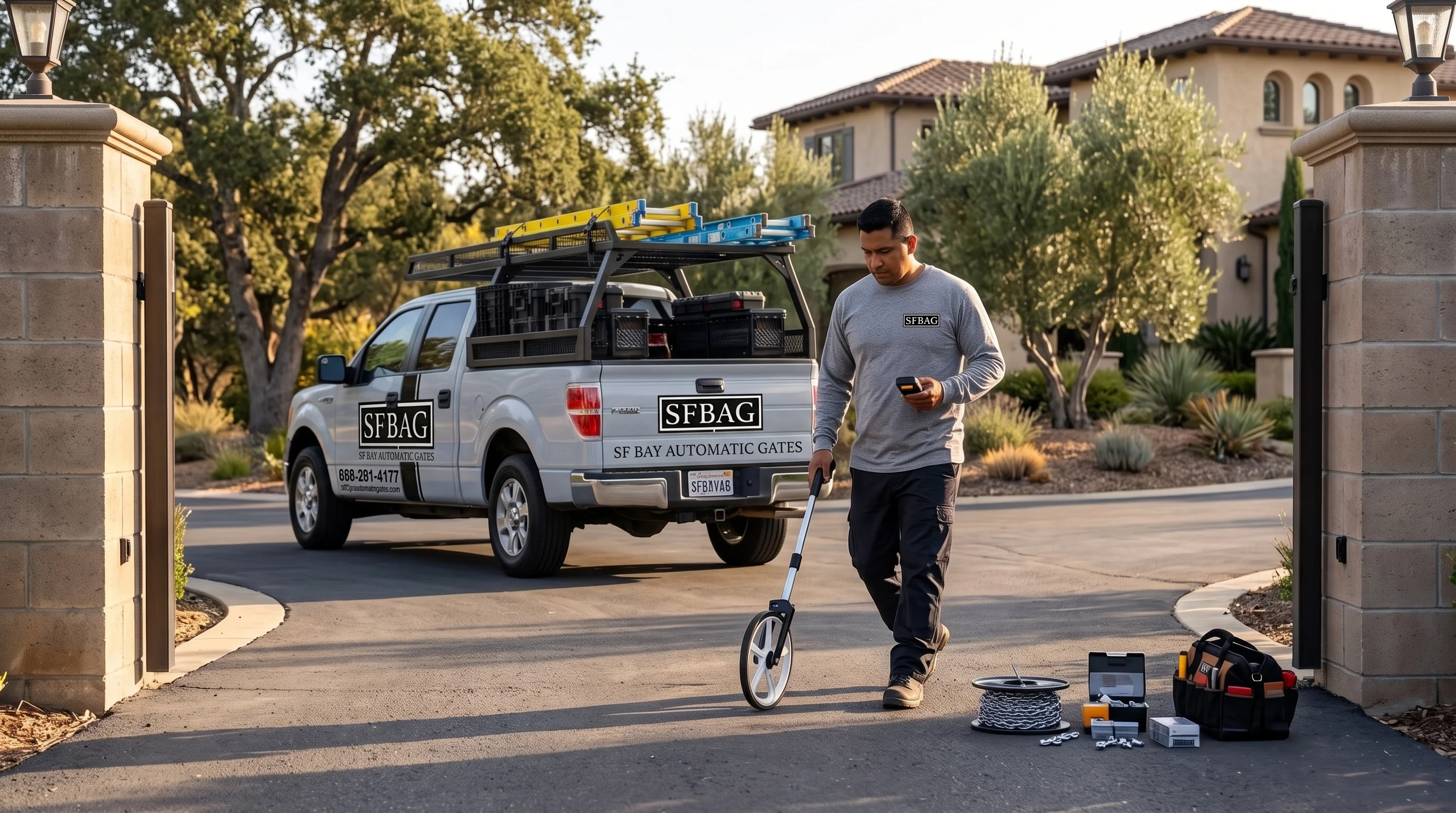
A driveway is more than a strip of pavement leading to a garage. It is the first line of defense between a private property and the street, and it is often the most overlooked one. Many Bay Area homes and businesses invest heavily in alarm systems, cameras, and lighting, yet leave the entrance itself wide open to anyone who walks or drives up. That gap is exactly what driveway gate installation is designed to close, and understanding how the process works makes it easier to decide whether an entrance upgrade is worth pursuing.
Why driveway gate installation Matters for Property Security
An open driveway sends a quiet signal that a property is easy to approach. Vehicles can pull in unnoticed, deliveries can be left unattended, and there is no clear boundary between public and private space beyond a property line on a map or a row of shrubs along the curb. Once a gate is in place, that boundary becomes physical and visible, and it changes how the entrance functions day to day. Security professionals often point out that the entrance is the single point every visitor, vehicle, and delivery must pass through, so when that point has no barrier, every other security measure on the property ends up working around a gap instead of alongside a controlled access point.
Common Vulnerabilities Before driveway gate installation
Before a gate goes in, most properties share a few predictable weak points. There is no controlled point of entry, so anyone can approach the front door, garage, or parked vehicles at any hour, and there is no way to screen visitors before they are already on the property, which limits the time available to react to an unexpected arrival. Properties without a gate also tend to rely heavily on reactive measures, since a camera might record an incident but rarely prevents one from starting in the first place. A barrier at the driveway shifts the property from a reactive security posture to a preventative one, which is a meaningful difference for anyone who has dealt with theft, trespassing, or unwanted solicitors in the past.
Visibility and Access Control Issues
Without a gate, access control depends entirely on people noticing an intruder in real time, whether through a camera feed or a passerby, and that reliance on constant attention is a fragile way to manage risk. A driveway gate shifts that responsibility away from constant human attention and onto a physical barrier that does its job without needing to be watched every minute, which matters most for properties across the Bay Area with long driveways or limited sightlines from the street, where a person or vehicle could be on the property for several minutes before anyone inside even notices. The time between an intruder's arrival and a homeowner's awareness is often the difference between a minor issue and a serious one, and while a locked gate does not eliminate risk entirely, it adds a meaningful delay that gives residents, neighbors, or monitoring systems enough time to respond before a situation develops further.
What to Expect From Professional driveway gate installation
A well-planned installation starts long before any hardware is mounted, since the driveway's slope, width, and surrounding landscaping all influence what kind of gate will function properly for years rather than just look good on day one. A thorough site assessment accounts for the grade of the driveway, the swing radius available, and how close the gate sits to the street, and Bay Area properties in particular often deal with sloped lots and tighter setbacks, which makes this step less of a formality and more of a determining factor in which gate style will actually work. Soil conditions, the location of underground utilities, and even the placement of existing landscaping can all affect where posts and hardware are positioned, and a proper assessment also considers how the gate will be used day to day, since a property with frequent deliveries or multiple daily visitors needs a different access setup than a home where the gate opens once or twice a day for residents only.
Site Assessment and Gate Style Selection
Material choice affects both security and maintenance over time. Steel and wrought iron offer strength and a traditional look, while aluminum resists corrosion in coastal air, a relevant consideration for many properties near San Francisco and the surrounding bay, and wood remains popular for a softer aesthetic but requires more upkeep in humid or salt-air conditions. Automation adds convenience, letting a gate open and close on command rather than requiring anyone to get out of a vehicle, and options range from simple remote-control operation to systems that integrate keypads, intercoms, and smartphone apps, giving property owners several layers of control over who gets in and when.
Materials and Automation Options
Sliding vs Swing Configurations
Sliding configurations suit driveways with limited depth, since the gate moves along a track parallel to a fence line instead of swinging into the yard or street, while swing gates work well on wider driveways with enough clearance on both sides. Choosing between them usually comes down to available space rather than personal preference alone, though both styles can be automated and finished in a range of materials to match the rest of the property.
How driveway gate installation Improves Daily Life
Security is the primary driver behind most installations, but the day-to-day convenience often becomes just as valuable once the gate is in place. Instead of manually opening and closing a barrier, residents can operate the entrance from a vehicle, a wall-mounted keypad, or a phone, and modern automated gates typically support multiple access methods at once. A homeowner might use a remote clipped to a visor, while guests are given a temporary code and delivery drivers use an intercom to request entry, and this flexibility means the property owner does not have to be present to manage every arrival, which is especially useful for larger households or properties that receive regular business traffic.
Integrating with Existing Security Systems
Many automated gates can connect to existing security infrastructure, including cameras positioned at the entrance and alarm systems inside the home. When a gate is triggered, it can send a notification, log the event, or even pull up a live camera feed, turning the entrance into an active part of the property's overall security setup rather than a standalone feature that operates on its own.
How Bay Area Homeowners Benefit From driveway gate installation
Beyond the security argument, a properly installed gate changes how a property presents itself. It frames the entrance, adds a clear architectural statement, and often becomes one of the first things a visitor or passerby notices, and a gate does not have to choose between looking good and doing its job. Many designs across San Jose and nearby communities pair ornamental ironwork with fully automated operation, so the property gains a distinctive entrance without sacrificing daily convenience, and that combination is part of why interest in driveway gate upgrades has grown steadily among homeowners across the Bay Area looking to improve both safety and resale appeal. Real estate listings frequently highlight gated entrances as a selling point, since buyers tend to associate them with privacy and lower risk, and that perception alone can shape how a property is valued when it eventually goes to market.
Maintenance Considerations After driveway gate installation
Installing a gate is not a one-time event that requires no further attention, and like any mechanical system exposed to the outdoors, it needs periodic checks to keep working reliably. Coastal humidity, fog, and seasonal rain all take a toll on hardware over time, even in a region that does not experience harsh winters, and hinges, tracks, and motors benefit from regular inspection since small issues such as a slight misalignment are far easier to correct early than after months of added strain on the system.
Keeping Automation Systems Reliable
Automated components, including motors, sensors, and control boards, depend on consistent power and clean electrical connections, and periodic testing of safety sensors is especially important since these are what prevent a gate from closing on a vehicle, pet, or person. A gate that operates smoothly on installation day should still be checked periodically to confirm it continues to perform the way it did when it was first put in place.
Signs You're Ready for driveway gate installation
A few patterns tend to show up right before homeowners decide to move forward. Frequent unannounced visitors, a driveway that feels exposed compared to neighboring properties, or a recent uptick in local property crime are common triggers, while others simply reach a point where manually opening and closing a gate, or dealing with no barrier at all, no longer fits their daily routine. For many properties across the greater Bay Area, the decision comes down to a simple question: does the current entrance protect the property, or does it just mark where the property begins? Once that question has a clear answer, driveway gate installation is usually the next logical step toward closing that gap for good, and taking the time to evaluate driveway layout, material options, and automation features before committing to a project tends to pay off well beyond the installation date. A gate chosen to fit the property, rather than picked for looks alone, holds up better over years of daily use and continues to serve its original purpose, keeping the entrance under control rather than leaving it open to anyone who happens to walk or drive by.