
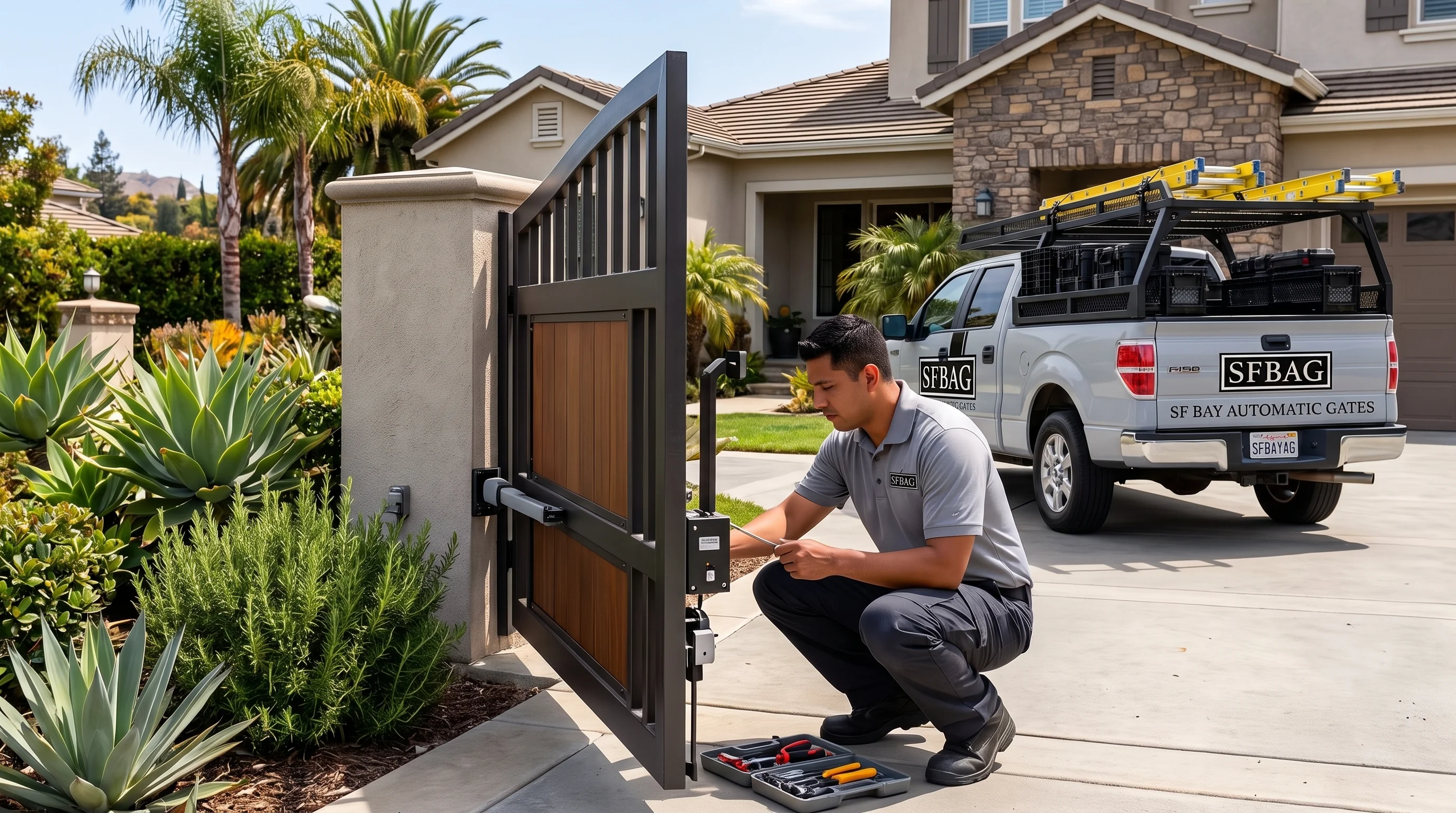
A fence can look solid from the street and still leave a property exposed, and the weak point is usually the same place every time: the fence gate. It is the one section of the perimeter designed to move, which means it carries hinges, latches, posts, and hardware that all wear at different rates. Across the Bay Area, where coastal fog, winter rain, and long dry summers take turns working on metal and wood, a gate that closed tightly a few years ago can start to sag, drift, or fail to latch without anyone noticing until something goes wrong. Property owners who work with an experienced fence contractor tend to catch these issues early, because a trained eye looks at the gate as part of the security system rather than as an afterthought attached to the fence line.
Security, in this context, is not only about stopping intruders. A well-built fence gate keeps children and pets inside, slows down package theft, protects pool areas, and signals to anyone passing by that the property is maintained and watched. A poorly built or neglected gate does the opposite. It invites testing, it can often be opened with a simple push or lift, and it becomes the path of least resistance through an otherwise well-protected perimeter. Understanding what separates a gate that helps from one that hurts is the first step toward fixing the problem before it becomes a much larger one.
How a Fence Gate Becomes the Weakest Point in the Perimeter
Every fence line has continuous structure except at the opening. Panels are supported on both sides by posts set in concrete, and the load spreads evenly along the run. A fence gate, by contrast, hangs from one side, and the full weight of the frame pulls downward and outward on a single hinge post every hour of every day. Over time, that constant leverage loosens fasteners, tilts posts that were not set deep enough, and pulls the latch side out of alignment. Once the gate drops even a fraction of an inch, the latch stops engaging cleanly, and many owners respond by propping, tying, or simply leaving the gate unlatched. At that point the fence is still standing, but the security it was supposed to provide is gone.
The Bay Area's soil adds another layer to the problem. Expansive clay in much of the South Bay and East Bay swells in wet months and shrinks during dry ones, and that seasonal movement shifts posts gradually. A gate that was perfectly plumb when installed can bind against its frame in January and swing loose by August. Recognizing that the gate is a moving system inside a moving landscape explains why so many security problems start there rather than along the solid sections of the fence.
Hardware Choices That Decide Fence Gate Security
Hinges and latches are small parts, but they carry most of the responsibility. Light-duty hinges designed for garden gates are often installed on heavier panels, and they stretch or bend under the load. Exposed hinge pins can sometimes be lifted out entirely, allowing the gate to be removed from the outside. Latches mounted where they can be reached over the top or through a gap offer little resistance to anyone determined to get in. Heavy-duty adjustable hinges, tamper-resistant fasteners, and locking latches positioned on the secure side of the gate make a measurable difference, and none of them change the look of the property in a way most owners would notice.
Self-Closing and Self-Latching Mechanisms
A gate that closes and latches on its own removes human error from the equation. Spring hinges or hydraulic closers pull the gate shut after each use, and gravity or magnetic latches catch it without anyone having to think about it. This matters most around pools, where local codes commonly require self-closing and self-latching gates, but it also helps on side yards and driveways where family members, guests, and service workers pass through throughout the week. The mechanism only works, though, if the gate hangs true. A sagging frame can drag against the ground or strike the latch at the wrong angle, so the closer ends up fighting the gate instead of guiding it.
Adjusting Closers as the Fence Gate Settles
Closers and self-latching hardware need periodic adjustment as seasons change and posts settle. Tension that worked in spring may slam the gate in summer heat or fail to pull it closed when damp wood swells in winter. A quick adjustment every few months keeps the fence gate closing with the right speed and force, and a closer that keeps drifting out of adjustment is often the first sign that a post or hinge needs deeper attention.
Materials and Frame Design
The frame determines how long the hardware can do its job. Wood gates without diagonal bracing tend to rack into a parallelogram shape, dropping the latch corner over time. Metal gates resist that movement better, especially when welded rather than bolted, but they still need proper post sizing and corrosion protection, particularly near the Bay where salt air accelerates rust. Steel and wrought iron offer the strongest barrier, aluminum offers low maintenance and good corrosion resistance, and each material responds differently to the region's climate. Matching the frame to the height, width, and use of the opening is what keeps a gate square for years instead of months.
Signs a Fence Gate Is Hurting Security Instead of Helping
Most gate failures give warning well before they become serious. A gate that has to be lifted to latch, one that swings open on its own in the wind, or one that leaves a visible gap at the bottom or latch side is already compromising the perimeter. Rust streaks around hinges, cracked concrete at the base of posts, and fasteners that spin without tightening point to structural issues rather than simple wear. A latch that needs a firm shove or a precise angle to catch is another common signal, and it usually leads people to leave the gate unlatched simply because closing it properly takes too much effort.
Visibility and height also play a role. A fence gate that is noticeably lower than the surrounding fence, or one with horizontal rails on the outside that work like a ladder, gives intruders an easy way over. Gaps beneath the gate large enough for an animal or a hand to pass through defeat the purpose of the enclosure. Property owners in dense neighborhoods of San Jose, where side yards often sit a few feet from sidewalks and neighboring lots, feel these weaknesses quickly, because the gate is the first thing anyone approaching from the street will see and test.
What a Professional Fence Gate Inspection Covers
A thorough inspection starts at the ground and works up. Posts are checked for plumb, depth, and footing condition, since a gate can never hang correctly from a post that is leaning or loose. Hinges, latches, and closers are tested through their full range of motion, and the gap between the gate and its frame is measured at the top and bottom to confirm the gate is square. Welds, fasteners, and finishes are examined for corrosion or fatigue. The result is a clear picture of whether the fence gate needs a simple adjustment, new hardware, a rebuilt frame, or a reset post, and that distinction matters because each fix addresses a different root cause.
When to Repair and When to Replace a Fence Gate
Repairs make sense when the frame is sound and the problem sits in the hardware or alignment. Replacing a worn hinge, adding a diagonal brace, resetting a post in fresh concrete, or installing a better latch can restore both function and security with far less disruption than a full replacement. Replacement becomes the better path when the frame itself has rotted, rusted through, or warped beyond correction, or when the existing gate no longer matches the security needs of the property. A home that now has a pool, a business that now stores equipment outside, or an owner who has experienced a break-in may simply need a stronger design than the original gate ever offered.
The decision also depends on how the gate fits with the rest of the fence. A new fence gate installed on an aging fence line can end up out of alignment within a season if the surrounding posts are also failing. In those cases, evaluating the full perimeter at once prevents paying for the same work twice. An honest assessment should explain what is wrong, why it happened, and which option will actually hold up, rather than defaulting to the largest possible job.
Upgrading a Fence Gate for Long-Term Security
Upgrades do not always mean replacing everything. Many properties benefit from adding a keyed or keypad lock, switching to concealed or tamper-resistant hinges, extending the gate height to match the fence, or adding a drop rod on double gates so the inactive leaf cannot be pushed open. For larger openings and driveways, converting a manual gate to an automated one with safety sensors and controlled access can change how a property is used day to day. Each of these improvements works best when planned with the gate's structure in mind, since added weight or hardware can overload a frame that was never designed for it.
Choosing the Right Fence Contractor for Gate Work in the Bay Area
Gate work sits at the intersection of fencing, metal fabrication, and hardware installation, and not every installer handles all three well. A qualified professional should hold the appropriate California contractor license, carry insurance, and be able to explain how posts will be set, how the frame will be braced or welded, and which hardware will be used and why. References and photos of completed gate projects, not just long fence runs, show whether the team understands the specific demands of a moving section. Clear written scopes and realistic timelines are also good signs, especially across the San Francisco Bay Area, where permitting rules, property lines, and neighborhood guidelines vary from one city to the next.
The right partner also thinks ahead. A gate built today should be able to accept a lock upgrade, a closer, or even automation later without needing to be rebuilt, and asking how the design allows for those changes separates an installer who hangs panels from one who builds complete perimeters. For property owners weighing whether their current gate is helping or hurting security, a detailed evaluation from an experienced fence contractor is the most direct way to find out, turning a vague concern into a clear plan that protects the property for years to come.