
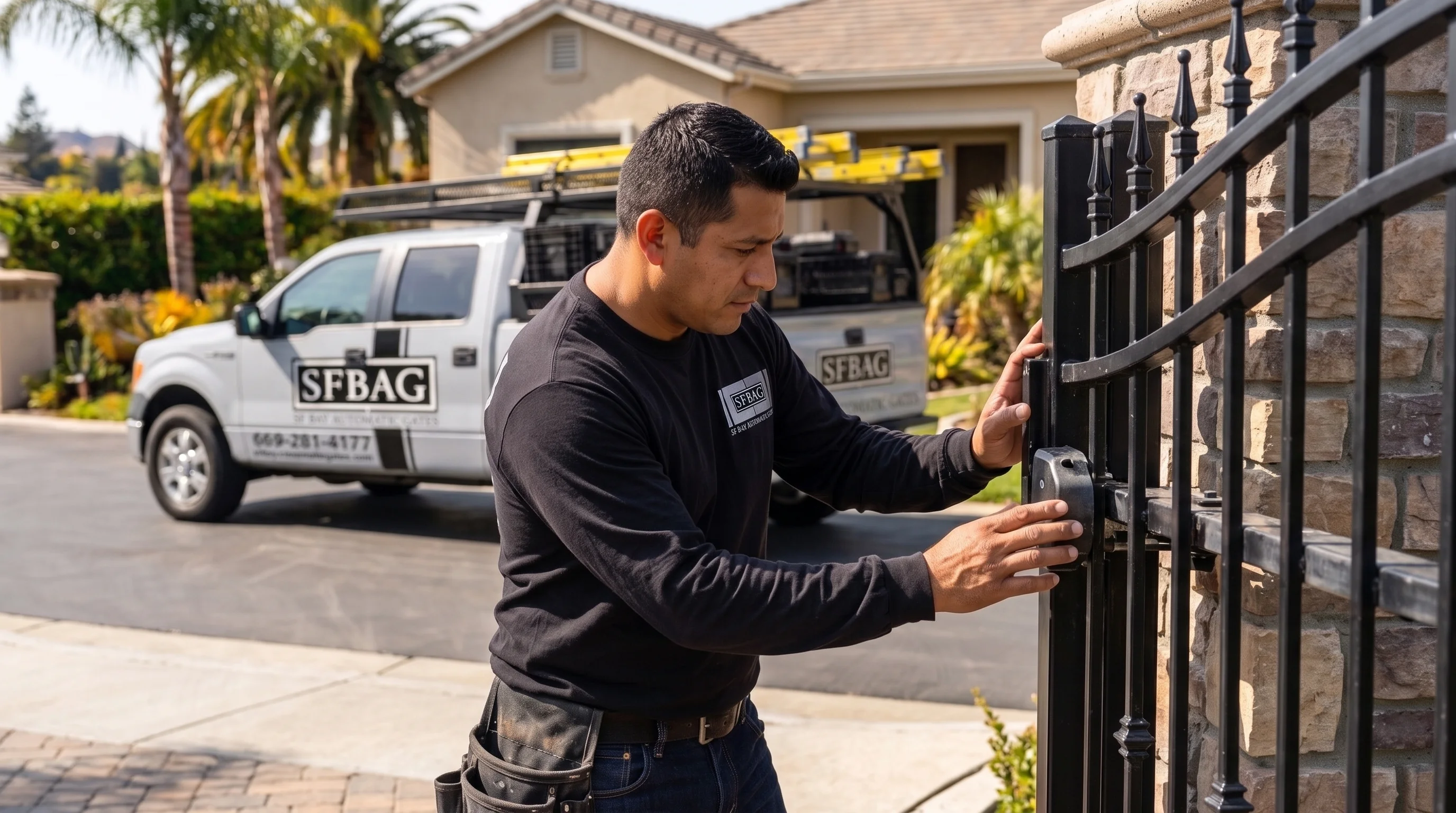
From the street, two gates can look remarkably similar. Both may have the same height, the same style of pickets, and the same finish color, and both may open smoothly on the day they are installed. Yet one driveway gate may continue to perform flawlessly for decades while the other begins to sag, rust, or struggle within a few years. The difference lies in details that are not always visible: materials, fabrication, finishes, hardware, footings, automation, and installation quality. For homeowners across the Bay Area, understanding what separates residential driveway gates that are worth the investment from those that are not makes it much easier to choose wisely.
A gate is a long-term part of the home, affecting security, privacy, safety, and curb appeal every day. Knowing which qualities matter most helps homeowners compare options with confidence and avoid paying twice for an entrance that does not last as long as it should.
Why Residential Driveway Gates Differ So Much in Quality
The market includes everything from lightweight prefabricated kits to fully custom fabricated gates, and installation methods vary just as widely. Some gates are designed specifically for the site, the slope, and the climate, while others are adapted from a standard size with little consideration for wind, soil, or daily use. Some installers set deep footings, size operators carefully, and test every safety device, while others take shortcuts that are invisible at first. These differences explain why gates that look alike can deliver very different experiences over time.
The local environment magnifies these differences. Fog and salt air near the coast, heat in inland valleys, steep hillside lots, and expansive clay soils across much of the region all place stress on gates. A gate built to handle these conditions will continue to perform, while one designed for an easier environment may not survive more than a few seasons without significant repairs.
Frame Construction and Materials
The frame is the backbone of the gate. Heavier-gauge steel tubing, solid bar pickets, and properly braced frames resist bending and racking, keeping the gate square for years. Wrought iron and ornamental iron provide classic beauty and substantial strength, aluminum offers corrosion resistance with lighter weight, and wood panels mounted on steel frames combine warmth with stability. Weld quality matters as much as material choice, since clean, complete welds keep joints strong under the repeated stress of opening and closing.
Finishes That Protect the Investment
Finish quality determines how well a gate holds up to weather. Galvanizing followed by a quality powder coat provides layered protection for steel, while proper surface preparation ensures the coating bonds firmly. Hollow sections should include drain holes so trapped water cannot rust them from the inside. Wood requires durable species and thorough sealing on every surface. A finish that starts peeling or rusting within a few years diminishes both appearance and value, and refinishing a gate in place is far more involved than finishing it properly the first time.
Hardware That Carries the Load
Hinges, rollers, latches, and locks carry the weight and movement of the gate. Heavy-duty bearing hinges, rollers rated for the gate's weight, and stainless or coated hardware last far longer than light-duty components. Investing in better hardware is one of the simplest ways to extend a gate's service life.
Footings, Posts, and Site-Specific Design
Even the best gate will fail if it is poorly supported. Posts must be sized for the gate's weight and leverage, and footings must be deep and wide enough to resist movement in expansive soil. On sloped lots, the design must account for grade so the gate clears the pavement without dragging, which may call for rising hinges, articulated panels, or a sliding design. Drainage around posts and control equipment prevents water from softening footings and damaging electronics.
Site-specific design also includes setback from the street, the swing or slide path, and the relationship between the gate and the home's architecture. In Hillsborough, where many residential properties feature long, winding approaches, mature landscaping, and homes with distinctive architecture, entrances often need custom dimensions and careful placement to suit both the terrain and the design of the home. Similar attention benefits properties throughout the Peninsula, Silicon Valley, the East Bay hills, and Marin, where no two sites are quite the same.
Swing, Sliding, and Cantilever Options
The style of operation affects both performance and longevity. Swing gates suit level driveways with room for the leaves to open, and dual swing designs reduce the load on each hinge for wider openings. Sliding gates work well on steep or narrow sites where a swing gate would strike the pavement or block parking. Cantilever sliding gates avoid ground tracks entirely, which helps on properties with heavy leaf litter, gravel, or uneven paving. A quality provider recommends the style that suits the site rather than the one that is easiest to install, and that choice has a large effect on how well the gate performs over time.
Matching the Gate to Daily Use
How often the gate is used should shape its design. A gate that opens a few times a day has different needs than one serving a busy household with multiple drivers, frequent deliveries, and regular service visits. Higher use calls for heavier hinges, operators rated for more cycles, and access control that can manage several users. Planning around real daily use keeps the gate from wearing out prematurely.
Automation That Matches the Gate
Many residential gates are automated, and the operator must be matched to the gate's weight, width, wind exposure, and expected use. An undersized operator may work at first but will wear out sooner, while a properly sized one runs smoothly and quietly for years. Soft-start and soft-stop features reduce strain on the gate, battery backup keeps it working during outages, and safety devices such as photo eyes and contact edges protect people, pets, and vehicles.
Safety Features That Separate Good Gates From Great Ones
Safety is one of the clearest dividing lines between quality gates and the rest. A well-designed residential gate includes entrapment protection, external sensors positioned to cover the full travel path, guarded pinch points, and warning signage. Force and limit settings should be adjusted precisely and tested at installation, and the gate should stop and reverse reliably when it meets an obstruction. Lower-quality installations sometimes omit sensors or leave them poorly aligned, which creates real risks for children, pets, and guests and can cause nuisance reversals that frustrate daily use.
Design, Value, and Curb Appeal
A quality gate complements the home rather than competing with it. Thoughtful design considers proportion, style, materials, and color, ensuring the gate looks like part of the original architecture. Matching pedestrian gates, fencing, and lighting create a cohesive entrance. Well-designed gates are often viewed as an attractive feature by buyers, adding perceived value along with security and privacy for the people who live there today.
The Lifetime View of Value
The true value of a gate becomes clear over its lifetime. A gate that requires frequent repairs, refinishing, or operator replacement can end up far more costly than one built correctly from the start. Evaluating materials, finishes, hardware, footings, and automation together provides a better measure of value than comparing initial proposals alone. Warranties that cover materials, finishes, operators, and workmanship, along with reliable local service, add further protection.
Warranty and Service as Part of Quality
A gate's quality does not end with the materials and installation. The support behind it determines how quickly small problems are corrected and how long the system remains reliable. Strong warranties cover the frame, finish, hardware, operator, and workmanship for clearly stated periods, and they come from providers with a local service team that can respond promptly. Maintenance programs that include periodic inspection, lubrication, battery testing, and safety checks keep the gate performing as intended. When comparing options, the service relationship deserves as much weight as the gate itself, because even the best-built entrance benefits from regular attention over its lifetime.
Questions That Reveal Quality
A few questions help separate durable gates from short-lived ones. What gauge and type of material will be used, and how is the frame braced? What finish system protects the metal? What hinges, rollers, and locks are specified? How deep are the footings, and how is the slope addressed? Which operator capacity is recommended, and why? What safety devices are included? What does the warranty cover, and who handles service? Clear, specific answers indicate a provider focused on quality, while vague responses deserve caution.
Choosing Residential Driveway Gates Worth the Investment
Residential driveway gates that deliver lasting value share common traits: solid construction, durable finishes, quality hardware, well-designed footings, correctly sized automation, thoughtful design, and dependable support. Homeowners across San Jose, San Francisco, and the broader Bay Area who focus on these qualities enjoy entrances that remain secure, attractive, and reliable for many years.
Not every gate is created equal, but understanding the differences makes it possible to choose one that is truly worth the investment. For homeowners ready to plan a new entrance, a consultation with specialists who design, fabricate, and install every kind of driveway gate is the best way to ensure the result lasts.