
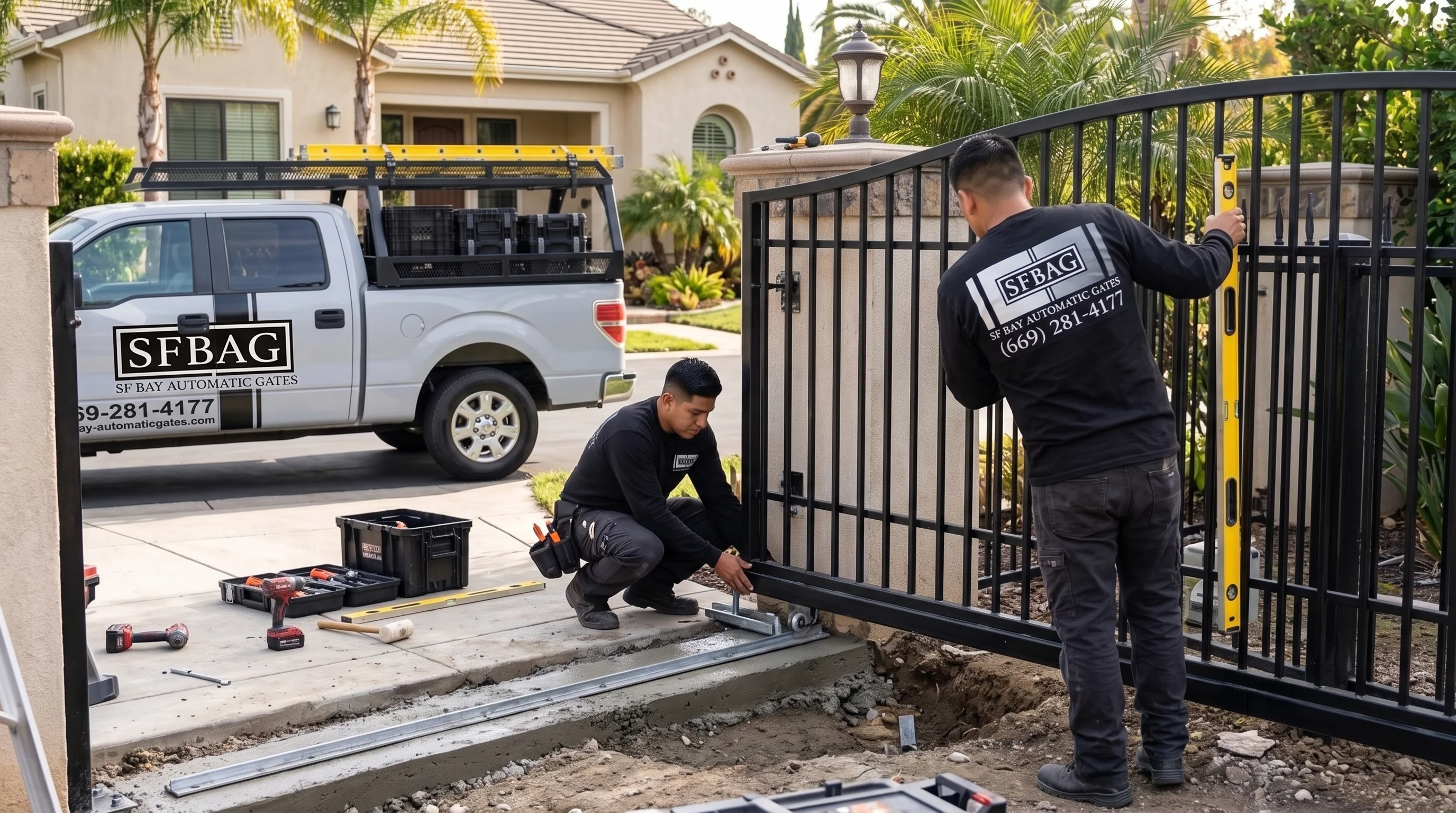
A driveway entrance is one of the first things anyone notices about a home, and it is also one of the few features that shapes daily routines from the moment a car pulls in. Homeowners considering driveway gate installation in the Bay Area are usually balancing several goals at once: better security, more privacy, a safer place for children and pets, and an entrance that complements the architecture rather than competing with it. Those goals are achievable, but the path to them runs through decisions about layout, materials, power, access control, and local rules that are easy to underestimate at the start. Working with a team experienced in automatic gate installation helps turn a general idea into a gate that fits the site, operates reliably, and holds up to the region's mix of fog, rain, heat, and shifting soil.
Planning ahead matters because a driveway gate is not a single product dropped into place. It is a system made up of the gate itself, the posts or pillars that carry it, the operator that moves it, the power and wiring that feed it, and the safety and access devices that control it. Each part affects the others, and the choices made during planning determine whether the finished entrance feels effortless or becomes a recurring source of service calls.
Why Driveway Gate Installation in the Bay Area Requires Local Planning
The Bay Area packs an unusual range of conditions into a short distance. Coastal neighborhoods deal with salt air and persistent fog, inland valleys see summer heat that pushes equipment hard, and hillside communities contend with steep grades, retaining walls, and drainage that changes with every storm. Much of the region also sits on expansive clay soil that swells in winter and shrinks during the dry months, gradually shifting posts that were not set deeply enough. A gate design that works perfectly on a flat lot in one city may struggle on a sloped driveway a few miles away, which is why site-specific planning is the foundation of any successful project.
Local rules add another layer. Cities and counties across the region regulate fence and gate height, setbacks from the street, visibility at driveway entrances, and electrical work, and some neighborhoods have homeowners association guidelines or design review requirements. Many jurisdictions also expect automated gates to provide access for emergency responders. Understanding these requirements before a design is finalized prevents redesigns, permit delays, and costly changes after the gate is built.
Measuring the Opening and Reading the Site
Every good design starts with accurate measurements and a careful look at the property. The width of the opening, the slope of the driveway, the distance between the gate and the street, the location of underground utilities, and the position of trees, walls, and landscaping all influence what type of gate will work. A gate that sits too close to the street can leave vehicles waiting in traffic while it opens, while a gate on a steep grade may scrape the pavement unless the design accounts for the change in elevation. Noting these details early allows the design to solve problems on paper instead of in the field.
Choosing Between Swing and Sliding Designs
Swing gates open inward like a pair of doors and suit driveways with enough level space behind the opening for the leaves to travel. Sliding gates move sideways along the fence line and work well where the driveway slopes upward behind the gate or where space is limited. Cantilever sliding gates avoid a ground track altogether, which helps on driveways with uneven pavement or heavy debris. The right choice depends on the site rather than preference alone, and each style places different demands on posts, footings, and operators.
Planning for Slopes and Uneven Driveways
Sloped driveways are common throughout the hills of the East Bay, the Peninsula, and Marin, and they require extra attention. Swing gates on an uphill grade may need raised hinges, articulated leaves, or a sliding design instead, while sliding gates on a slope need a track or cantilever system that remains level. Addressing the grade during design keeps the gate from dragging, reduces strain on the operator, and avoids gaps beneath the gate that defeat its purpose.
Materials, Style, and Durability for a Bay Area Driveway Gate
Material choice affects appearance, strength, weight, and maintenance. Steel offers excellent strength and security, wrought iron and ornamental iron provide a classic look with substantial presence, aluminum resists corrosion and keeps weight down, and wood or composite panels add warmth and privacy when mounted on a rigid metal frame. In foggy and coastal areas, galvanized steel finished with a quality powder coat holds up far better than painted steel, and stainless or coated hardware prevents rust streaks from forming at hinges and fasteners. Matching the style of the gate to the home, whether through ornamental details, clean horizontal lines, or a solid privacy panel, makes the entrance feel like part of the original design rather than an addition.
Posts, Pillars, and Footings
The strength of a gate depends on what holds it up. Heavy driveway gates exert continuous leverage on their posts, and footings must be deep and wide enough to resist that load in expansive soil. Masonry pillars need internal steel reinforcement when they will carry a gate, and existing pillars should be evaluated by a professional before being reused. Undersized footings are one of the most common causes of sagging gates and strained operators, and because they are buried, they are rarely noticed until problems appear.
Power, Automation, and Access Control
Most new driveway gates in the region are automated, and that decision shapes the rest of the project. The operator must be matched to the gate's weight, width, and expected number of daily cycles, with additional capacity for windy locations where solid panels catch gusts. Power can come from a hardwired electrical line, a low-voltage system, or solar panels where running new wiring is impractical. Battery backup keeps the gate working during outages, which is especially valuable in areas affected by storm-related power interruptions or planned shutoffs during high fire-risk weather.
Access control determines how residents, guests, and service providers will use the gate. Remote controls, keypads, video intercoms, and smartphone-based access each offer different levels of convenience and security, and many homeowners combine them. Vehicle detection loops allow the gate to open automatically for departing cars, and safety devices such as photo eyes and edge sensors keep the gate from closing on people, pets, or vehicles. Neighborhoods like those in Concord, where many homes have long driveways and active families, benefit from layouts that keep the gate far enough from the street for cars to pull completely off the road while it opens.
Safety Features That Should Never Be Optional
Automated gates move heavy loads, so safety features are essential rather than optional. Photo eyes, contact edges, and obstruction sensing allow the gate to stop and reverse when something is in its path, and proper force settings keep it from pushing through an obstruction. Pinch points between the gate and posts should be guarded, and sliding gates need protection at the rollers and along the travel path. A professional installation includes testing every safety device before the gate is placed into service, along with clear warning signage at the entrance.
The Installation Process From Start to Finish
A typical project moves through several stages. After the site visit and design, the team confirms permits, orders or fabricates the gate, and schedules any electrical work. Footings and posts are installed and allowed to cure, conduit and wiring are run, and the gate is hung and adjusted so it moves freely by hand before the operator is connected. The operator, safety devices, and access controls are then installed, programmed, and tested together. A final walkthrough should cover how to use the system, how to operate the manual release during an outage, and what routine maintenance will keep it reliable.
Timelines vary with the scope of the project. A simple automated swing gate on a level driveway can move quickly once materials are ready, while a custom fabricated gate on a sloped site with new electrical service and integrated access control may take several weeks from design to completion. Weather can affect concrete work in the rainy season, and permit review adds time in some cities. Setting realistic expectations at the start keeps the project on track and avoids surprises for everyone involved.
Choosing the Right Team for Automatic Gate Installation
The quality of the finished entrance depends heavily on who designs and installs it. A qualified team should hold the appropriate California contractor license, carry insurance, and have experience with gates similar in size, style, and site conditions. Reviewing completed projects, especially on sloped or challenging driveways, and confirming who handles fabrication, electrical work, permits, and ongoing service provides a clear picture of what to expect. Written proposals that specify materials, finishes, operator capacity, safety devices, and warranty terms make it far easier to compare options fairly.
Driveway gate installation in the Bay Area rewards careful planning, and homeowners who take time to understand their site, their options, and their local requirements end up with entrances that look right and work reliably for years. Across San Jose, San Francisco, the East Bay, and the Peninsula, the most satisfying projects begin with a detailed conversation about how the gate will be used every day. For homeowners ready to start planning, consulting specialists in automatic gate installation is the most direct way to turn a new entrance from an idea into a secure, attractive, and dependable part of the home.