
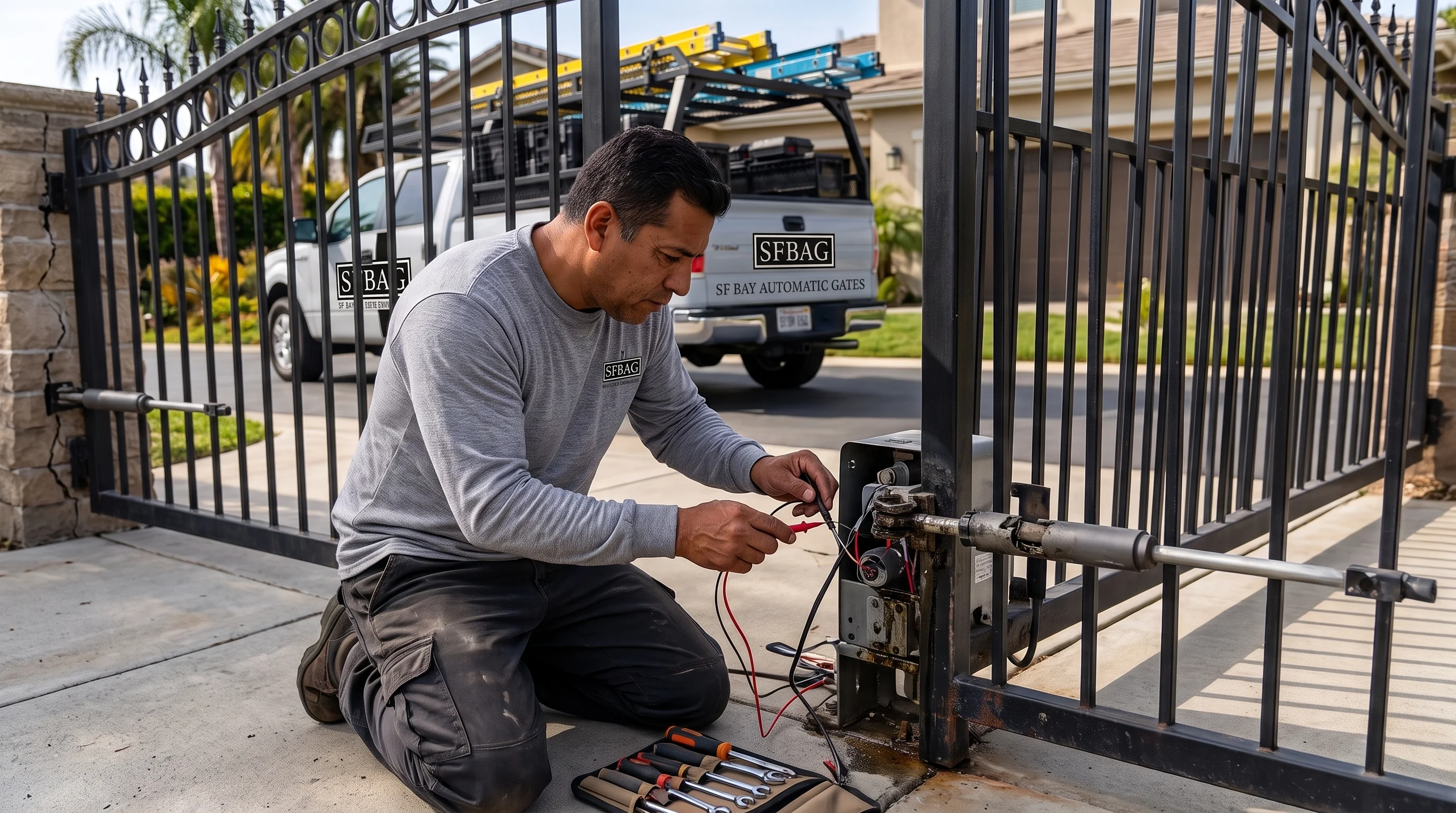
A gate that hesitates before opening, makes a new noise on the track, or occasionally ignores a remote signal rarely feels like an emergency in the moment. Most property owners notice these small signs and decide to wait, assuming the gate will sort itself out or that the issue is too minor to worry about. In practice, that hesitation is often the first stage of a larger problem, and understanding when automatic gate repair is genuinely needed can prevent a manageable fix from turning into a full system failure.
Why electric gate repair Gets Delayed Until It's Urgent
Gates are built to operate quietly in the background of daily life, which is part of why early warning signs are so easy to dismiss. A slight delay in response time or an occasional squeak does not stop the gate from functioning, so it rarely triggers the same urgency as a car that will not start or a door that will not lock. That gradual tolerance for minor issues is exactly what allows small mechanical or electrical faults to compound over weeks or months until the gate stops working altogether, often at the least convenient moment.
The Cost of Waiting on electric gate repair
Every mechanical system has a threshold where minor wear turns into component failure, and automated gates are no exception. A motor working slightly harder than it should to compensate for a misaligned track will eventually overheat or burn out. A sensor that occasionally misreads an obstruction will eventually stop reading it altogether, creating a safety risk rather than just an inconvenience. Addressing these issues while they are still minor almost always costs less time, effort, and disruption than waiting for a complete breakdown, since a full failure often means replacing a component rather than simply adjusting or repairing one.
How Minor Issues Compound Over Time
A gate rarely fails all at once. Instead, one small issue places extra strain on another part of the system, and that strain accelerates wear across components that were otherwise functioning normally. A track that is slightly out of alignment forces the motor to work harder on every cycle, which shortens the motor's lifespan. A worn hinge changes how weight is distributed across the gate, which can eventually affect how well it seals against its frame or how accurately its sensors detect position. By the time a gate stops opening entirely, the underlying cause is often several smaller problems that were never addressed individually.
Common Signs That electric gate repair Is Needed
Recognizing the early indicators of a failing gate system makes it far easier to schedule repairs before an emergency call becomes necessary. Some signs are obvious, such as a gate that no longer opens or closes at all, while others are subtle enough that property owners across the Bay Area often overlook them for weeks before deciding to act.
Mechanical Warning Signs
A gate that moves slower than usual, hesitates partway through its cycle, or makes grinding or scraping noises is signaling that something in the mechanical system needs attention. These sounds are frequently tied to track misalignment, worn rollers, or debris buildup, all of which are relatively simple to correct when caught early but can damage the motor or track further if ignored.
Electrical and Sensor-Related Symptoms
Electrical issues tend to show up as inconsistent behavior rather than a single clear symptom. A gate might respond to a remote from one angle but not another, or it might open on command but fail to close automatically. Safety sensors that intermittently fail to detect a vehicle or person in the gate's path are particularly important to address quickly, since these components exist specifically to prevent injury or property damage during operation.
Power and Connectivity Failures
In some cases, the gate itself is mechanically sound, but the issue lies in the power supply, wiring, or control board that governs its operation. Storms, rodent activity, and general wear on exposed wiring are common culprits across properties throughout the Bay Area, and these issues can cause a gate to behave unpredictably even when every visible component looks intact.
What a Professional electric gate repair Process Typically Involves
A proper repair starts with diagnosing the actual source of the problem rather than simply addressing the most visible symptom. A gate that will not close, for example, could be affected by a misaligned sensor, a software or control board issue, an obstruction in the track, or a mechanical fault in the motor itself, and each of those causes requires a different fix.
Diagnostic Testing Before Any Repair Work Begins
Technicians typically test the full range of motion, check safety sensor accuracy, inspect wiring connections, and evaluate the condition of tracks, hinges, and rollers before making any adjustments. This step matters because replacing a part that was not actually the source of the problem wastes time and does not resolve the underlying issue, which often resurfaces shortly afterward in a slightly different form.
Repair Versus Replacement Decisions
Not every issue requires a new component. Many electric gate repair situations are resolved through realignment, cleaning, lubrication, or a targeted electrical fix rather than a full parts replacement. However, components that have reached the end of their functional lifespan, such as a motor that has been overworking for months or a control board damaged by moisture, are usually better replaced outright, since a temporary fix on a failing part tends to lead to a repeat service call within a short period of time.
How San Jose and Bay Area Properties Are Affected by Delayed Repairs
Coastal humidity, fog, and seasonal rain place additional strain on gate hardware across the region, which means issues that might progress slowly in a drier climate can accelerate faster locally. Salt-tinged air near San Francisco and the surrounding bay is particularly hard on exposed metal components, making regular inspection more important than it might be for properties further inland.
Security Implications of an Unrepaired Gate
A gate that fails to close properly is not just an inconvenience, it is a security gap. A property that relies on its gate as a primary access control point loses that protection the moment the gate stops functioning as intended, whether it gets stuck open, closes too slowly, or stops responding to remote commands altogether. For businesses and homes across the Bay Area that depend on controlled access, a malfunctioning gate can undo the security benefit the system was originally installed to provide.
Preventive Habits That Reduce the Need for electric gate repair
While no automated system runs indefinitely without attention, a few consistent habits can meaningfully extend the interval between repairs. Keeping the track clear of debris, leaves, and standing water reduces strain on the motor and rollers, since buildup in the track is one of the most common reasons a gate begins to move unevenly. Periodically testing the remote, keypad, and safety sensors, rather than only relying on them passively, also helps surface small issues before they affect daily use.
Scheduling Routine Inspections
Many property owners across San Jose and the wider Bay Area treat gate inspections the way they would treat routine vehicle maintenance, checking components on a predictable schedule rather than waiting for a visible problem to appear. This approach tends to catch wear on hinges, tracks, and wiring well before it affects performance, and it also gives a clearer picture of which components are approaching the end of their functional life. A gate that receives this kind of attention is far less likely to fail suddenly, and when a repair is eventually needed, it tends to be smaller in scope and easier to resolve than one caused by months of unaddressed wear.
Recognizing When It's Time to Schedule electric gate repair
A gate that shows any combination of slow movement, unusual noise, inconsistent remote response, or sensor irregularities is signaling that a closer inspection is worthwhile, even if the gate still technically opens and closes. Waiting for a complete failure rarely saves money or effort in the long run, since components under strain tend to fail in a way that affects surrounding parts as well.
Property owners who treat these early signs seriously, rather than assuming a gate will simply continue working despite the symptoms, tend to spend less on upkeep over the life of the system. Addressing automatic gate repair needs while they are still isolated issues keeps the gate functioning as intended and avoids the disruption of an entrance that suddenly stops working altogether. In a region where gates serve both a security and a practical daily function, keeping that system reliable matters as much as installing it correctly in the first place, and staying attentive to small changes in performance is usually the simplest way to avoid a larger automatic gate repair project down the line.