
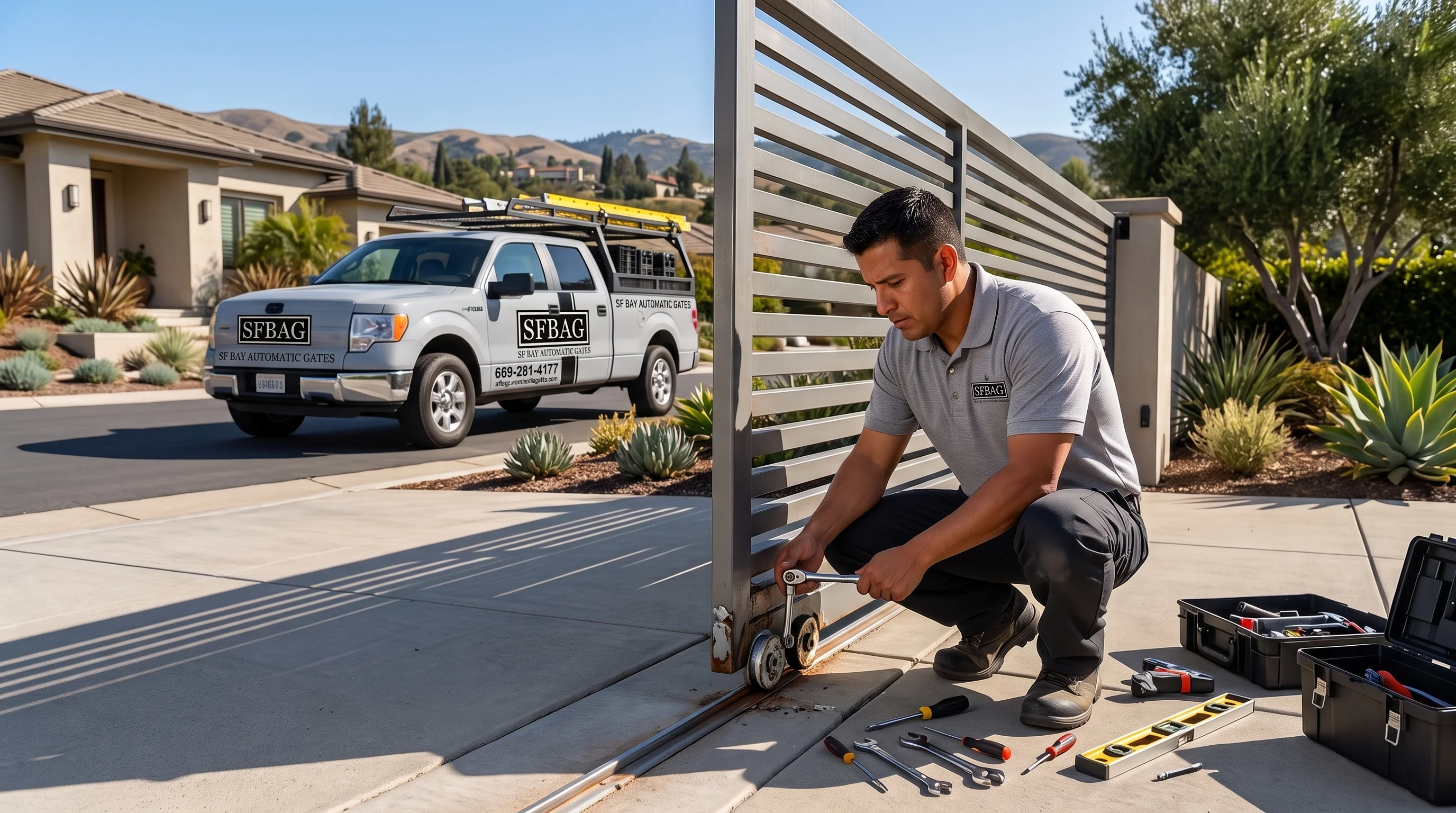
Metal gates are built to last, but they are not built to be ignored. A little surface rust, a hinge that squeaks, a latch that needs an extra push, or a sliding gate that hesitates on its track can all seem like minor annoyances. Left alone, those small issues tend to grow into bent frames, failed welds, burned-out operators, and gates that no longer open or close at all. For automated systems in particular, scheduling automatic gate repair at the first sign of trouble is usually far simpler and less disruptive than waiting for a complete breakdown. Across the Bay Area, where fog, salt air, and seasonal rain accelerate wear on metal, that timing matters even more.
Understanding how minor problems escalate, and which symptoms signal the need for attention, helps property owners protect both the gate and everything it secures. The goal is not to react to every scratch but to recognize the issues that will only get worse, and to address them while the repair is still straightforward and the gate is still doing its job.
How Small Problems Grow Without Metal Gate Repair
Gates operate under constant stress. Every opening and closing cycle puts load on hinges, posts, rollers, and welds, and automated gates may cycle dozens of times a day. When one component starts to wear, the others compensate. A worn hinge lets the gate drop slightly, which misaligns the latch and forces the operator to work harder. A dragging gate strains the motor and gearbox, which heat up and wear faster. A small crack in a weld allows the frame to flex, which spreads the crack further with every cycle. This chain reaction is why a gate that seemed to have one minor problem can suddenly need several repairs at once.
Weather adds to the stress. Moisture settles into joints and hollow frames, salt air accelerates corrosion near the coast, and temperature swings cause metal to expand and contract throughout the day. Ground movement from expansive clay soils can shift posts out of plumb over a few seasons. None of these forces act quickly, but together they steadily degrade a gate that is not maintained. Timely metal gate repair interrupts that process before the damage spreads from one component to the next.
Rust and Corrosion
Rust is the most visible early warning on steel and iron gates. It often begins at scratches, welds, fasteners, and the bottom rail where water collects, and it spreads beneath coatings where it cannot easily be seen. Once corrosion eats into the metal, it weakens the structure and can eventually cause pickets or rails to break away from the frame. Addressing rust early by removing corrosion, treating the metal, and restoring the protective coating preserves the gate's strength and appearance, while ignoring it can turn a cosmetic issue into a structural one.
Cracked Welds and Loose Connections
Welds hold the gate frame together, and cracks usually appear at stress points such as corners, hinge attachment points, and the spot where the operator arm connects. A cracked weld allows movement that the frame was never designed to handle, leading to sagging, racking, and misalignment. Loose bolts and fasteners create similar problems. These issues are easy to miss because they often start small, but they tend to accelerate once the frame begins to move.
Why Weld Repairs Need Proper Preparation
Effective weld repairs require grinding out the damaged area, cleaning the metal, rewelding with the appropriate technique, and refinishing the joint to prevent new corrosion. Quick fixes that simply add weld material over a crack or a rusty surface rarely last, and they can hide ongoing damage beneath a fresh layer of paint.
Hinges, Rollers, and Tracks
Moving parts wear with use. Swing gate hinges can loosen, wear out their bearings, or bend under the weight of a heavy gate. Sliding gates rely on rollers and tracks that collect debris, wear unevenly, or fall out of alignment, causing the gate to jerk, bind, or jump off the track. Cantilever gates depend on precise roller alignment to carry the load without touching the ground. Replacing worn components and realigning the gate restores smooth movement and reduces stress on every other part of the system.
Warning Signs That Call for Metal Gate Repair
Certain symptoms indicate that a gate needs attention soon. Grinding, squealing, or clunking noises during operation, visible sagging or uneven gaps, a latch that no longer catches reliably, and a gate that drags on the ground are all common signs. For automated gates, slower movement, stopping partway, reversing unexpectedly, or requiring multiple attempts to open suggest that the operator is struggling against mechanical resistance. Leaning posts, cracked concrete at the base, and visible rust at welds or hinges also signal problems that will worsen without intervention.
Heavy daily use makes these signs appear sooner. Busy residential communities, office parks, and multifamily properties in places like Sunnyvale often rely on gates that open and close many times each day, and the cumulative wear can turn a small issue into a failure quickly. Property managers in these settings benefit from responding to early warning signs rather than waiting for residents or tenants to report a gate that will not open. The same principle applies to homes throughout Silicon Valley and the wider region, where a failed gate can leave a property unsecured or a vehicle trapped inside.
Latches, Locks, and Gate Stops
Some of the most overlooked metal gate problems involve the small parts that hold a gate in its final position. Latches wear, strike plates shift, and electric locks can fall out of alignment as the frame settles, which means the gate may appear closed while it is not actually secured. Gate stops and positive stops on sliding gates prevent overtravel, and when they are bent or missing, the gate can crash into posts or run past its intended limit, stressing welds and operator components. Checking that the gate closes, latches, and locks in the same position every time is a simple test that reveals a great deal about the condition of the entire system. When any of these parts begins to slip, repairing it promptly keeps the gate secure and prevents the repeated impacts that loosen everything else.
Strain on Automated Gate Operators
An operator is designed to move a gate that swings or slides freely. When hinges bind, rollers wear, or the frame sags, the motor must work harder to complete each cycle, which leads to overheating, worn gears, and premature failure of circuit boards and other components. Correcting mechanical problems protects the operator and often resolves symptoms that appear to be electrical. Safety devices such as photo eyes and edge sensors also need to be checked, since misaligned or damaged sensors can cause erratic behavior or compromise safety.
Repair or Replace: Making the Right Call
Most gate problems can be repaired. Replacing hinges or rollers, resetting posts, repairing welds, treating rust, and adjusting or rebuilding operators can restore a gate to reliable operation. Repair is usually the better option when the frame is structurally sound and the issues are limited to specific components. It preserves the existing design and avoids the disruption of a full replacement.
Replacement becomes more practical when corrosion has compromised large sections of the frame, when the gate has been severely damaged by a vehicle impact, or when repeated repairs suggest an underlying design flaw. It may also make sense when the property's needs have changed, such as upgrading from a manual to an automated system or adding modern access control. A thorough inspection should clarify which path offers the best long-term result for the property.
Preventing Future Metal Gate Repair Needs
Preventive care is the most effective way to avoid major repairs. Regular inspections catch developing problems while they are still minor, and routine maintenance keeps moving parts operating smoothly. For automated gates, professional service at regular intervals helps keep operators, sensors, and safety features functioning correctly, and it creates a record of how the gate is aging over time.
Maintenance Habits That Extend Gate Life
Simple habits make a real difference. Keeping tracks and hinge areas free of debris, lubricating moving parts with appropriate products, washing salt and grime from metal surfaces, and touching up chips in the finish before rust sets in all extend the life of a gate. Paying attention to changes in sound, speed, or alignment allows problems to be addressed early. Trimming vegetation away from the gate and its sensors also prevents interference and moisture buildup around sensitive components.
Getting Professional Automatic Gate Repair at the Right Time
The right time to call for service is when the first warning sign appears, not after the gate stops working. Early intervention usually involves simpler repairs, less downtime, and fewer replaced components. Technicians experienced with both metal fabrication and gate automation can address structural and mechanical issues together rather than treating symptoms separately. For properties across San Jose, San Francisco, and the Bay Area, that combined expertise helps restore reliable, secure operation quickly.
Small problems rarely stay small, and gates are no exception. Paying attention to early signs and responding promptly protects the gate, the operator, and the security of the entire property. When a metal gate begins to sag, rust, drag, or hesitate, arranging professional automatic gate repair is the most effective way to keep a minor issue from turning into a major failure.