
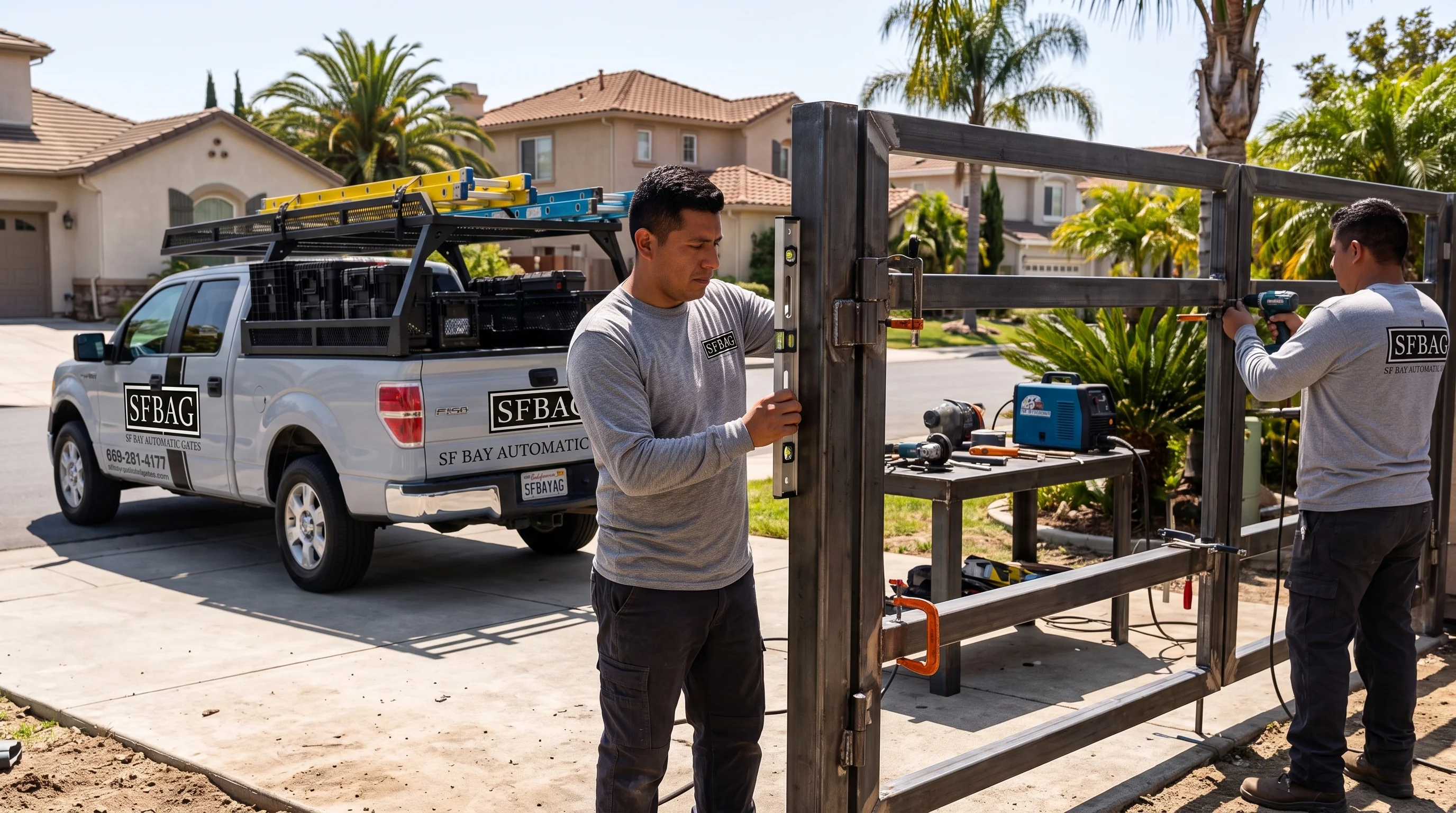
A gate that looks solid on installation day does not always stay that way. Some gates hold up for decades with only routine maintenance, while others begin showing structural issues within a few years despite looking nearly identical when they were first put in. The difference almost always comes down to how the gate was built in the first place, which is why understanding automatic gate installation as a construction process, rather than a simple product purchase, matters more than most property owners realize.
Why gate construction san jose Requires More Than a Standard Approach
Every region has its own combination of soil conditions, weather patterns, and terrain that affects how outdoor structures perform over time, and gates are no exception. San Jose properties often deal with a mix of sloped lots, seasonal rain, and soil that shifts slightly with moisture changes throughout the year, all of which place demands on a gate's foundation and frame that a generic, one-size-fits-all installation may not account for. A gate built without factoring in these local conditions might function correctly for the first year or two, only to develop alignment issues, foundation settling, or premature wear once the site's actual behavior over multiple seasons becomes apparent.
How Local Soil and Climate Affect Gate Longevity
Soil composition plays a larger role in gate durability than most property owners expect. Clay-heavy soil, common across parts of the South Bay, expands and contracts with moisture in ways that can gradually shift a post out of alignment if the foundation was not set deep enough or reinforced properly. Combined with seasonal rain and the general humidity found throughout the Bay Area, this movement can be slow but persistent, which is exactly why foundation work deserves as much attention during construction as the gate itself.
Foundation Depth and Post Stability
A gate is only as stable as what holds it in the ground. Posts set into shallow or poorly compacted foundations tend to develop a lean over time, especially on gates that see frequent daily use or that carry the added weight of automation hardware. Proper foundation depth, adequate curing time for concrete footings, and correct post spacing all contribute to a structure that stays aligned through years of opening and closing cycles rather than gradually working itself loose.
Materials That Hold Up Under gate construction san jose Conditions
Material selection is where many of the long-term performance differences between gates become apparent. A gate that looks similar to another on the surface can behave very differently after several years outdoors, depending on what it was actually built from and how those materials were treated during construction.
Comparing Steel, Wrought Iron, and Aluminum
Steel offers strength and rigidity, making it a common choice for larger or heavier gate designs, though it requires proper coating or galvanizing to resist rust, particularly in coastal air near San Francisco and the surrounding bay. Wrought iron delivers a similar level of strength with a more traditional aesthetic, but it shares the same vulnerability to corrosion if not finished correctly. Aluminum, by contrast, resists corrosion naturally and requires less ongoing maintenance, which makes it a popular choice for properties that want durability without frequent upkeep, though it typically cannot match the rigidity of steel for very large or heavy gate designs.
Finishing and Weatherproofing Techniques
The finish applied to a gate's metal components affects its lifespan as much as the base material itself. Powder coating provides a more durable, chip-resistant surface than standard paint, and hot-dip galvanizing before finishing adds another layer of corrosion resistance that becomes especially valuable in humid or salt-exposed environments. Skipping or shortcutting this step is one of the more common reasons a gate that otherwise seems well built begins showing rust or surface degradation well before it should.
Automation Components and Long-Term Reliability
A gate's construction quality is not limited to its visible frame and posts. The automation system that powers it, including the motor, control board, and safety sensors, is just as much a part of the overall build and plays a significant role in how well the gate performs over time.
Matching Motor Capacity to Gate Weight
An undersized motor working to move a gate heavier than its rated capacity will wear out faster and place additional strain on the track and hinges as it compensates. Proper gate construction accounts for the total weight of the finished gate, including any decorative elements, and selects automation hardware rated to handle that load comfortably rather than at its absolute limit. This kind of planning during the construction phase prevents a cascade of premature wear across multiple components later on.
Wiring and Control System Placement
Where wiring and control components are placed during construction also affects long-term reliability. Housings positioned to avoid standing water, direct sun exposure, or contact with irrigation systems tend to last considerably longer than those installed without much consideration for their surrounding environment. Property owners throughout San Jose and nearby communities who have dealt with premature control board failures often trace the issue back to this stage of construction rather than a defect in the components themselves.
What a Well-Planned automatic gate installation Process Looks Like
A construction process built to last typically begins with a detailed site evaluation that accounts for slope, soil type, drainage, and how the gate will be used on a daily basis. From there, foundation work is completed and given adequate time to cure before posts and framing are set, since rushing this stage is one of the most common causes of long-term instability. Only once the structural elements are solid does automation installation begin, followed by testing of the full system under real operating conditions rather than a single trial run.
Why Rushed Installations Cause Problems Later
Gates installed under time pressure, without allowing foundations to cure fully or without a proper site assessment, often perform acceptably at first, which can make cut corners easy to miss until months or years later. Settling posts, misaligned tracks, and motors working harder than they should are frequently traced back to a construction process that moved faster than local soil and climate conditions actually allowed for. Property owners across the Bay Area evaluating automatic gate installation options benefit from asking specifically about foundation work, curing time, and material specifications rather than focusing only on the finished appearance of the gate.
Questions Worth Asking Before Construction Begins
A few direct questions during the planning stage tend to reveal more about long-term gate performance than any visual comparison of finished products can. Asking how deep foundation footings will be set, how long concrete will be allowed to cure before load is applied, and what grade of steel or aluminum will be used gives a much clearer picture of build quality than simply comparing photos of completed gates. It is also worth asking how the automation system's weight rating compares to the gate's actual finished weight, since this figure is rarely obvious just by looking at the design.
Warranty Coverage as a Quality Indicator
The length and scope of a warranty often reflects how confident a builder is in their own construction process. Warranties that cover structural components such as posts and framing, not just automation hardware, tend to indicate a build that was designed with long-term durability in mind rather than short-term appearance. Property owners across San Jose comparing options are well served by reading warranty terms closely, since gaps in coverage frequently point to the exact areas, foundation work and material grade, most likely to cause problems years down the line.
Signs a Gate Was Built to Last
A well-constructed gate operates smoothly and consistently across seasons, without developing new noises, misalignment, or automation issues as weather conditions shift throughout the year. Posts remain plumb, the frame stays square, and the finish on metal components resists the early signs of corrosion even after repeated exposure to rain and humidity. These outcomes are not accidental; they reflect decisions made during construction about foundation depth, material selection, and automation sizing, all of which matter more to a gate's lifespan than its appearance on the day it is finished.
Property owners across San Jose weighing their options for a new entrance are best served by treating gate construction as a long-term structural investment rather than a straightforward installation task. Asking the right questions about foundation work, material grade, and component sizing before construction begins is the clearest way to end up with a gate that performs reliably for decades rather than one that requires early and repeated attention. Understanding what goes into durable automatic gate installation from the ground up makes it far easier to evaluate whether a proposed approach is built to last or simply built to look finished.