
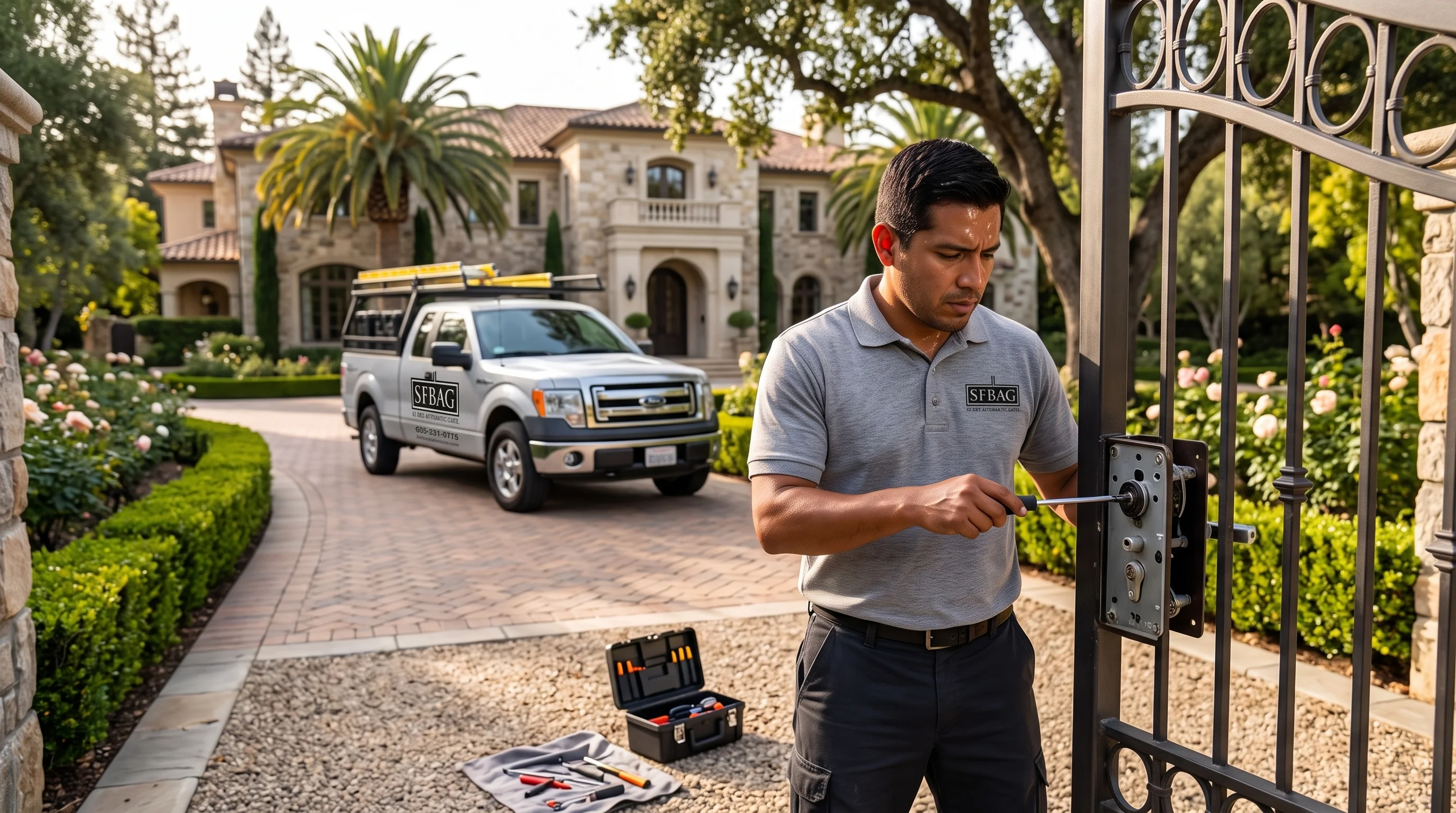
On a luxury estate, the entry gate does far more than open and close. It establishes the first impression of the property, protects privacy, controls who enters and when, and often represents a significant piece of custom craftsmanship in its own right. When that gate begins to show signs of trouble, the consequences reach beyond inconvenience to security, privacy, and the appearance of the home itself. For estate owners in Atherton, scheduling automatic gate repair as soon as warning signs appear protects all of those qualities and prevents small issues from turning into disruptive failures at properties where reliability is expected.
Estate gates also tend to be larger, heavier, and more complex than typical residential gates, with sophisticated access control and integration with security systems. That complexity makes timely gate repair in Atherton especially valuable, because problems in one part of the system can quickly affect the rest.
Gate Repair Atherton: Why Estate Gates Face Unique Demands
Estate properties in the area often feature long driveways, expansive grounds, and entries designed to make a statement. Gates may be wide double-swing designs, long sliding gates, or custom pieces crafted from ornamental iron, steel, wood, or combinations of materials. These gates can weigh considerably more than standard residential gates, and they often operate in settings with mature trees, landscaped medians, and decorative stone or masonry pillars. Each of these features adds to the demands placed on hinges, posts, operators, and electrical systems.
Usage patterns add to the load. Estates frequently receive household staff, landscapers, pool technicians, delivery drivers, and guests in addition to the residents themselves, so the gate may cycle many times each day. Access systems must accommodate different users with different permissions, and the gate must respond reliably to each of them. When performance begins to slip, the impact is felt quickly by everyone who depends on the entry.
Heavy Custom Gates and Operator Load
Operators must be matched to the size and weight of the gate they move. Custom gates that are heavier than anticipated, or that have been modified with added panels or decorative elements, can overload operators that were originally sized correctly. Over time, this leads to overheating, gear wear, and control board failures. Repair work on estate gates often involves evaluating whether the operator is still appropriate for the gate and recommending an upgrade if it is consistently working near its limits.
Hinges, Pivots, and Support Posts
The weight of a large gate is carried by its hinges or pivots and the posts or pillars they attach to. Heavy-duty bearing hinges and pivot systems are designed for this load, but they wear with use and can loosen or bind. Masonry pillars may develop cracks, and steel posts may lean if footings shift. Any movement at the support points affects the entire gate, causing sagging, dragging, and misalignment that strain the operator.
Wood and Mixed-Material Gates
Wood and mixed-material gates add character and privacy, but wood responds to moisture and sun by swelling, shrinking, and warping. These changes affect how the gate hangs and how smoothly it moves, so regular finishing and inspection help maintain both the appearance and the function of these gates. Steel frames hidden inside wood cladding are a common solution on large estate entries, combining the warmth of wood with the rigidity that heavy automated gates require, but they still need attention where the two materials meet, since trapped moisture at those joints can lead to rot on one side and corrosion on the other.
Warning Signs Estate Owners Should Not Ignore
Early indicators of trouble are often subtle. A gate that moves more slowly than it used to, makes grinding or clicking sounds, pauses or reverses unexpectedly, or no longer closes completely is signaling a developing problem. Visible sagging, uneven gaps between gate leaves, scraping on the driveway, rust at joints or hinges, cracks in pillars, and error codes on the operator all deserve attention. Intermittent problems with remotes, keypads, or intercoms can also indicate wiring or control board issues that may worsen.
In Atherton, where heritage oaks and dense landscaping surround many properties, falling debris and root growth add to these risks. Leaves and acorns can collect in tracks and around sensors, roots can shift pavement and posts, and irrigation spray can introduce moisture into control boxes. Estate gates in neighboring communities such as Menlo Park, Woodside, and Portola Valley face similar conditions. Recognizing how the setting contributes to wear helps owners and property managers act before small signs become major failures.
Access Control and Integrated Systems
Many estate gates are part of a larger security ecosystem that includes video intercoms, keypads, card readers, smartphone access, cameras, and integration with home automation. When the gate hesitates or fails, the cause may lie in any of these connected components or in the communication between them. Diagnosing these systems requires familiarity with both gate mechanics and access control technology, and repairs should ensure that every component works together reliably.
Protecting Security, Privacy, and Property Value
A malfunctioning gate can compromise security in ways that are not immediately obvious. A gate that fails to close completely, that can be pushed open when it should be locked, or that stays open after a power interruption leaves the property exposed. For high-profile residents and properties with valuable assets, those gaps are unacceptable. Privacy is also affected when a gate cannot be relied upon to close behind visitors or service vehicles.
Appearance and value matter as well. The entry gate is one of the most visible features of an estate, and signs of neglect such as rust, sagging, or damaged finishes detract from the property's overall impression. Keeping the gate in excellent working and cosmetic condition supports the home's value and reflects the standard of care expected at luxury properties.
Preserving Custom Finishes and Craftsmanship
Custom gates often feature hand-forged details, specialty finishes, and designs that are difficult to replicate. Repairs should preserve these elements whenever possible, using matching materials and finishes along with careful welding and refinishing techniques. Addressing rust and damage early limits the extent of restoration needed and helps maintain the original craftsmanship for years to come.
Upgrading Aging Operators and Access Systems
Some warning signs point less to a failing part than to an aging system. Operators installed when the gate was first built may lack the power, safety features, or connectivity that current estate security expects, and access systems that once worked well may no longer integrate with newer cameras, phones, or home automation platforms. Repair visits are a natural time to evaluate these components as a whole. Upgrading an operator to one properly rated for the gate's weight and daily cycles, adding battery backup, replacing outdated keypads with video intercoms, or enabling remote management for staff and guests can improve reliability and convenience at the same time. The goal is not to replace equipment unnecessarily, but to make sure that when a repair is made, the rest of the system is capable of supporting the property for the years ahead.
Proactive Gate Repair in Atherton and Surrounding Communities
The most effective approach for estate gates is proactive care. Regular inspections, scheduled according to usage and conditions, allow technicians to lubricate and adjust hinges and pivots, test operators and batteries, align and clean sensors, verify access control functions, and inspect structural components and finishes. Problems identified during these visits can be addressed on a planned schedule rather than during an inconvenient failure.
Proactive care also allows for long-term planning. Operators, batteries, and access control components have finite service lives, and knowing when they are approaching the end of that life allows replacements to be scheduled with minimal disruption. For properties across the Peninsula and the broader Bay Area, this approach keeps entries secure and reliable year-round.
Scheduling Repairs Around Household Routines
Service at an estate involves more than the technical work itself. Residents may travel frequently, household staff and vendors follow their own schedules, and events or guests can make certain days unsuitable for having the main entry out of service. Planning repairs in advance allows work to be timed around these routines, with temporary access arrangements in place when a gate must be disabled for longer than a short visit. Coordinating with estate managers or security providers ensures that cameras, alarms, and access credentials continue to function correctly once the work is complete. This level of planning is difficult to achieve during an emergency, which is one more reason early warning signs deserve prompt attention rather than a wait-and-see approach.
Working With Specialists in Estate Gate Service
Estate gates require a level of expertise that goes beyond basic service. The right team should understand heavy-duty operators, custom fabrication, masonry and post issues, access control integration, and the finish work needed to preserve high-end craftsmanship. Discretion, professionalism, and respect for the property and its residents are equally important. Clear communication about findings and recommendations helps owners and estate managers make informed decisions.
Warning signs are opportunities to prevent larger problems, and at luxury properties those opportunities are especially valuable. Responding promptly protects security, privacy, and the appearance of the estate while avoiding disruptive failures. When an estate gate begins to show any sign of trouble, arranging professional automatic gate repair is the most dependable way to keep the entry performing at the level the property deserves.