
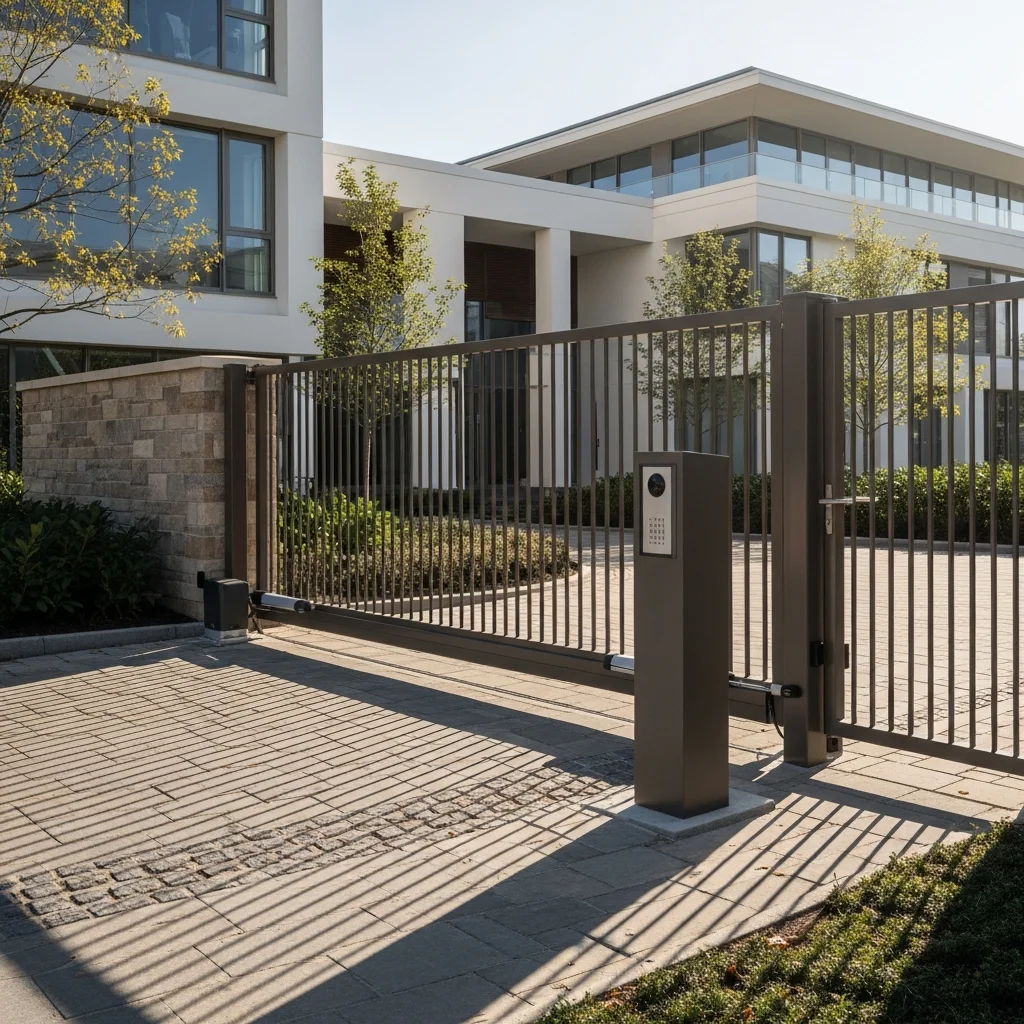
A driveway gate serves as more than just an aesthetic addition to homes, it plays a crucial role in enhancing security and privacy. With the right security features, driveway gates act as strong deterrents against trespassers, ensuring controlled access to properties. Modern gate systems offer advanced technologies that improve safety, convenience, and peace of mind for homeowners. Understanding how to maximize driveway gate security potential ensures that homes remain well-protected against unauthorized entry. Installing secure and well-designed driveway gates helps safeguard properties, making them valuable investments in long-term safety.
SF Bay Automatic Gates recognizes that residential driveway gates represent first-line defenses in comprehensive home security strategies. Beyond their visible deterrent effects, properly configured gate systems create physical barriers, enable sophisticated access management, and integrate with broader security infrastructure protecting families and assets. This guide explores how homeowners can optimize driveway gate installations for maximum security effectiveness while maintaining convenience and aesthetic appeal.
Understanding the Security Benefits of Driveway Gates
Before examining specific security features and configurations, understanding the fundamental ways driveway gates enhance property protection helps homeowners appreciate why these systems represent worthwhile security investments.
Psychological Deterrence and Crime Prevention
The presence of automatic driveway gates alone significantly reduces property crime risk through psychological deterrence. Criminals seeking easy targets deliberately avoid properties with visible security measures requiring additional effort, time, or risk for access. Gates signal that properties are protected, owners are security-conscious, and intrusion attempts will likely be detected or prevented.
Research consistently demonstrates that visible security measures disproportionately deter opportunistic crimes. Burglars report in studies that they avoid gated properties, perceiving them as having additional security layers beyond visible gates themselves, alarm systems, cameras, and attentive owners. This perception often proves accurate, as homeowners investing in driveway gate installation typically implement comprehensive security approaches rather than relying on single measures.
The psychological impact extends beyond direct deterrence to community-wide benefits. Neighborhoods where multiple properties install residential driveway gates experience reduced crime overall as criminals shift activities to less-protected areas. This collective security enhancement benefits all residents, creating safer communities through individual property improvements.
Physical Barrier and Time Delay
Beyond psychological effects, driveway gates create tangible physical barriers preventing or delaying unauthorized access. Even basic gates without sophisticated security features require time and effort to bypass, time during which detection becomes more likely and criminals feel increasingly exposed. This delay factor proves crucial since most burglaries are abandoned if entry takes longer than a few minutes.
The physical barrier effect multiplies when gates are properly integrated with perimeter fencing creating continuous protected boundaries. Gaps between gate posts and adjacent fencing represent security vulnerabilities that determined intruders exploit. Seamless integration ensures that entire property perimeters receive equivalent protection rather than gates being isolated barriers surrounded by easily bypassed fencing.
Gate strength directly affects physical security provision. Heavy-duty construction withstands ramming attempts, cutting tools, and climbing efforts that would defeat lighter installations. Modern driveway gates engineered specifically for security applications provide protection exceeding what casual observers might expect from what appears to be simple entry barriers.
Access Control and Accountability
Perhaps the most significant security advantage automatic driveway gates provide involves controlled access management. Unlike open driveways where anyone can enter unnoticed, gated properties require credentials, remote controls, access codes, or approval from residents. This access control transforms anonymous public approaches into accountable private entries where authorized individuals are identified and unauthorized attempts are detected.
Access logs created by electric driveway gates provide valuable security records documenting who entered properties and when. These logs aid investigations after incidents while also enabling pattern recognition that might reveal security concerns before problems occur. Unusual access patterns, entries during unexpected times or by unfamiliar credentials, trigger alerts allowing proactive response rather than reactive damage control.
The accountability aspect also affects authorized visitor behavior. Service providers, delivery personnel, and guests understand their entries are recorded, promoting responsible conduct. This awareness reduces risks from individuals who might otherwise view open properties as unmonitored environments where inappropriate behavior carries minimal detection risk.
Access Control and Smart Security Features
One of the most effective ways to enhance the security of driveway gates is through access control technology. Automated gate systems equipped with keypads, remote controls, and smartphone integration allow homeowners to regulate who enters properties. Video intercoms and security cameras provide real-time monitoring, allowing homeowners to verify visitors before granting access. Motion detectors and automatic locking systems add another layer of protection, preventing unauthorized access. Investing in smart driveway gate systems ensures complete control over entry points, significantly reducing security risks. These smart features not only increase security but also improve convenience, allowing remote gate operation from anywhere. Well-equipped driveway gate systems ensure that only trusted individuals can enter properties, providing extra safety levels.
Multi-Factor Authentication Systems
Modern access control for driveway gate openers supports multiple authentication methods that can be layered for enhanced security. Basic single-factor access, a remote control or keypad code, provides convenience but limited security since credentials can be lost, stolen, or shared. Multi-factor approaches requiring two or more authentication types dramatically increase security by making unauthorized access exponentially more difficult.
Combining physical credentials (key fobs or cards) with knowledge factors (PIN codes) creates robust two-factor authentication. Even if credentials are stolen, thieves cannot access properties without also knowing associated codes. Biometric authentication adds third factors through fingerprint or facial recognition technologies that verify user identities with near certainty. While biometric systems cost more than basic access methods, the security they provide justifies investments for high-value properties or heightened threat environments.
Time-based access restrictions enhance multi-factor systems by limiting when credentials function. Service providers might receive codes valid only during scheduled appointment windows. Guest credentials can expire automatically after specified periods. These temporal restrictions ensure that even legitimate credentials cannot be misused outside appropriate contexts, containing security risks from lost credentials or dishonest individuals.
Video Intercom Integration
Video intercom systems represent particularly valuable security enhancements for residential driveway gates. These systems enable visual verification of visitors before granting access, capability far exceeding audio-only intercoms or blind gate opening. Seeing who requests entry allows homeowners to make informed decisions about access while also creating video records of all visitors whether access is granted or denied.
Modern video intercoms integrate with smartphones enabling remote access management from any location. Homeowners away from properties can answer gate calls, view visitors via live video, and decide whether to grant access. This remote capability prevents situations where homes appear unoccupied, security vulnerabilities criminals actively seek. Properties where occupants respond to gate activity regardless of actual presence demonstrate security awareness that deters criminal interest.
Two-way communication through video intercoms also facilitates legitimate access while maintaining security. Delivery personnel can leave packages inside gates where theft risk is minimal compared to unsecured exterior locations. Service providers can receive entry instructions or temporary codes without requiring homeowners to physically meet them. These conveniences maintain security while accommodating modern lifestyle demands for flexible access.
Security Camera Integration
Integrating security cameras with custom driveway gates creates comprehensive monitoring covering approaches, gate operation, and entry areas. Cameras positioned to capture vehicle license plates and occupant faces provide identification evidence valuable for both deterrence and investigation. Visible cameras reinforce psychological deterrence while concealed cameras ensure documentation even when visible units are disabled.
Camera systems networked with gate controls enable automated behaviors enhancing both security and documentation. Gates can trigger recording when opening, ensuring all entries are captured regardless of whether continuous recording is configured. Motion detection in camera fields can trigger alerts even when gates remain closed, identifying individuals surveilling properties or attempting to circumvent gates through adjacent areas.
Cloud storage of camera footage ensures evidence preservation even if local recording equipment is damaged or stolen during incidents. SF Bay Automatic Gates recommends camera systems with both local and cloud storage providing redundancy that guarantees documentation availability. This dual-storage approach also enables remote footage review, allowing homeowners to check property activity while away.
Automated Locking and Fail-Secure Configurations
Electric gate systems should include automatic locking mechanisms engaging whenever gates close. These locks prevent manual opening even if someone disables operators or cuts power. Fail-secure configurations ensure gates lock during power failures rather than defaulting to unlocked states that invite intrusion during outages.
Electromagnetic locks provide holding forces measured in hundreds or thousands of pounds, making forced entry extremely difficult without specialized equipment and considerable time. Electric strikes integrated with access control systems release locks only when proper credentials are presented and verification occurs. These locking systems transform gates from movable barriers into solid walls when closed, dramatically increasing security.
Override capabilities must accommodate emergency access requirements while maintaining security. Fire department connections enabling rapid response don't compromise security since they require specialized keys available only to emergency services. Manual release mechanisms accessible only from secure interior locations allow occupants to exit during emergencies without creating external access points. This balance between security and safety ensures systems protect without creating hazards.
Smartphone and Smart Home Integration
Modern driveway gates integrate seamlessly with smart home ecosystems, enabling centralized security management and sophisticated automation. Homeowners control gates through same applications managing door locks, alarm systems, lights, and cameras. This integration creates coordinated security responses where multiple systems work together rather than operating independently.
Geofencing technology enables automatic gate operation based on smartphone location. Gates open automatically as residents approach, eliminating manual operation while maintaining security since only authorized devices trigger opening. Departure routines can close and lock gates automatically when occupants leave, preventing security lapses from forgetting to secure entries.
Voice control through smart assistants provides additional convenience, though security considerations require authentication beyond simple voice commands for gate operation. Requiring PIN codes or biometric verification before voice-activated gate opening maintains security while providing hands-free convenience. Notifications through smart home systems alert homeowners to gate activity, unexpected entries, or system malfunctions requiring attention.
Reinforced Materials and Perimeter Protection
The strength and durability of driveway gates play significant roles in security capabilities. Opting for steel or wrought iron gates provides superior resistance against forced entry compared to lighter materials. Reinforced gates with anti-climb features, such as spiked tops or smooth panel designs, further deter intruders. Additionally, integrating gates with perimeter fencing enhances overall security, preventing easy access to properties. By combining strong materials with smart security features, homeowners create reliable barriers protecting families and valuable assets. Installing additional security reinforcements, such as motion-activated lights and alarm-triggered entry sensors, further strengthens driveway gate systems. Secure perimeters ensure homes remain protected from unwanted visitors, giving peace of mind whether at home or away.
Material Selection for Security Applications
Gate material choices directly impact security effectiveness and long-term protection reliability. Steel gates offer optimal security through exceptional strength and impact resistance. Thick-gauge steel construction withstands ramming attempts, cutting tools, and climbing stresses that would compromise lighter materials. Tubular steel frames provide strength while resisting gripping surfaces that facilitate climbing.
Wrought iron provides traditional aesthetic appeal while maintaining robust security properties. The material's inherent strength and decorative possibilities create gates that are both beautiful and functional. However, wrought iron's ornamental nature sometimes includes horizontal elements or decorative patterns that inadvertently create climbing aids. Security-optimized wrought iron designs minimize these vulnerabilities while preserving aesthetic character.
Aluminum gates offer corrosion resistance and lighter weight but provide less security than steel equivalents. Where aluminum suits aesthetic or environmental requirements, security-grade construction with reinforced frames and heavy-gauge materials maximizes protection within material limitations. Aluminum works best in lower-threat environments or where perimeter protection relies more on access control than physical barrier strength.
Anti-Climb Design Features
Gate designs should actively resist climbing attempts through features eliminating handholds and footholds. Smooth-faced panels without horizontal rails provide no purchase for climbing. Vertical picket designs with adequate spacing prevent foot placement while remaining visually open. These design choices deter casual climbing attempts that might succeed against more climbable configurations.
Spiked or pointed tops add additional climbing deterrence by making top-rail surmounting painful or dangerous. Various spike styles accommodate aesthetic preferences from subtle deterrents to aggressive security emphasis. Anti-climb rotating tops prevent gripping even when determined intruders attempt ascending despite spike presence. These specialized tops rotate freely under load, preventing purchase necessary for climbing over.
Height considerations balance security against aesthetic impact and regulatory compliance. Taller gates provide greater security through increased climbing difficulty but may appear fortress-like in residential settings. Local zoning often regulates maximum heights for property-line structures. Optimizing security within these constraints requires combining adequate height with anti-climb features maximizing protection within allowable dimensions.
Gate and Post Mounting Security
Even the strongest gates prove vulnerable if mounting systems fail under attack. Posts must be substantial enough to support gate weight while resisting lateral forces from ramming or prying attempts. Steel posts set in deep concrete footings provide foundations that won't shift under assault. Proper installation ensures posts resist extraction, bending, or concrete cracking that would compromise gate security.
Hinge and track systems should be designed to resist tampering and forced removal. Hinges on swing gates should include non-removable pins preventing gate removal by pulling pins. Mounting brackets should be accessible only from secure interior sides where attackers cannot reach them. Track systems for sliding driveway gates should be robust enough to resist derailment attempts while being sufficiently secured to prevent track displacement.
Automated operator components require protection from tampering or disabling. Lockable enclosures prevent access to operators and controls. Hardened mounting hardware resists removal attempts. These protective measures ensure that security isn't compromised through simple disablement of automation systems, forcing intruders to address the physical gate barrier itself rather than merely bypassing its operation mechanisms.
Perimeter Integration
Driveway gates achieve maximum security when integrated with comprehensive perimeter protection rather than existing as isolated barriers. Fencing should extend from gates along all property boundaries creating continuous barriers without gaps. Fence height and construction should match gate security standards, tall fences with anti-climb features complement secure gates while low decorative fencing creates vulnerabilities intruders exploit.
Corner treatments and fence line changes require particular attention to prevent gaps or weak points. Posts at directional changes should be reinforced to resist the increased stress these positions experience. Gates at secondary access points, pedestrian entries or rear vehicle access, deserve equivalent security to primary driveway gates since criminals exploit weakest entry points regardless of other protections.
Natural barriers complement constructed perimeters by adding depth to security zones. Dense thorny vegetation along fence lines creates additional obstacles and concealment denial. Water features, terrain variations, or other landscape elements increase approach difficulty. These natural elements work synergistically with driveway gate installation, creating layered defenses more effective than any single measure.
Additional Perimeter Security Measures
Motion-activated lighting dramatically enhances gate and perimeter security by eliminating concealment darkness provides. Bright lights triggered by approach eliminate criminal preference for working unseen. Lighting positions should illuminate gates, adjacent fencing, and approach paths without creating shadows where intruders might hide. LED technology provides bright illumination at minimal energy cost, making extensive security lighting economical for continuous operation.
Alarm systems integrated with gates and perimeter fencing detect intrusion attempts triggering alerts and potentially active countermeasures like additional lighting or audible alarms. Vibration sensors on gates and fences detect tampering, cutting, or climbing attempts. Infrared beams create invisible barriers triggering alarms when crossed. These detection systems provide early warning of intrusion attempts, enabling response before property boundaries are breached.
Landscaping strategies can enhance security while maintaining attractive property aesthetics. Keeping vegetation trimmed near gates and fences eliminates concealment opportunities and maintains sensor effectiveness. Strategic plant selection, thorny or dense species near boundaries, open sight lines in other areas, balances beauty with security. Regular landscape maintenance ensures security features remain effective rather than being degraded by overgrowth or neglect.
Emergency Access and Fire Safety Considerations
While maximizing security remains paramount, residential driveway gates must also accommodate emergency access requirements ensuring first responders can reach properties quickly when needed. Balancing these competing concerns requires thoughtful system design and proper feature implementation.
Emergency Override Systems
Fire departments and emergency services require rapid property access during emergencies. Knox boxes or similar systems provide secure key storage that emergency responders can access using standardized keys or tools. These systems enable entry without property damage while remaining secure against unauthorized access. Installation locations should be clearly marked and easily accessible to responding emergency personnel.
Radio-operated emergency access systems enable one-touch gate opening from emergency vehicles equipped with compatible transmitters. These systems use standardized frequencies and protocols ensuring compatibility with local emergency services. Gates equipped with emergency radio receivers open automatically when emergency vehicles approach, eliminating delay while maintaining security against unauthorized transmitters.
Manual release mechanisms accessible from exterior locations enable emergency access even during power failures or system malfunctions. These releases should require tools or specialized knowledge to operate, preventing casual use by unauthorized individuals while remaining straightforward for trained emergency personnel. Clear instructional signage near release mechanisms aids emergency responders unfamiliar with specific installations.
Power Failure Protocols
Security considerations during power outages require careful planning since some configurations enhance security while others improve emergency access. Fail-secure systems that lock during outages maximize security but may impede emergency access or resident egress. Fail-safe configurations that unlock during outages facilitate emergency access but create security vulnerabilities.
Battery backup systems represent optimal solutions maintaining both security and functionality during outages. Gates continue operating normally using reserve power, preserving access control while enabling authorized entry and exit. Backup system capacity should support multiple operation cycles ensuring functionality throughout extended outages. Regular battery maintenance and testing ensures backup systems function when needed.
Balancing Security and Life Safety
Building codes and fire safety regulations often mandate specific requirements for gate installations affecting security configurations. Maximum opening times ensure emergency vehicles aren't delayed excessively by slow-operating gates. Minimum opening widths accommodate fire apparatus and ambulances. Automatic opening triggers linked to fire alarm systems ensure gates don't impede evacuation during emergencies.
These regulatory requirements need not compromise security when properly implemented. Fast-acting driveway gate openers provide rapid opening while maintaining robust security when closed. Wide openings accommodate emergency vehicles while gates still create effective barriers when closed. Fire alarm integration actually enhances security by ensuring controlled emergency access rather than forced entry damaging gates and leaving properties unsecured after emergencies.
Professional Installation and Ongoing Maintenance
Achieving optimal security from driveway gate systems requires professional installation ensuring proper configuration, integration, and operation. DIY installations often compromise security through improper mounting, inadequate materials, or configuration errors creating vulnerabilities.
The Value of Professional Installation
Licensed installers understand security best practices, local regulations, and proper integration techniques that maximize protection. Professional driveway gate installation ensures structural mounting withstands forced entry attempts, electrical systems operate reliably, and safety features function correctly. Experienced installers identify site-specific security vulnerabilities and recommend configurations addressing particular property risks.
Quality installers provide detailed documentation covering system operation, access programming, maintenance requirements, and troubleshooting. This information proves invaluable for ongoing security management and addressing issues promptly. Warranty coverage typically requires professional installation, providing financial protection against defects or failures while ensuring access to qualified service when needed.
Security-Focused Maintenance
Regular maintenance preserves security effectiveness while preventing failures that create vulnerabilities. Mechanical components should be inspected for wear, damage, or tampering evidence. Electrical systems require testing ensuring reliable operation and detecting degradation before failures occur. Access control credentials should be audited periodically, removing obsolete authorizations and updating permissions reflecting current requirements.
SF Bay Automatic Gates provides maintenance services specifically addressing security aspects beyond basic operational maintenance. Security audits evaluate system configurations against evolving threat landscapes, recommending upgrades enhancing protection. Penetration testing identifies vulnerabilities that determined intruders might exploit. These specialized services ensure that driveway gate systems continue providing maximum security throughout their service lives.
Security effectiveness depends on properly configured, well-maintained systems installed by qualified professionals. The investment in professional installation and ongoing maintenance protects far more than the gate system itself, it safeguards families, homes, and peace of mind that comprehensive security provides. Modern driveway gates represent sophisticated security platforms that, when properly implemented, create formidable barriers against threats while maintaining the convenience and aesthetic appeal that make them attractive additions to residential properties.