
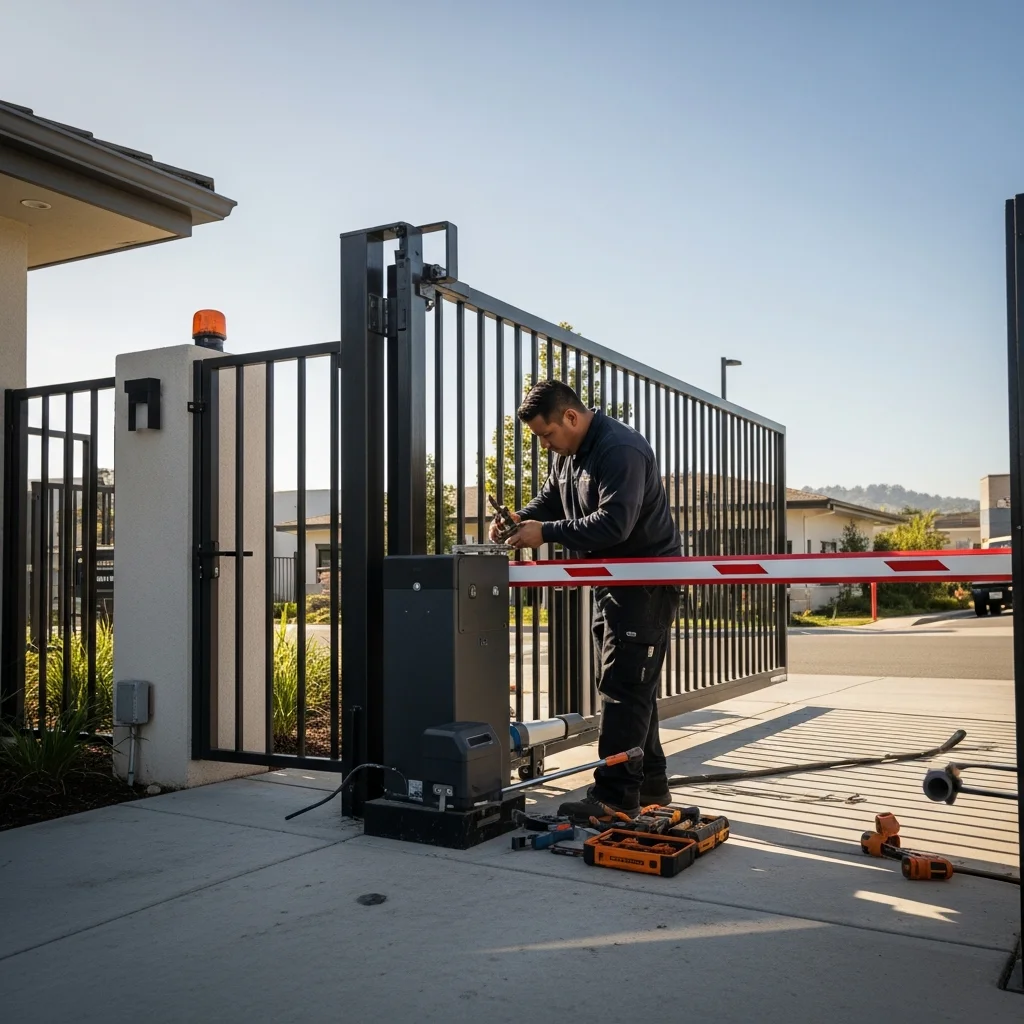
The sphere of gate repairs has seen a tremendous transformation over the years, with advanced techniques and innovative methods shaping the modern landscape of this industry. The city of San Jose, California is home to SF Bay Automatic Gates, a leading entity in the field that consistently demonstrates expertise in these cutting-edge procedures. Leveraging an amalgamation of state-of-the-art tools and an extensive knowledge base accrued from years of experience, SF Bay Automatic Gates' adept professionals have mastered the art and science behind contemporary gate restoration.
This discussion delves into how advanced strategies enhance durability and optimize maintenance processes when performing gate repair. While these concepts might appear complicated at first glance, they are broken down into comprehensible terms for ease of understanding. Whether one is part of a residential community looking for ways to maintain the security features within their perimeter or commercial enterprises keen on ensuring continued functionality of their entrance control systems, this examination provides valuable insights that cater to all interests and needs. This inclusivity fosters a sense of belonging among readers as they navigate through this exploration into modern gate repair techniques.
Innovative Approaches to Gate Restoration
Employing innovative approaches to gate restoration, such as the use of cutting-edge technology and materials, can dramatically increase their lifespan, a strategy that is akin to bringing the durability of an ancient Roman aqueduct into today's urban landscapes. Advanced techniques in modern gate repairs are not simply a matter of replacing old parts with new ones; it involves a holistic understanding of the material properties, construction methods, and environmental conditions that affect the state of gates. For instance, digital technologies enable precise measurements and simulations to anticipate wear and tear patterns over time. Moreover, modern metallurgy has introduced corrosion-resistant alloys that have superior strength compared to traditional iron or steel gates.
Digital Diagnostic Technologies in Automatic Gate Repair
Contemporary automatic gate repair has evolved beyond manual inspection to incorporate sophisticated diagnostic equipment that provides unprecedented insight into system health. Thermal imaging cameras detect overheating components before catastrophic failures occur, identifying motors, circuit boards, and electrical connections operating outside normal temperature ranges. This predictive approach prevents unexpected breakdowns and extends component lifespans through timely intervention.
Computerized diagnostic scanners interface directly with modern gate control systems, retrieving error logs, operational parameters, and performance metrics stored within controller memory. These digital records reveal patterns invisible to traditional inspection methods, intermittent failures that occur during specific conditions, gradual performance degradation over time, and component stress levels approaching failure thresholds. SF Bay Automatic Gates technicians utilize this data to make informed decisions about electric gate repair priorities and preventive maintenance schedules.
Laser alignment systems have revolutionized precision in sliding gate repair and swing gate installations. These instruments measure gate positioning, track alignment, and hinge geometry with millimeter accuracy, detecting misalignments that create operational stress and accelerate wear. Traditional methods relying on visual estimation or simple levels cannot match the precision these technologies provide, resulting in installations and repairs that operate more smoothly and last significantly longer.
Advanced Materials in Metal Gate Repair
The choice of material for gate repair is one critical factor in ensuring longevity. While metal gates have been popular due to their robustness and aesthetic appeal, they can be susceptible to rust if not properly treated or maintained. In response to this issue, advanced applications like galvanization or powder coating provide reliable solutions against corrosion while maintaining structural integrity. Furthermore, sustainable wooden gates made from pressure-treated lumber offer resistance against decay-causing organisms without sacrificing aesthetics, a testament to how innovation bridges functionality with artistry in gate restoration efforts.
Modern metallurgy has introduced specialized alloys specifically engineered for gate applications in challenging environments. Marine-grade stainless steel resists salt air corrosion in coastal areas, while weather-resistant steel alloys maintain structural integrity through extreme temperature fluctuations. These materials cost more initially but deliver superior longevity that reduces lifetime ownership costs through decreased gate motor repair frequency and extended replacement intervals.
Composite materials represent another innovation in wrought iron gate repair and restoration. Fiber-reinforced polymers provide exceptional strength-to-weight ratios while eliminating corrosion concerns entirely. These materials prove particularly valuable for decorative elements and non-structural components where traditional metals would require constant maintenance. The integration of composites with traditional metalwork creates hybrid gates that combine aesthetic authenticity with modern durability.
Protective Coating Technologies
Surface treatment technologies have advanced dramatically, offering protection far superior to traditional painting methods. Powder coating creates dense, uniform protective layers through electrostatic application and thermal curing processes. This coating bonds at the molecular level with metal surfaces, creating barriers that withstand impacts, UV exposure, and chemical attack without peeling or flaking like conventional paints.
Ceramic coating applications provide even greater protection for gates in extreme environments. These nanotechnology-based treatments create surfaces that actively repel water, dirt, and corrosive substances while providing exceptional hardness that resists scratching and abrasion. For driveway gate repair in high-traffic areas or industrial settings, ceramic coatings extend maintenance intervals significantly while maintaining aesthetic appearance over decades rather than years.
Hot-dip galvanization remains the gold standard for corrosion protection in structural gate components. This process immerses steel components in molten zinc, creating metallurgically bonded coating layers that protect even if surface damage exposes underlying metal. The self-healing properties of galvanized coatings make them ideal for applications where scratches and abrasions occur regularly, providing reliable protection that requires minimal maintenance throughout gate lifespans.
Precision Engineering in Gate Opener Repair
Modern gate opener repair benefits from engineering principles and manufacturing techniques previously reserved for aerospace and automotive industries. Computer-aided design software enables technicians to model gate systems virtually, analyzing stress distributions, movement dynamics, and load characteristics before physical modifications occur. This simulation capability prevents trial-and-error approaches that risk damaging expensive components or creating unsafe operating conditions.
Computer-Controlled Manufacturing for Replacement Components
Three-dimensional printing and computer numerical control machining have transformed component replacement in residential gate repair. When obsolete or discontinued parts fail, these manufacturing technologies enable precise reproduction of original components based on measurements, drawings, or even damaged parts themselves. This capability eliminates lengthy searches for vintage components and prevents situations where entire systems require replacement because single parts are unavailable.
Custom fabrication using these technologies also allows performance improvements beyond original specifications. Reinforced components withstand higher stress levels, upgraded materials resist environmental degradation better, and optimized geometries reduce friction and wear. These enhancements transform routine gate repair into opportunities for system upgrades that improve reliability and extend service life.
The precision these manufacturing methods provide ensures perfect fit and function for replacement components. Traditional fabrication techniques introduce variations that require field adjustment and compromise optimal performance. Computer-controlled processes maintain tolerances measured in thousandths of inches, creating components that install without modification and operate exactly as designed.
Automated Welding and Joining Technologies
Structural repairs to gate frameworks have traditionally relied on manual welding that introduces heat distortion and quality variations between different welders. Robotic welding systems now provide consistent, high-quality joints that exceed the strength of surrounding materials. Automated processes control heat input precisely, minimizing distortion while creating penetration and fusion characteristics impossible to achieve through manual techniques.
Friction stir welding represents a revolutionary joining method for metal gate repair that creates solid-state bonds without melting base materials. This process eliminates defects associated with fusion welding, porosity, cracking, and distorted microstructures, while producing joints stronger than parent metals. The minimal heat input preserves material properties and prevents warping that complicates alignment and finish work.
Advanced adhesive bonding systems provide alternatives to mechanical fasteners and welding for certain applications. Structural adhesives distribute loads across entire bond areas rather than concentrating stress at fastener points. These materials also eliminate corrosion concerns associated with dissimilar metal contacts and provide vibration damping that reduces fatigue failures in mechanical components.
Smart Technology Integration in Electric Gate Repair
The integration of smart technologies has fundamentally altered approaches to electric gate repair and maintenance. Internet-connected systems provide real-time monitoring that transforms reactive repair models into predictive maintenance programs. Sensors throughout gate systems continuously monitor operational parameters, detecting abnormal conditions that indicate developing problems before failures occur.
Predictive Maintenance Through Data Analytics
Modern control systems log operational data that, when analyzed over time, reveals patterns indicating component health and remaining service life. Motor current draw gradually increases as mechanical wear creates additional resistance. Operating speeds decrease as capacitors age and lose capacity. Safety sensor response times lengthen as electronic components drift from original specifications. These subtle changes escape notice during individual operational cycles but become apparent through statistical analysis of longitudinal data.
Machine learning algorithms process this operational data to predict failures before they occur. By comparing current system performance against baseline measurements and historical failure data from similar installations, these systems generate maintenance alerts that enable scheduled repairs during convenient times rather than emergency gate repair during inconvenient hours. This predictive capability reduces downtime, prevents secondary damage from catastrophic failures, and optimizes maintenance scheduling.
Remote diagnostic capabilities allow technicians to evaluate system health without site visits. Control systems connected to internet platforms provide access to operational parameters, error logs, and diagnostic test sequences from any location. This remote assessment capability enables preliminary troubleshooting that identifies probable causes before technicians arrive on-site, ensuring appropriate tools, equipment, and replacement parts accompany service calls. The efficiency gains from remote diagnostics reduce service costs while accelerating problem resolution.
Automated Adjustment and Calibration Systems
Self-adjusting gate systems represent the cutting edge of sliding gate repair technology. These sophisticated controllers continuously monitor operational parameters and automatically adjust force limits, acceleration rates, and timing sequences to maintain optimal performance as components age and environmental conditions change. Systems that previously required quarterly professional calibration now maintain factory-fresh performance for years without manual intervention.
Adaptive learning algorithms enable controllers to optimize operation for specific installation conditions and usage patterns. Systems observe successful operational cycles and adjust parameters to replicate that performance consistently. If environmental changes affect operation, seasonal temperature variations, gate weight changes from ice accumulation, or track friction from debris, controllers detect these influences and compensate automatically.
Safety system self-testing capabilities enhance reliability while reducing maintenance requirements. Modern photo eye sensors and edge detectors verify their own functionality during each operational cycle, alerting users immediately when faults develop. This continuous self-monitoring ensures safety features remain functional between professional inspections, providing peace of mind and reducing liability concerns for property owners and managers.
Environmental Adaptation in Gate Motor Repair
San Jose's Mediterranean climate and diverse microclimates present unique challenges that modern gate motor repair techniques specifically address. Temperature extremes between summer heat and winter cold create expansion and contraction cycles that stress mechanical components and electrical connections. Advanced repair methodologies account for these thermal movements, incorporating design features and materials that accommodate dimensional changes without degradation.
Climate-Specific Component Selection
Material selection for gate motor repair now considers specific environmental conditions at installation sites. Coastal properties receive components with enhanced corrosion protection, while inland locations with greater temperature swings utilize materials and lubricants that maintain performance across wider thermal ranges. This site-specific approach ensures components operate within optimal parameters regardless of local conditions.
Lubricant technology has evolved to address varied environmental demands. Synthetic lubricants maintain consistent viscosity across temperature ranges that would cause conventional petroleum products to either congeal or become excessively thin. These advanced lubricants also resist water contamination and oxidation better than traditional greases, extending lubrication intervals while providing superior protection.
Sealed bearing systems eliminate environmental exposure that causes premature failure in conventional designs. These permanently lubricated components require no maintenance while providing service life several times longer than traditional bearings. The initial cost premium proves economical through eliminated maintenance and extended replacement intervals that reduce long-term ownership costs.
Weather-Resistant Control Systems
Electronic components in automatic gate repair now feature environmental protection far exceeding previous generations. Conformal coatings on circuit boards create moisture barriers that prevent corrosion and electrical leakage even in humid environments. Sealed control boxes with pressure equalization valves prevent condensation while excluding dust, insects, and moisture. These protective measures dramatically extend control system longevity in challenging outdoor environments.
Temperature-compensated circuits maintain consistent performance despite ambient temperature variations that would cause drift in older electronic designs. Precision voltage regulation ensures stable operation during supply voltage fluctuations from utility variations or long wire runs. These refinements create control systems that perform reliably regardless of environmental conditions or installation circumstances.
Lightning protection has become standard in modern gate control systems rather than optional add-ons. Transient voltage suppressors and isolation transformers protect sensitive electronics from indirect lightning strikes and power grid surges. These protective devices intercept destructive voltage spikes before they reach vulnerable components, preventing catastrophic failures that would require complete system replacement.
Structural Analysis and Reinforcement Techniques
Advanced structural analysis methods have revolutionized approaches to wrought iron gate repair and restoration of deteriorated installations. Finite element analysis software models gate structures under load conditions, identifying stress concentrations and potential failure points invisible to visual inspection. This analytical capability guides reinforcement strategies that prevent future failures rather than merely addressing current damage.
Non-Destructive Testing Methods
Ultrasonic testing reveals internal defects in welds and structural members without causing damage. This technology detects voids, cracks, and incomplete fusion that compromise structural integrity while remaining invisible externally. Identifying these hidden flaws enables targeted repairs that prevent catastrophic failures from unexpected component collapse.
Magnetic particle inspection identifies surface and near-surface cracks in ferromagnetic materials through magnetic field disruptions at defect sites. This testing method proves particularly valuable for detecting fatigue cracks in high-stress areas, hinge points, operator mounting locations, and weld zones, where cyclic loading creates progressive damage over time.
Dye penetrant testing provides simple yet effective crack detection for non-magnetic materials like aluminum and stainless steel. Capillary action draws visible dyes into surface-breaking defects, making minute cracks readily apparent under inspection. This low-cost technique identifies damage that requires repair before it propagates into major structural failures.
Structural Reinforcement Strategies
Carbon fiber reinforcement represents breakthrough technology for strengthening deteriorated gate structures without adding significant weight. These high-strength composite materials bond to existing structures, dramatically increasing load capacity and rigidity while remaining virtually invisible after finishing. The technique proves especially valuable for historic gates where maintaining original appearance while meeting modern safety standards presents challenges.
Post-tensioning systems preload gate structures to counteract operational stresses and prevent deflection. Steel cables embedded within structural members or attached to frameworks apply compressive forces that oppose bending and twisting loads during operation. This technique enables lighter gate construction while maintaining rigidity or reinforces aging structures showing excessive deflection.
Strategic bracing additions distribute loads more effectively throughout gate frameworks. Engineering analysis identifies optimal brace locations and orientations that maximize structural improvements while minimizing aesthetic impact. These carefully designed reinforcements transform marginally adequate structures into robust systems capable of decades of additional service.
Energy Efficiency in Modern Driveway Gate Repair
Sustainability considerations have entered gate repair methodologies as property owners recognize both environmental responsibilities and operational cost implications. Energy-efficient motors, LED lighting, and solar charging systems reduce electrical consumption while providing performance equal to or exceeding conventional alternatives.
High-Efficiency Motor Technologies
Brushless DC motors have largely replaced traditional brushed designs in residential gate repair applications. These motors eliminate mechanical commutation that creates friction, wear, and electrical noise. The resulting efficiency improvements reduce energy consumption by thirty to fifty percent while extending motor life by eliminating brush replacement requirements and reducing bearing wear from lower operating temperatures.
Variable frequency drives optimize motor operation for specific load conditions rather than operating at fixed speeds regardless of requirements. These controllers adjust motor speeds to match operational demands, reducing energy consumption during low-load conditions while maintaining adequate power for challenging situations. The soft-start capabilities these drives provide also reduce mechanical stress and peak electrical demands.
Gearless direct-drive operators eliminate efficiency losses in reduction gearing while reducing maintenance requirements. These compact units directly couple motors to gate mechanisms, achieving efficiency levels impossible with conventional geared operators. The elimination of gears also reduces noise and extends service life by removing components subject to wear and lubrication requirements.
Solar Power Integration
Photovoltaic charging systems eliminate electrical connections to remote gate installations while providing environmental benefits. Modern solar panels generate sufficient power for typical residential gate operation while maintaining battery reserves for cloudy periods and nighttime operation. Battery technology improvements provide reliable energy storage with minimal maintenance through chemistry advances that extend cycle life and resist sulfation.
Hybrid systems combine solar charging with grid power backup, ensuring reliable operation while maximizing renewable energy utilization. These configurations automatically switch between power sources based on battery charge state and solar generation capacity. The intelligence built into modern charge controllers optimizes battery health while maximizing solar harvest and minimizing grid consumption.
Energy storage systems have evolved beyond traditional lead-acid batteries to lithium-ion technologies offering superior performance and longevity. These advanced batteries provide higher energy density in compact packages while tolerating deep discharge cycles that would destroy conventional batteries. Temperature tolerance improvements enable reliable operation across wider environmental ranges without performance degradation.
Comprehensive System Upgrades During Gate Repair
Modern gate repair increasingly involves comprehensive system upgrades rather than simple component replacement. When addressing failures in aging systems, the opportunity exists to incorporate current technologies that enhance functionality, improve reliability, and reduce future maintenance requirements. SF Bay Automatic Gates technicians evaluate existing installations holistically, identifying upgrade opportunities that provide value beyond immediate repair needs.
Access Control System Modernization
Retrofitting modern access control systems to existing gates transforms basic entry barriers into sophisticated security platforms. Smartphone-based access eliminates physical credentials while providing detailed access logs and remote management capabilities. Biometric readers add security layers impossible with traditional keypads or card systems. Integration with property management systems enables coordinated security across entire facilities.
Video intercom systems add visual verification to audio communication, enhancing security while improving convenience. High-definition cameras capture clear images for access logs and security review. Two-way audio enables conversation with visitors before granting access. Integration with smartphones allows property owners to answer gate calls and grant access from any location.
Multi-credential systems accommodate various access methods, key fobs, keypads, smartphones, and vehicle recognition, through single control platforms. This flexibility addresses different user needs and preferences while maintaining centralized management and consistent security policies. The redundancy provided by multiple access methods ensures continued functionality if individual systems experience problems.
Safety System Enhancements
Upgrading safety systems during emergency gate repair provides protection beyond minimum code requirements. Additional photo eye pairs eliminate blind spots in detection coverage. Intelligent edge sensors distinguish between firm obstructions requiring reversal and light contact from wind-blown debris. Monitored safety loops verify sensor functionality continuously rather than waiting for annual inspections.
Vehicle detection systems prevent gates from closing on cars in travel paths. Ground loops embedded in pavement reliably detect vehicle presence regardless of weather conditions. These systems eliminate scenarios where gates close on vehicles whose drivers failed to maintain pressure on transmitter buttons or where timer functions initiated closing cycles while vehicles remained in gate paths.
Audible and visual warnings alert pedestrians and vehicles to gate movement, reducing accident risks. Flashing lights and warning tones provide clear indication when gates begin operation, allowing people to clear travel paths or maintain safe distances. These warning systems prove particularly valuable in commercial applications with pedestrian traffic near gate installations.
Training and Certification in Advanced Repair Techniques
The sophistication of modern gate systems demands that repair technicians maintain current knowledge through ongoing education and certification programs. Technology evolves rapidly, introducing new components, diagnostic procedures, and repair methodologies that require formal training for proper implementation. SF Bay Automatic Gates ensures technicians receive manufacturer-specific training on systems they service, maintaining competency with current products and technologies.
Manufacturer Certification Programs
Major gate system manufacturers offer certification programs that validate technician knowledge and authorize warranty repair work. These programs cover product-specific technical information, diagnostic procedures, and proper repair techniques. Certification requires passing written examinations and practical assessments that demonstrate competency. Maintaining certification requires continuing education as manufacturers release new products and update existing systems.
Safety training forms critical components of technician education. Working with automated gate systems presents electrical hazards, moving machinery risks, and potential for serious injuries from improper procedures. Comprehensive safety training covers lockout-tagout procedures, electrical safety practices, and proper use of personal protective equipment. This training protects both technicians and property owners from accidents during gate motor repair work.
Diagnostic equipment operation requires specialized training beyond basic electrical knowledge. Modern test equipment features sophisticated capabilities that technicians must understand to utilize effectively. Training covers proper equipment setup, test procedure selection, result interpretation, and troubleshooting when diagnostic tools provide ambiguous or contradictory information.
Integration of Traditional Craftsmanship With Modern Technology
While advanced technologies transform many aspects of gate repair, traditional metalworking craftsmanship remains essential for certain applications. The most effective approaches combine time-tested techniques with modern capabilities, creating solutions that leverage strengths of both methodologies. Ornamental metal gate repair particularly benefits from this hybrid approach, where artisan skills restore decorative elements while modern technologies address mechanical and electrical systems.
Blacksmithing techniques remain relevant for custom component fabrication and historical restoration work. Forge welding, hot forming, and traditional joinery methods create repairs invisible on period gates where modern welding would appear anachronistic. Skilled craftspeople replicate original fabrication techniques, ensuring repairs maintain historical authenticity while meeting current structural and safety requirements.
Hand finishing techniques provide surface qualities impossible to achieve through automated processes. Skilled metalworkers create textures, patinas, and details that match original work, making repairs blend seamlessly with surrounding material. This artistry distinguishes superior restoration work from adequate repairs, particularly on gates where aesthetic considerations equal or exceed functional requirements.
Therefore, adopting these advanced repair techniques brings about a sense of belonging for property owners as it enhances both security and visual appeal simultaneously, making properties feel more like personal sanctuaries amidst today's bustling urban landscapes. The combination of cutting-edge technology, advanced materials, and skilled craftsmanship creates gate systems that provide reliable service for decades while maintaining or enhancing original aesthetic character. SF Bay Automatic Gates continues advancing these methodologies, ensuring San Jose properties receive the most effective, durable, and comprehensive gate repair services available in the industry.