
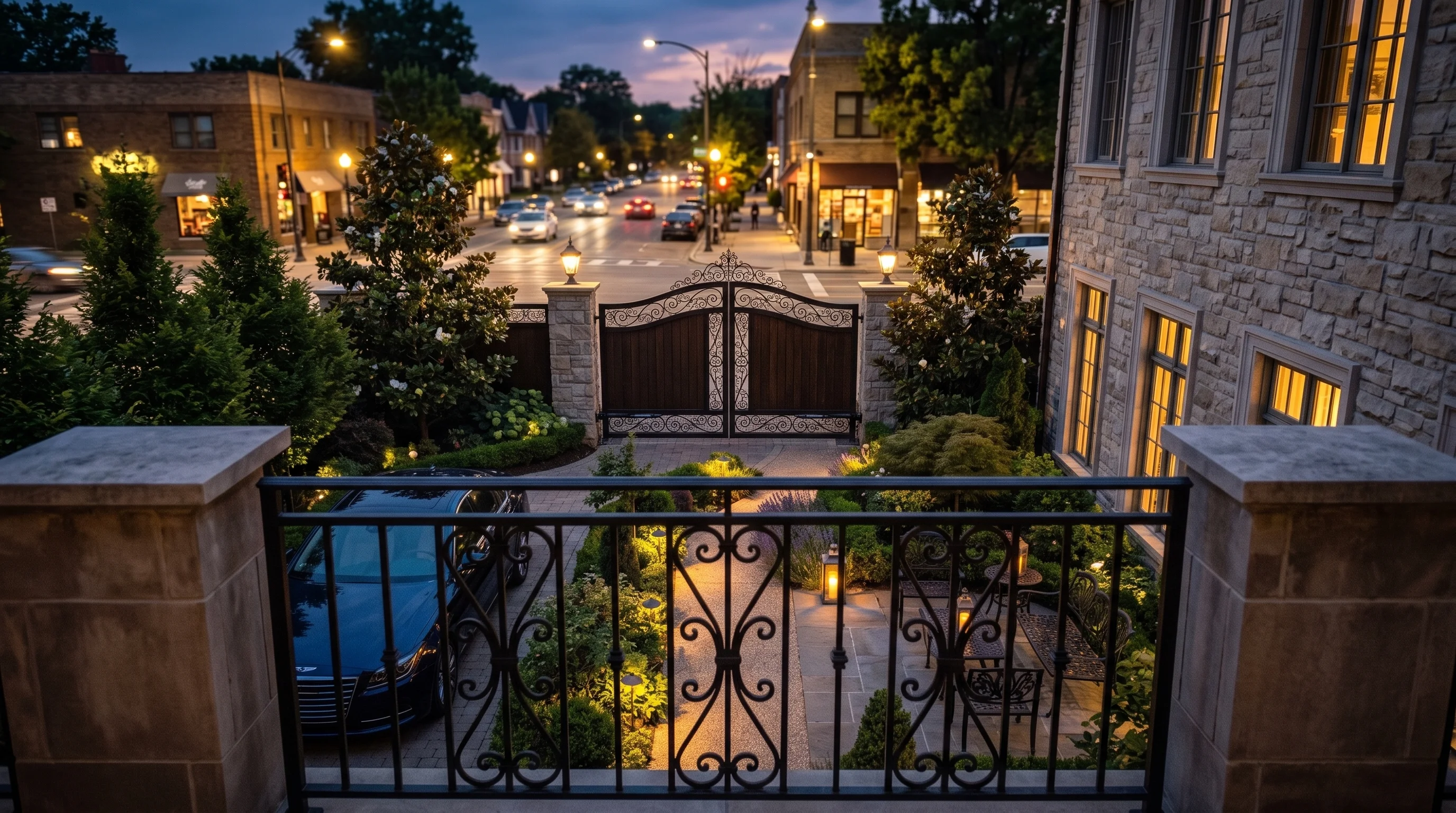
A well-chosen driveway gate does far more than mark the edge of a property. Across the SF Bay region, homeowners and property managers are increasingly treating the entrance as an active layer of security rather than a passive boundary. When a gate is designed and installed correctly, it shifts who controls access from anyone passing by to the property owner alone. That shift has real consequences for safety, privacy, and daily peace of mind.
Why Access Control Begins at the Driveway Gate
Most unauthorized entries happen at the easiest point. Without a physical barrier, a driveway is simply an open invitation. A driveway gate changes that equation immediately. It requires anyone approaching to stop, identify themselves, or use an authorized credential before moving forward.
In dense SF Bay neighborhoods, where lots sit close together and foot traffic is constant, that barrier matters. Properties in areas ranging from suburban Antioch to hillside communities in Belmont face different exposure risks, but the underlying need is the same: a clear, controlled threshold that signals this property is not open to casual entry.
Modern gate systems go beyond a simple swing or slide. They integrate keypads, remote controls, intercoms, and smartphone-based access. Each of these tools adds a layer of verification, so the property owner always knows who came in and when.
The Role of Design in Reliable Access Management
Not every driveway gate delivers the same level of access control. The design, material, and automation system all affect how well a gate performs its security function over time.
A gate that sags on its hinges or uses an underpowered opener can be pushed open with minimal effort. One built with heavy-gauge steel frames, anti-pry receiver plates, and a properly rated operator resists forced entry far more effectively. SF Bay properties face a range of environmental conditions, from coastal salt air in communities near Pacifica to summer heat in the inland East Bay. Materials and coatings need to match those conditions or the gate will degrade faster than expected.
Sliding gates work well on narrow driveways where a swinging gate would need too much clearance. Swing gates suit wider entries and can carry more ornamental detail. The choice of style affects not only aesthetics but also how reliably the gate seals the entrance. A gap-free closure is essential for any gate meant to control access rather than just signal a boundary.
For SF Bay properties with sloped driveways, the gate design must account for grade changes so the panel clears the ground consistently without leaving a gap at the bottom. A contractor should evaluate slope, soil conditions, and post placement before finalizing the design.
Automation Features That Strengthen Daily Control
Manual gates require someone to physically open and close them every time. Automation removes that friction while adding accountability. With an automated driveway gate, every opening event can be logged, timed, or triggered by a specific credential.
Common automation features found on SF Bay residential and commercial gates include:
- Keypad entry for residents and recurring visitors who need their own code
- Remote controls for quick access from inside a vehicle
- Intercom and video systems that let the property owner screen visitors before granting entry
- Smartphone integration for remote monitoring and one-time access codes for delivery drivers or service providers
- Automatic closing timers that ensure the gate never stays open unintentionally
Each of these features addresses a specific gap in access control. Together, they create a system where the property owner maintains authority over the entrance without being physically present at the gate every time it opens.
Backup power options, such as battery or solar, keep the system functional during outages, which matters in parts of the SF Bay region that experience periodic power interruptions. A gate that fails open during an outage defeats its own purpose.
Material Choices and Long-Term Reliability
by microclimate. Coastal communities deal with salt air and moisture that accelerate corrosion. Inland areas face dry summers and occasional frost. The right material choice extends the service life of a driveway gate and reduces the frequency of repairs.
Iron and steel gates offer strength and customization but require proper primer, powder coating, and periodic maintenance to resist rust. Aluminum gates are lighter and naturally corrosion-resistant, making them a practical option in coastal SF Bay communities. Wood gates bring warmth and privacy but need weather-resistant finishes and regular upkeep.
Powder-coated finishes, sealed welds, and stainless hardware at contact points all contribute to a gate that continues to operate reliably years after installation. A gate that corrodes or binds at the latch no longer controls access effectively, regardless of how well it was designed.
For SF Bay homeowners considering fabrication options in specific communities, resources covering gates fabrication in Walnut Creek and gates fabrication in San Rafael outline how local conditions shape material and design decisions.
What to Evaluate Before Installing a Driveway Gate
Before committing to a specific gate system, a property owner should work through several practical questions:
Driveway width and clearance. The gate needs to match the opening precisely. Too narrow and vehicles scrape; too wide and the gate becomes difficult to operate or leaves gaps.
Post and foundation conditions. Gate posts carry significant load, especially on automated systems. Soil type and existing hardscape affect how posts should be anchored.
Power availability. Automated gates need a power source. If the driveway runs far from the home, running conduit may be part of the project scope.
Access needs. How many people need independent access? A household with multiple drivers, regular deliveries, and occasional service visits has different credential management needs than a single-occupancy property.
Local codes. Many SF Bay municipalities have requirements around gate setbacks, height limits, and safety sensors. A contractor should verify applicable codes before installation begins.
Taking time to work through these questions before installation prevents costly adjustments later and ensures the gate actually solves the access control problem it was meant to address.
Driveway Gate Access Control Across SF Bay Property Types
The access control benefits of a driveway gate apply across a wide range of SF Bay property types. Single-family homes gain a clear perimeter that discourages solicitors, package theft, and uninvited visitors. Multi-unit residential properties can use gate systems with multiple credentials so each resident has independent access. Commercial properties near SF Bay business corridors can integrate gate systems with existing security infrastructure, including cameras and alarm systems.
Explore the full range of driveway gate options and services available across the SF Bay region to understand which system configuration fits a specific property type and access control goal.
A driveway gate is not a passive feature. When it is designed well, built from the right materials, and equipped with appropriate automation, it becomes an active tool that gives property owners genuine control over who enters and when. That level of control is worth investing in carefully.