
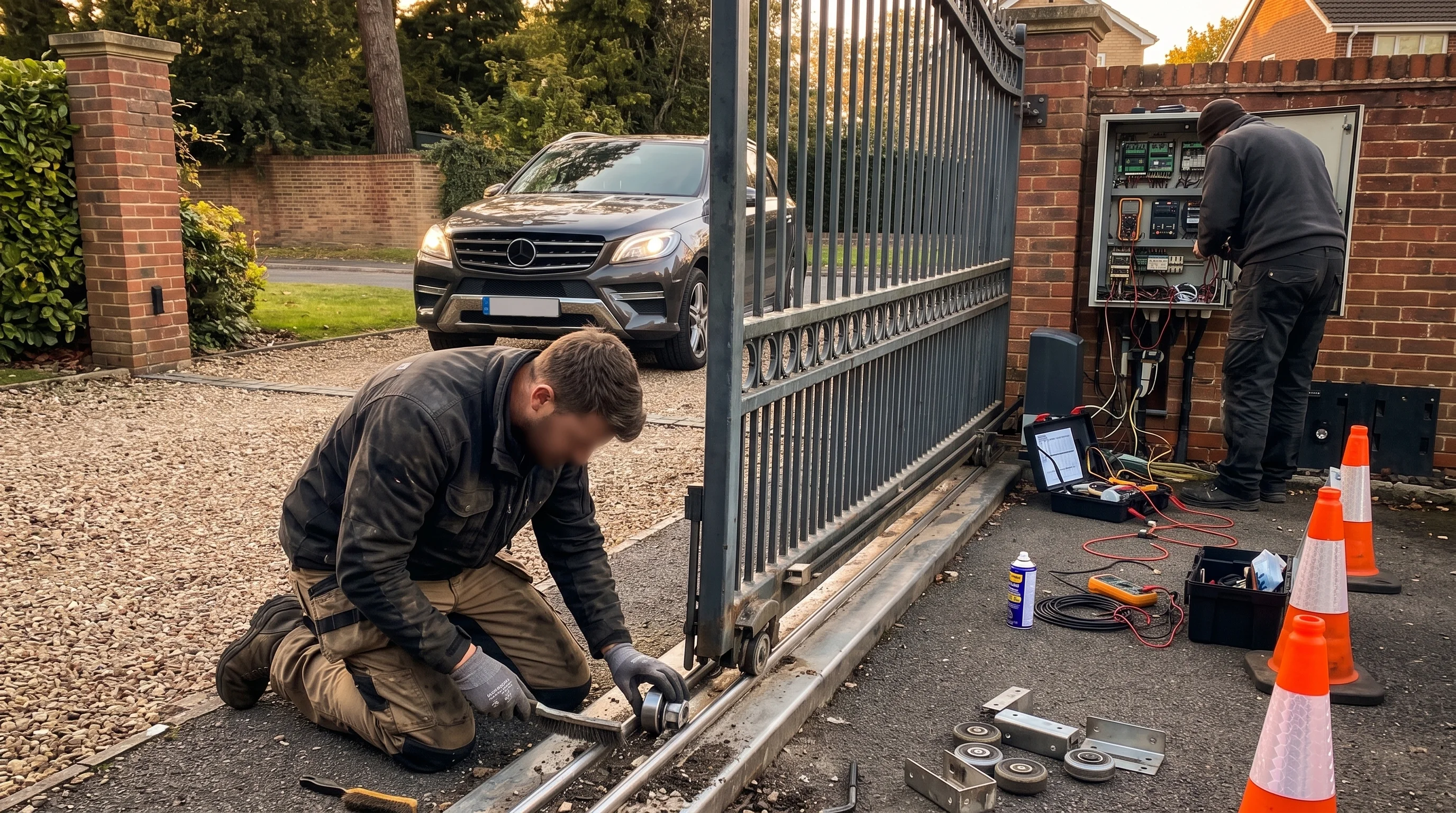
A sluggish gate is rarely just an inconvenience. Across the SF Bay Area, property owners who notice their gates dragging, pausing mid-cycle, or straining to open are often dealing with a problem that will worsen without proper attention. Understanding what drives slow gate movement is the first step toward timely automatic gate repair before a minor issue turns into a complete system failure.
Why Slow Gate Movement Signals a Need for Automatic Gate Repair
Gate speed is a reliable indicator of overall system health. When an automatic gate begins to slow down noticeably, it means one or more components are working harder than they should. The motor, hinges, tracks, sensors, and control board all play a role in how smoothly and quickly a gate cycles. A change in speed usually points to stress somewhere in that chain.
In the SF Bay Area, where coastal humidity, salt air, hillside terrain, and temperature swings create demanding conditions, gates face more environmental stress than in many other regions. What might be a minor lubrication issue in a drier climate can become a significant mechanical problem along the Bay.
Motor Strain and Worn Drive Components
One of the most common reasons a gate slows down is motor fatigue. Over time, the motor that drives the gate opener accumulates wear, especially on properties with high daily cycle counts. When a motor is struggling, the gate will often move noticeably slower than it did at installation, sometimes accompanied by a low hum or grinding noise.
Drive components, including chains, belts, and gears, also degrade with regular use. A stretched chain or a worn gear reduces the mechanical efficiency of the entire system. Gate opener repair specialists can assess whether the motor needs service or replacement and whether drive components have reached the end of their usable life. Catching this early avoids the scenario where a gate stops entirely at the most inconvenient moment.
Hinge and Track Problems That Slow Gate Operation
For swing gates, hinge wear is a leading cause of sluggish movement. Hinges that are corroded, misaligned, or under-lubricated create friction that the motor must overcome on every cycle. In the SF Bay Area, where moisture from the Bay and marine layer is a constant factor, metal hinges are particularly vulnerable to rust and corrosion if not maintained regularly.
For sliding gates, the track condition matters enormously. Debris accumulation, track warping from ground movement, or roller wear can all reduce the speed and smoothness of operation. Properties in hillside neighborhoods across the SF Bay region sometimes experience ground settling that shifts track alignment gradually, making the gate progressively harder to move.
Routine gate maintenance and repair address these issues before they compound. If hinges or tracks are already causing visible slowdowns, a professional assessment of the gate mechanism is the appropriate next step. Property owners in commuter-heavy communities like Dublin can explore high-uptime gate solutions for Dublin properties that are specifically engineered for high-cycle reliability.
Sensor and Safety Device Interference
Modern automatic gates are equipped with safety sensors, including photo eyes and loop detectors, that stop or slow the gate when they detect an obstruction. When these sensors become dirty, misaligned, or faulty, they may trigger false readings that cause the gate to hesitate, reverse, or operate at reduced speed as a precaution.
In the SF Bay Area, foggy mornings and dusty conditions can coat sensor lenses quickly. A gate that seems slow may actually be responding to phantom obstructions detected by a sensor that needs cleaning or recalibration. This is a relatively straightforward fix during a gate repair service call, but it is easy to misdiagnose without the right diagnostic tools.
Electrical and Control Board Issues
The control board governs how the gate opener receives and processes commands. Voltage irregularities, damaged wiring, or a failing circuit board can all result in the motor receiving insufficient power, which directly affects gate speed. In older systems, capacitors on the control board degrade over time, reducing the burst of power the motor needs to start a cycle efficiently.
Wiring issues are particularly common in the SF Bay Area, where temperature fluctuations and moisture exposure can degrade insulation on outdoor electrical components. A trained technician performing automatic gate repair will test voltage at the motor, inspect the control board, and trace any wiring faults that may be robbing the system of performance. Answers to common questions about gate diagnostics and what the repair process involves are available on the automatic gates frequently asked questions page.
Lack of Lubrication and Deferred Maintenance
Gates that have gone without scheduled maintenance are among the most common candidates for gate repair service calls across the SF Bay Area. Every moving component, including hinges, rollers, chains, and pivot points, requires periodic lubrication. Without it, friction accumulates, components wear faster, and the motor compensates by working harder, which accelerates its own decline.
Many property owners in the SF Bay region do not realize that lubrication needs vary by environment. A gate near the waterfront in Alameda or along the coast in Pacifica requires more frequent attention than one installed in a drier inland neighborhood. Establishing a maintenance schedule suited to the local environment is one of the most effective ways to prevent slow gate operation and extend the system's overall lifespan.
When Slow Becomes Stopped: Acting Before It Reaches That Point
A gate that is moving slowly today may not be moving at all within weeks or months. The mechanical and electrical issues described above rarely resolve on their own. Each cycle under stress adds wear, and the gap between "slow" and "failed" can close quickly.
For SF Bay Area property owners who have noticed a change in gate speed, the appropriate response is to schedule a professional inspection promptly. A qualified technician performing automatic gate repair can diagnose the root cause, whether it is a motor, hinge, sensor, track, or electrical issue, and restore the system to full operating speed before the problem escalates into a costlier breakdown.
Across the SF Bay Area, from coastal communities to inland suburbs, gates that receive timely attention consistently outlast those where warning signs are ignored. Slow movement is a warning sign. Treating it as one is the most practical decision a property owner can make.